Department of Bio and Brain Engineering, Korea Advanced Institute of Science and Technology (KAIST), Daejeon, South Korea.
Department of Radiology, Seoul National University College of Medicine, Seoul, South Korea.
Fluids Barriers CNS. 2023 May 26;20(1):37. doi: 10.1186/s12987-023-00446-z.
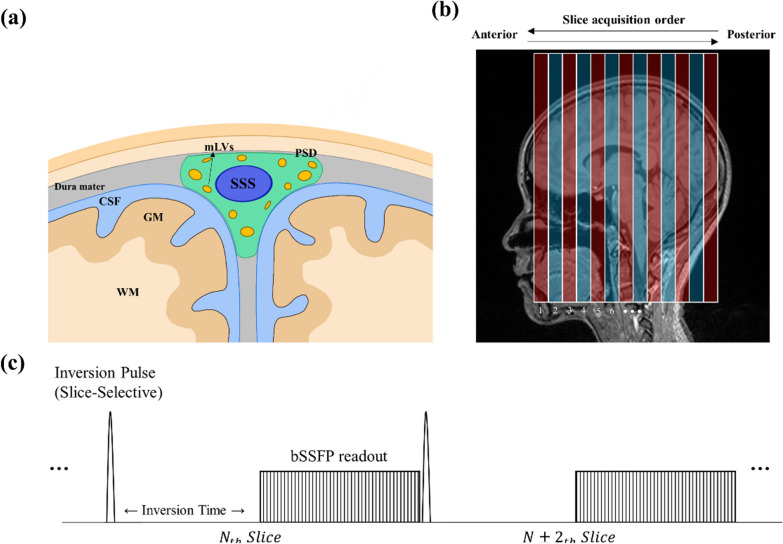
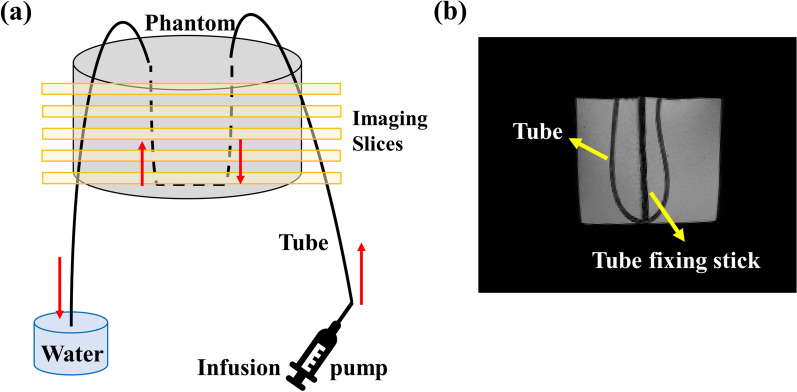
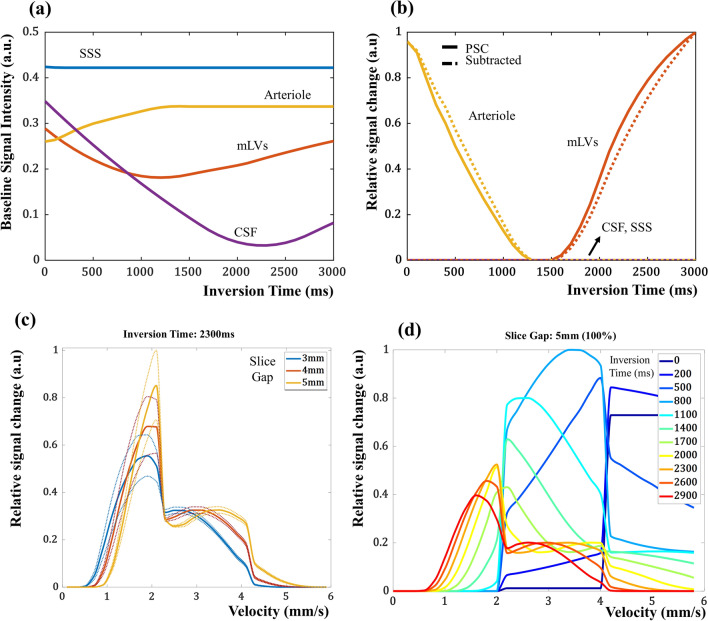
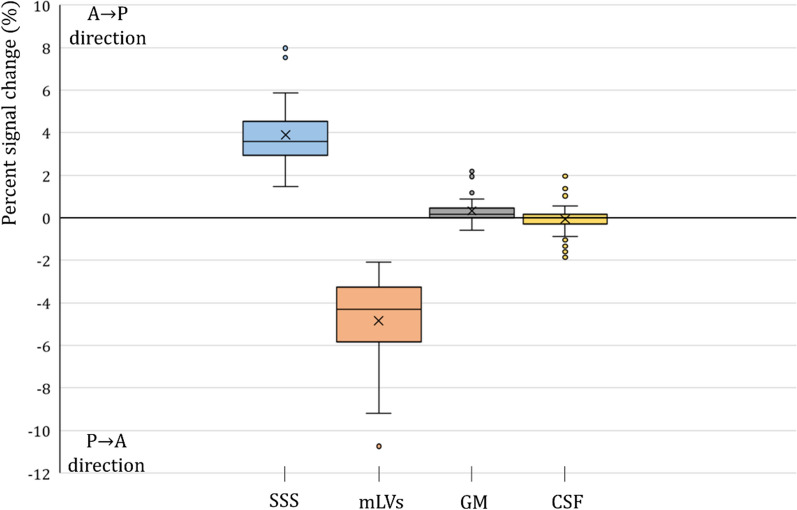
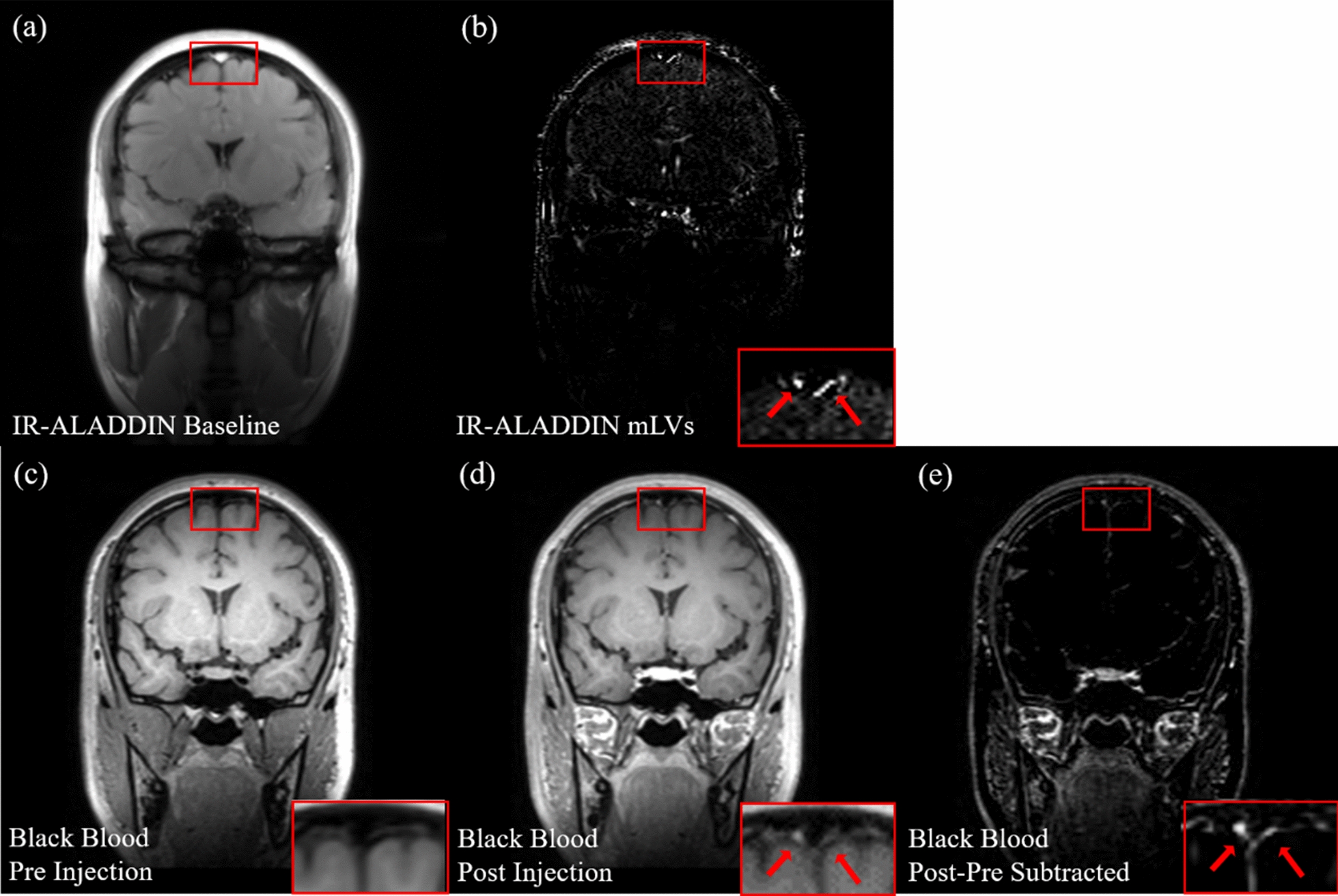
The clearance pathways of brain waste products in humans are still under debate in part due to the lack of noninvasive imaging techniques for meningeal lymphatic vessels (mLVs). In this study, we propose a new noninvasive mLVs imaging technique based on an inter-slice blood perfusion MRI called alternate ascending/descending directional navigation (ALADDIN). ALADDIN with inversion recovery (IR) at single inversion time of 2300 ms (single-TI IR-ALADDIN) clearly demonstrated parasagittal mLVs around the human superior sagittal sinus (SSS) with better detectability and specificity than the previously suggested noninvasive imaging techniques. While in many studies it has been difficult to detect mLVs and confirm their signal source noninvasively, the detection of mLVs in this study was confirmed by their posterior to anterior flow direction and their velocities and morphological features, which were consistent with those from the literature. In addition, IR-ALADDIN was compared with contrast-enhanced black blood imaging to confirm the detection of mLVs and its similarity. For the quantification of flow velocity of mLVs, IR-ALADDIN was performed at three inversion times of 2000, 2300, and 2600 ms (three-TI IR-ALADDIN) for both a flow phantom and humans. For this preliminary result, the flow velocity of the dorsal mLVs in humans ranged between 2.2 and 2.7 mm/s. Overall, (i) the single-TI IR-ALADDIN can be used as a novel non-invasive method to visualize mLVs in the whole brain with scan time of ~ 17 min and (ii) the multi-TI IR-ALADDIN can be used as a way to quantify the flow velocity of mLVs with a scan time of ~ 10 min (or shorter) in a limited coverage. Accordingly, the suggested approach can be applied to noninvasively studying meningeal lymphatic flows in general and also understanding the clearance pathways of waste production through mLVs in humans, which warrants further investigation.
人类脑内废物清除途径仍存在争议,部分原因是缺乏脑膜淋巴管(meningeal lymphatic vessels,mLVs)的非侵入性成像技术。在这项研究中,我们提出了一种新的基于脑血灌注 MRI 的非侵入性 mLVs 成像技术,称为交替上升/下降定向导航(alternate ascending/descending directional navigation,ALADDIN)。采用单反转时间为 2300ms 的反转恢复(inversion recovery,IR)ALADDIN(single-TI IR-ALADDIN)技术可清晰显示矢状窦旁 mLVs,与先前提出的非侵入性成像技术相比,其具有更好的可探测性和特异性。虽然在许多研究中,很难非侵入性地检测到 mLVs 并确认其信号源,但本研究中 mLVs 的检测通过其从前向后的血流方向及其速度和形态特征得到了确认,这些特征与文献中的特征一致。此外,IR-ALADDIN 与对比增强黑血成像进行了比较,以确认 mLVs 的检测及其相似性。为了定量 mLVs 的血流速度,对流动体模和人体分别在三个反转时间(2000、2300 和 2600ms)下进行了 IR-ALADDIN(three-TI IR-ALADDIN)。对于初步结果,人体背侧 mLVs 的血流速度在 2.2 至 2.7mm/s 之间。总之,(i)single-TI IR-ALADDIN 可作为一种新的非侵入性方法,用于在大约 17 分钟的扫描时间内可视化全脑的 mLVs;(ii)multi-TI IR-ALADDIN 可用于以大约 10 分钟(或更短)的扫描时间量化 mLVs 的血流速度(在有限的覆盖范围内)。因此,所提出的方法可用于非侵入性地研究脑膜淋巴管的总体流动,并有助于了解人类通过 mLVs 清除废物的途径,这值得进一步研究。