Department of Pediatrics, Emory University School of Medicine, Atlanta, Georgia, USA.
Department of Medicine, Johns Hopkins University School of Medicine, Baltimore, Maryland, USA.
J Virol. 2020 Dec 22;95(2). doi: 10.1128/JVI.01669-20.
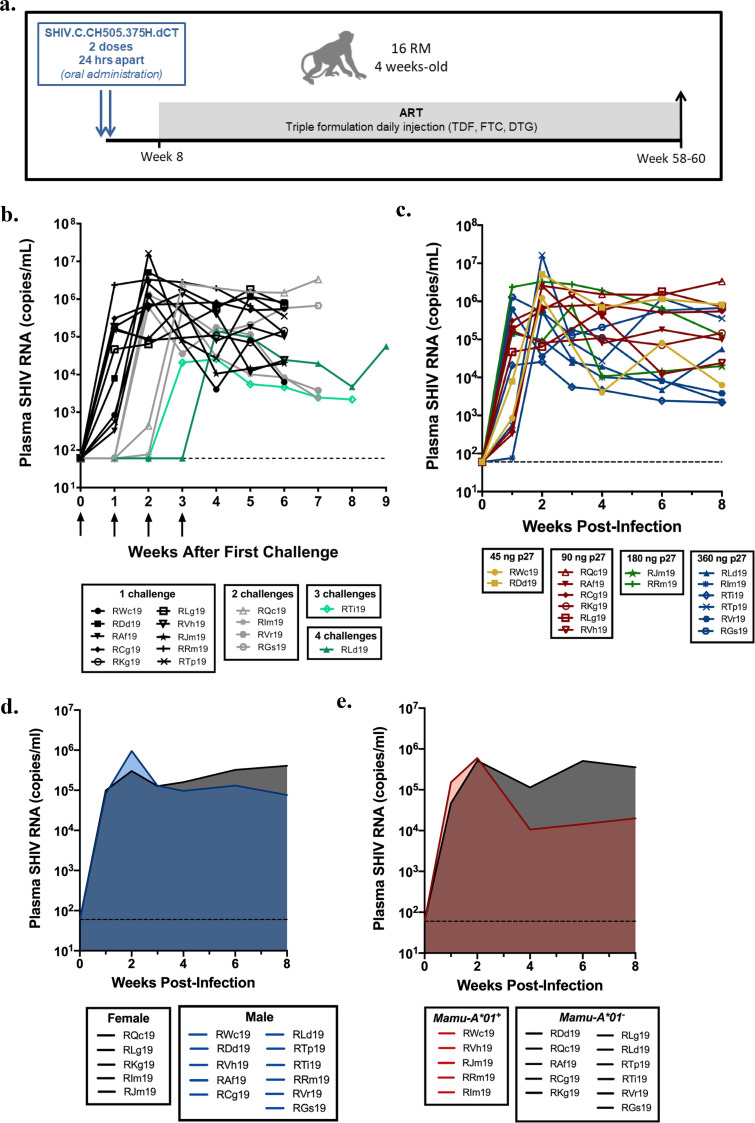
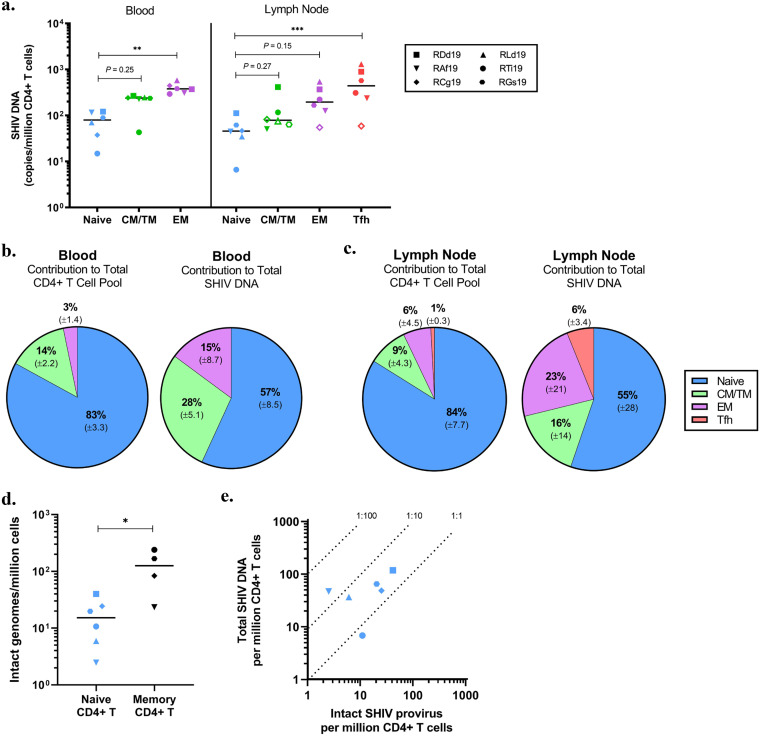
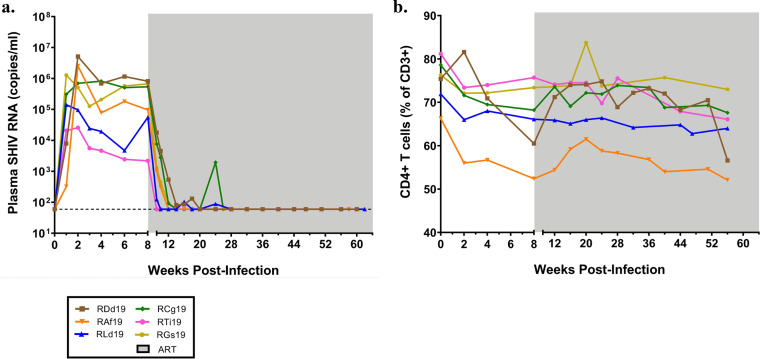
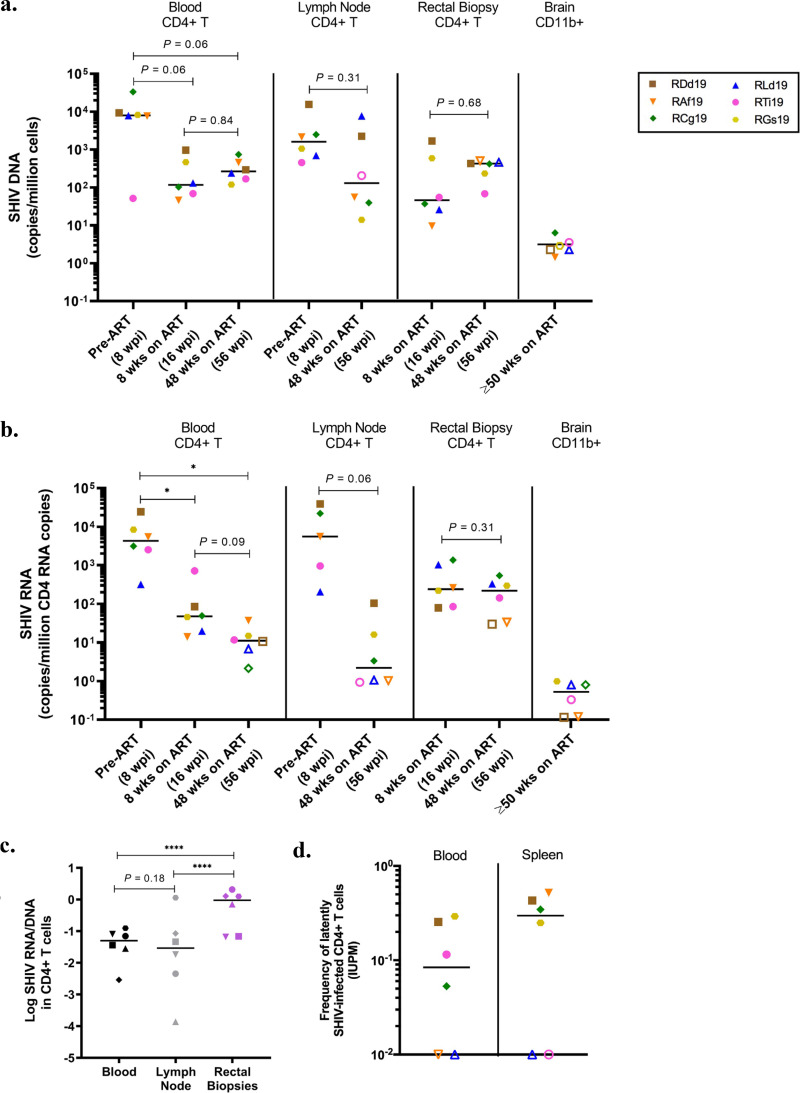
Mother-to-child transmission of human immunodeficiency virus type 1 (HIV-1) continues to cause new pediatric cases of infection through breastfeeding, a setting where it is not always possible to initiate early antiretroviral therapy (ART). Without novel interventions that do not rely on daily ART, HIV-1-infected children face lifelong medications to control infection. A detailed analysis of virus persistence following breast milk transmission of HIV-1 and ART has not been performed. Here, we used infant rhesus macaques orally infected with simian/human immunodeficiency virus (SHIV) (SHIV.C.CH505) to identify cellular and anatomical sites of virus persistence under ART. Viral DNA was detected at similar levels in blood and tissue CD4 T cells after a year on ART, with virus in blood and lymphoid organs confirmed to be replication competent. Viral RNA/DNA ratios were elevated in rectal CD4 T cells compared to those of other sites (0.0001), suggesting that the gastrointestinal tract is an active site of virus transcription during ART-mediated suppression of viremia. SHIV.C.CH505 DNA was detected in multiple CD4 T cell subsets, including cells with a naive phenotype (CD45RA CCR7 CD95). While the frequency of naive cells harboring intact provirus was lower than in memory cells, the high abundance of naive cells in the infant CD4 T cell pool made them a substantial source of persistent viral DNA (approximately 50% of the total CD4 T cell reservoir), with an estimated 1:2 ratio of intact provirus to total viral DNA. This viral reservoir profile broadens our understanding of virus persistence in a relevant infant macaque model and provides insight into targets for cure-directed approaches in the pediatric population. Uncovering the sanctuaries of the long-lived HIV-1 reservoir is crucial to develop cure strategies. Pediatric immunity is distinct from that of adults, which may alter where the reservoir is established in infancy. Thus, it is important to utilize pediatric models to inform cure-directed approaches for HIV-1-infected children. We used an infant rhesus macaque model of HIV-1 infection via breastfeeding to identify key sites of viral persistence under antiretroviral therapy (ART). The gastrointestinal tract was found to be a site for low-level viral transcription during ART. We also show that naive CD4 T cells harbored intact provirus and were a major contributor to blood and lymphoid reservoir size. This is particularly striking, as memory CD4 T cells are generally regarded as the main source of latent HIV/simian immunodeficiency virus (SIV) infection of adult humans and rhesus macaques. Our findings highlight unique features of reservoir composition in pediatric infection that should be considered for eradication efforts.
母婴传播艾滋病毒 1 型(HIV-1)仍然通过母乳喂养导致新的儿科感染病例,在这种情况下,并不总是可以启动早期抗逆转录病毒治疗(ART)。如果没有不依赖每日 ART 的新干预措施,感染 HIV-1 的儿童将面临终身药物控制感染。目前尚未对 HIV-1 通过母乳传播和 ART 后病毒的持续存在进行详细分析。在这里,我们使用恒河猴口服感染猴/人免疫缺陷病毒(SHIV)(SHIV.C.CH505)的婴儿恒河猴,在 ART 下鉴定病毒持续存在的细胞和解剖部位。一年后,ART 治疗后血液和组织 CD4 T 细胞中的病毒 DNA 水平相似,血液和淋巴器官中的病毒被证实具有复制能力。与其他部位相比,直肠 CD4 T 细胞中的病毒 RNA/DNA 比值升高(0.0001),表明在 ART 介导的病毒血症抑制期间,胃肠道是病毒转录的活跃部位。在多个 CD4 T 细胞亚群中检测到 SHIV.C.CH505 DNA,包括具有幼稚表型(CD45RA CCR7 CD95)的细胞。虽然携带完整前病毒的幼稚细胞频率低于记忆细胞,但婴儿 CD4 T 细胞库中幼稚细胞的高丰度使它们成为持续存在的病毒 DNA 的重要来源(约占总 CD4 T 细胞库的 50%),估计完整前病毒与总病毒 DNA 的比例为 1:2。这种病毒库特征拓宽了我们对相关婴儿猕猴模型中病毒持续存在的理解,并为儿科人群中针对治愈的方法提供了深入的见解。揭示长期存在的 HIV-1 储存库的避难所对于开发治愈策略至关重要。儿科免疫与成人不同,这可能会改变婴儿期储存库的建立位置。因此,利用儿科模型为感染 HIV-1 的儿童提供针对治愈的方法非常重要。我们使用通过母乳喂养感染 HIV-1 的婴儿恒河猴模型,确定了在抗逆转录病毒治疗(ART)下病毒持续存在的关键部位。研究发现,在 ART 期间,胃肠道是病毒低水平转录的部位。我们还表明,幼稚 CD4 T 细胞携带完整的前病毒,是血液和淋巴库大小的主要贡献者。这一点尤其引人注目,因为记忆 CD4 T 细胞通常被认为是成人和恒河猴潜伏 HIV/猴免疫缺陷病毒(SIV)感染的主要来源。我们的研究结果突出了儿科感染中储存库组成的独特特征,这些特征应在消除努力中加以考虑。