Mainou Ellie, Berendam Stella J, Obregon-Perko Veronica, Uffman Emilie A, Phan Caroline T, Shaw George M, Bar Katharine J, Kumar Mithra R, Fray Emily J, Siliciano Janet M, Siliciano Robert F, Silvestri Guido, Permar Sallie R, Fouda Genevieve G, McCarthy Janice, Chahroudi Ann, Chan Cliburn, Conway Jessica M
Department of Biology, Pennsylvania State University, University Park, PA, USA.
GlaxoKlineSmith, Rockville, MD, USA.
bioRxiv. 2024 May 23:2024.05.21.595130. doi: 10.1101/2024.05.21.595130.
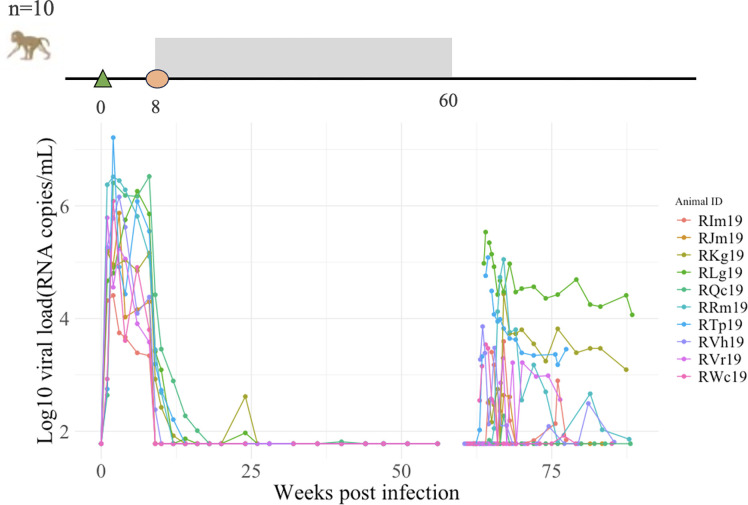
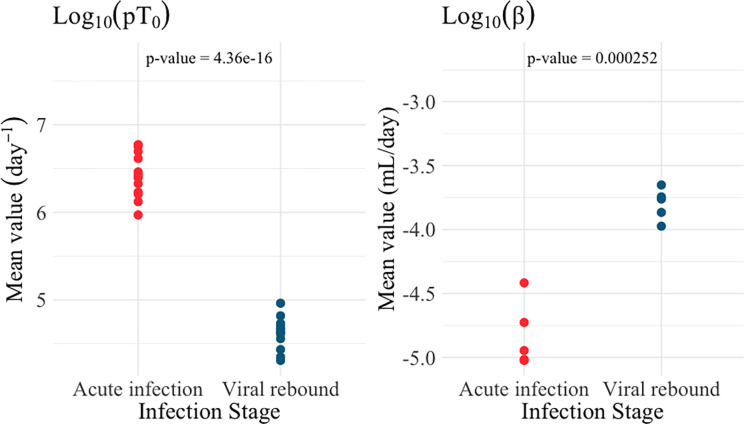
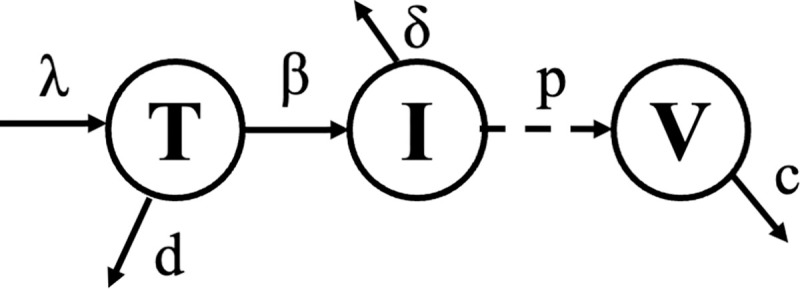
Viral dynamics of acute HIV infection and HIV rebound following suspension of antiretroviral therapy may be qualitatively similar but must differ given, for one, development of adaptive immune responses. Understanding the differences of acute HIV infection and viral rebound dynamics in pediatric populations may provide insights into the mechanisms of viral control with potential implications for vaccine design and the development of effective targeted therapeutics for infants and children. Mathematical models have been a crucial tool to elucidate the complex processes driving viral infections within the host. Traditionally, acute HIV infection has been modeled with a standard model of viral dynamics initially developed to explore viral decay during treatment, while viral rebound has necessitated extensions of that standard model to incorporate explicit immune responses. Previous efforts to fit these models to viral load data have underscored differences between the two infection stages, such as increased viral clearance rate and increased death rate of infected cells during rebound. However, these findings have been predicated on viral load measurements from disparate adult individuals. In this study, we aim to bridge this gap, in infants, by comparing the dynamics of acute infection and viral rebound within the same individuals by leveraging an infant nonhuman primate Simian/Human Immunodeficiency Virus (SHIV) infection model. Ten infant Rhesus macaques (RMs) orally challenged with SHIV.C.CH505 375H dCT and given ART at 8 weeks post-infection. These infants were then monitored for up to 60 months post-infection with serial viral load and immune measurements. We use the HIV standard viral dynamics model fitted to viral load measurements in a nonlinear mixed effects framework. We find that the primary difference between acute infection and rebound is the increased death rate of infected cells during rebound. We use these findings to generate hypotheses on the effects of adaptive immune responses. We leverage these findings to formulate hypotheses to elucidate the observed results and provide arguments to support the notion that delayed viral rebound is characterized by a stronger CD8+ T cell response.
急性HIV感染的病毒动力学以及抗逆转录病毒治疗中断后的HIV反弹,在性质上可能相似,但鉴于适应性免疫反应的发展等因素,二者必然存在差异。了解儿科人群中急性HIV感染与病毒反弹动力学的差异,可能会为病毒控制机制提供见解,这对疫苗设计以及为婴幼儿开发有效的靶向治疗方法具有潜在意义。数学模型一直是阐明宿主内驱动病毒感染的复杂过程的关键工具。传统上,急性HIV感染采用最初为探索治疗期间病毒衰减而开发的标准病毒动力学模型进行建模,而病毒反弹则需要对该标准模型进行扩展,以纳入明确的免疫反应。此前将这些模型与病毒载量数据拟合的努力突出了两个感染阶段之间的差异,例如反弹期间病毒清除率增加以及被感染细胞死亡率增加。然而,这些发现是基于不同成年个体的病毒载量测量得出的。在本研究中,我们旨在通过利用婴儿非人灵长类动物猿猴/人类免疫缺陷病毒(SHIV)感染模型,比较同一婴儿个体内急性感染和病毒反弹的动力学,来弥合这一差距。十只恒河猴幼猴口服感染SHIV.C.CH505 375H dCT,并在感染后8周给予抗逆转录病毒治疗(ART)。然后对这些幼猴在感染后长达60个月的时间里进行连续病毒载量和免疫指标监测。我们在非线性混合效应框架下,使用拟合病毒载量测量值的HIV标准病毒动力学模型。我们发现急性感染与反弹之间的主要差异在于反弹期间被感染细胞的死亡率增加。我们利用这些发现对适应性免疫反应的影响提出假设。我们利用这些发现来阐述所观察到的结果,并提供论据支持延迟病毒反弹以更强的CD8 + T细胞反应为特征这一观点。