Department of Gynecology and Obstetrics, University Medicine Göttingen, Robert-Koch-Str. 40, 37075, Göttingen, Germany.
Institute of Clinical Chemistry, University Medical Center Göttingen, Göttingen, Germany.
Sci Rep. 2020 Oct 21;10(1):17889. doi: 10.1038/s41598-020-74838-8.
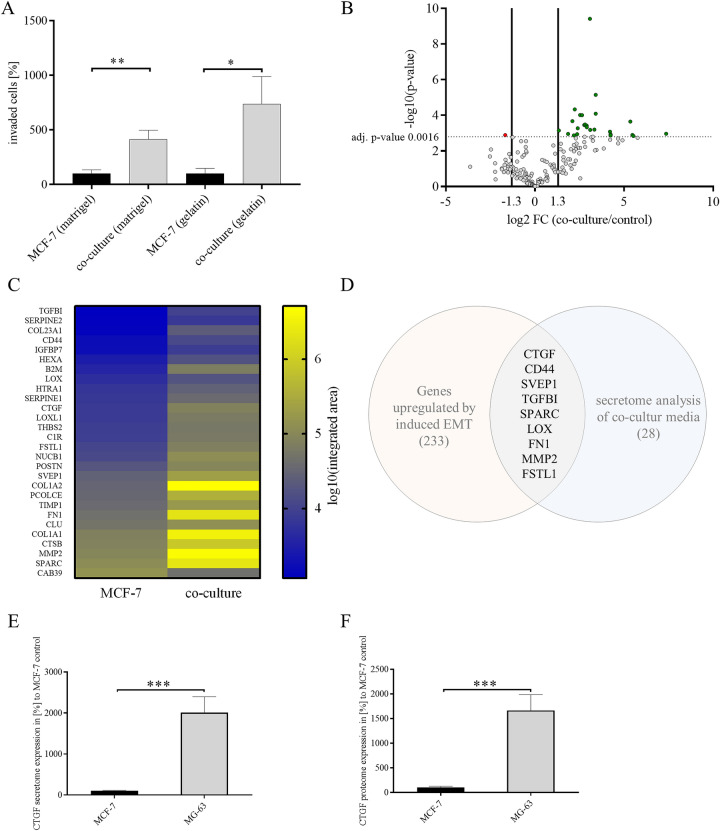
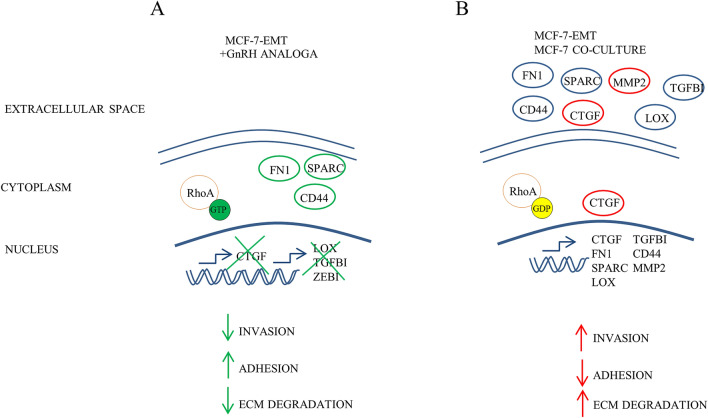
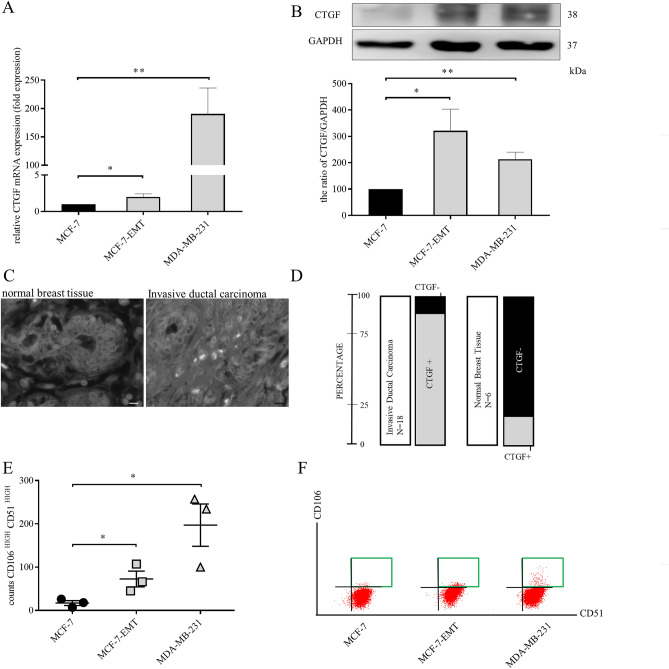
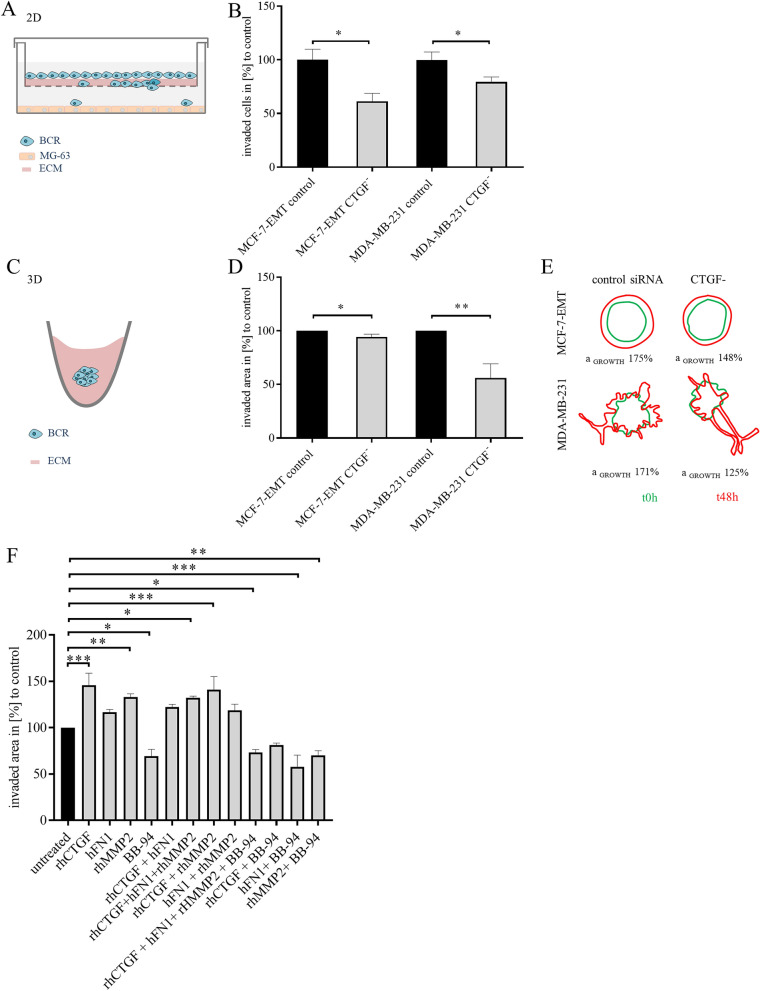
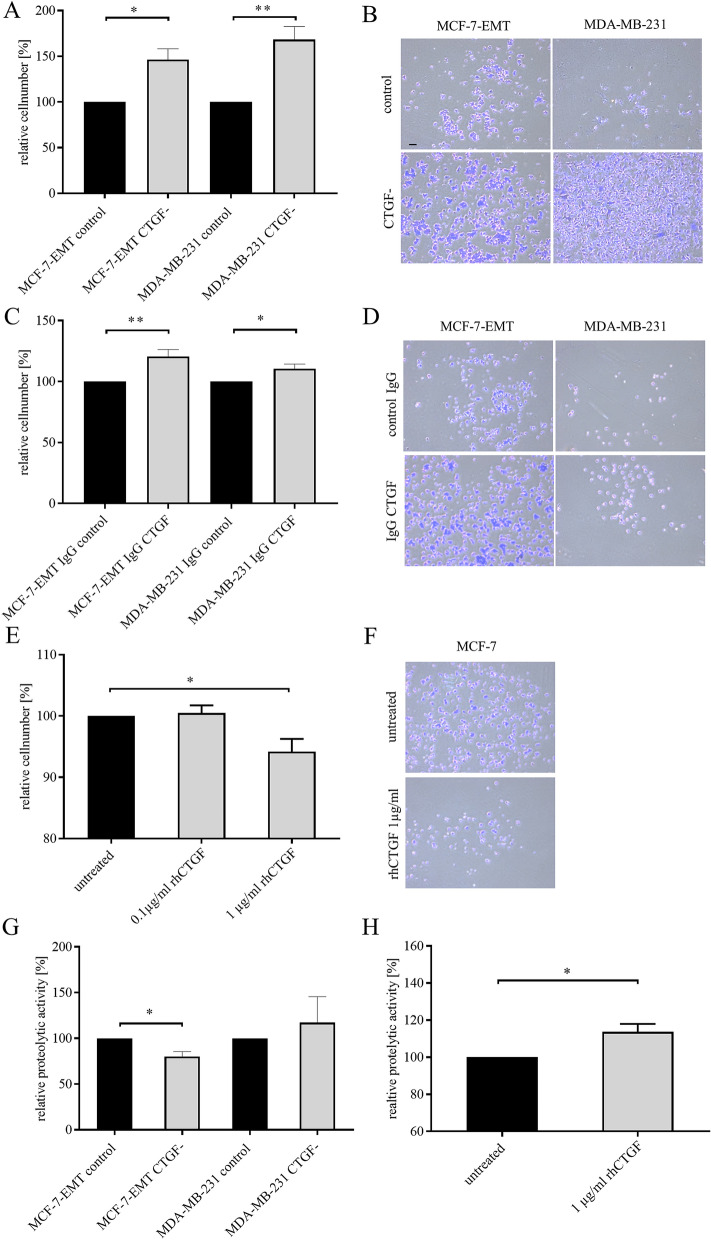
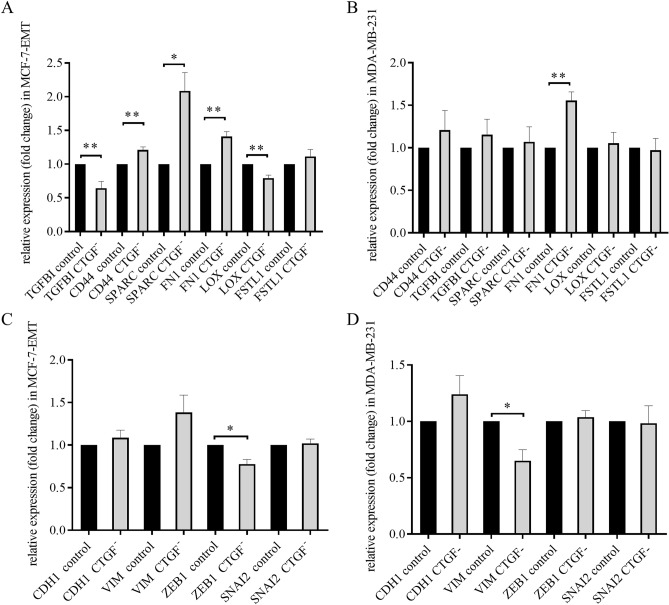
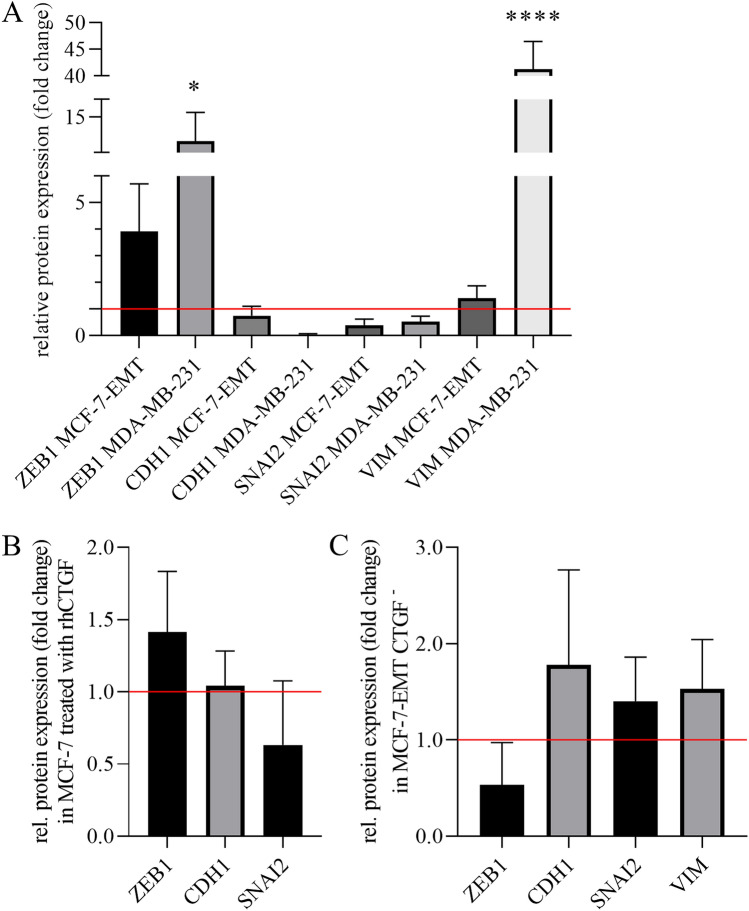
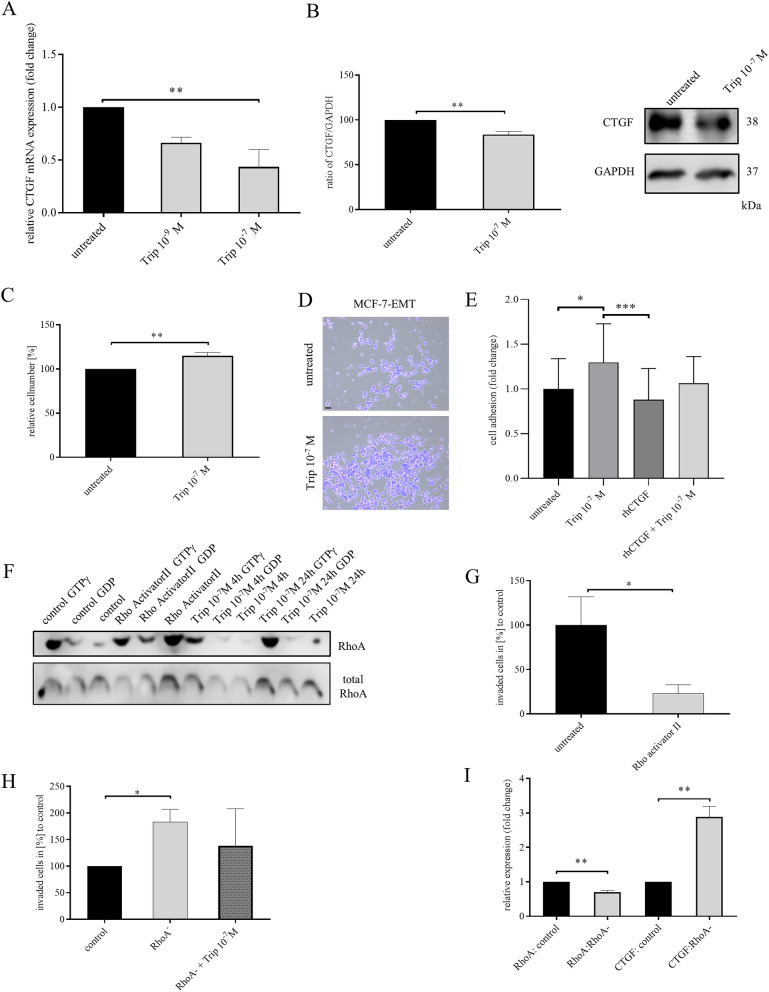
An altered consistency of tumor microenvironment facilitates the progression of the tumor towards metastasis. Here we combine data from secretome and proteome analysis using mass spectrometry with microarray data from mesenchymal transformed breast cancer cells (MCF-7-EMT) to elucidate the drivers of epithelial-mesenchymal transition (EMT) and cell invasion. Suppression of connective tissue growth factor (CTGF) reduced invasion in 2D and 3D invasion assays and expression of transforming growth factor-beta-induced protein ig-h3 (TGFBI), Zinc finger E-box-binding homeobox 1 (ZEB1) and lysyl oxidase (LOX), while the adhesion of cell-extracellular matrix (ECM) in mesenchymal transformed breast cancer cells is increased. In contrast, an enhanced expression of CTGF leads to an increased 3D invasion, expression of fibronectin 1 (FN1), secreted protein acidic and cysteine rich (SPARC) and CD44 and a reduced cell ECM adhesion. Gonadotropin-releasing hormone (GnRH) agonist Triptorelin reduces CTGF expression in a Ras homolog family member A (RhoA)-dependent manner. Our results suggest that CTGF drives breast cancer cell invasion in vitro and therefore could be an attractive therapeutic target for drug development to prevent the spread of breast cancer.
肿瘤微环境的改变促进了肿瘤向转移的发展。在这里,我们将使用质谱法进行的分泌组和蛋白质组分析的数据与间充质转化的乳腺癌细胞(MCF-7-EMT)的微阵列数据相结合,以阐明上皮-间充质转化(EMT)和细胞侵袭的驱动因素。结缔组织生长因子(CTGF)的抑制作用降低了 2D 和 3D 侵袭实验中的侵袭,并且表达转化生长因子-β诱导的蛋白 ig-h3(TGFBI)、锌指 E-框结合同源盒 1(ZEB1)和赖氨酰氧化酶(LOX),而间充质转化的乳腺癌细胞中细胞-细胞外基质(ECM)的粘附增加。相比之下,CTGF 的增强表达导致 3D 侵袭增加、纤维连接蛋白 1(FN1)、富含酸性和半胱氨酸的分泌蛋白(SPARC)和 CD44 的表达增加,以及细胞 ECM 粘附减少。促性腺激素释放激素(GnRH)激动剂曲普瑞林以 Ras 同源家族成员 A(RhoA)依赖性方式降低 CTGF 的表达。我们的结果表明,CTGF 驱动体外乳腺癌细胞侵袭,因此可能成为开发药物以防止乳腺癌扩散的有吸引力的治疗靶标。