Drug Metabolism and Pharmacokinetics Research Laboratories, Research, Takeda Pharmaceutical Company Limited, 26-1, Muraoka-Higashi 2-chome, Fujisawa, Kanagawa, Japan.
Sci Rep. 2020 Oct 21;10(1):17884. doi: 10.1038/s41598-020-74927-8.
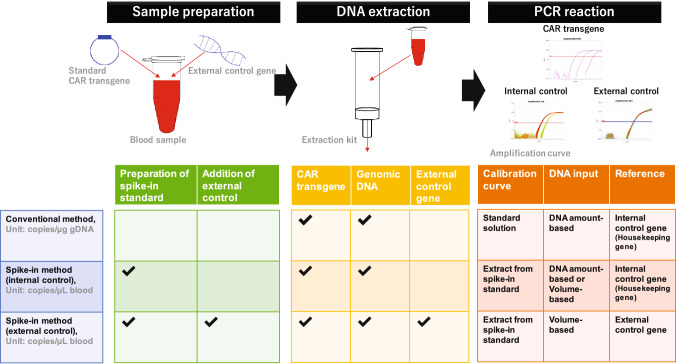
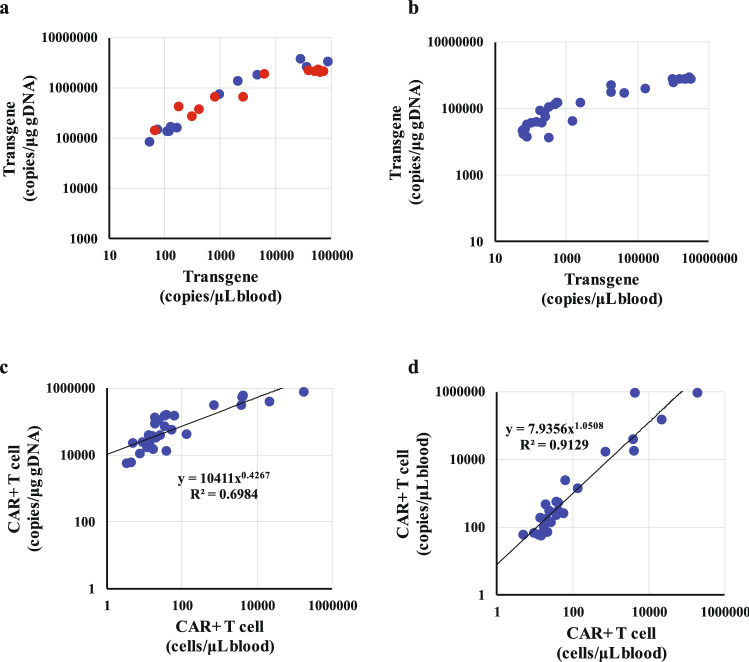
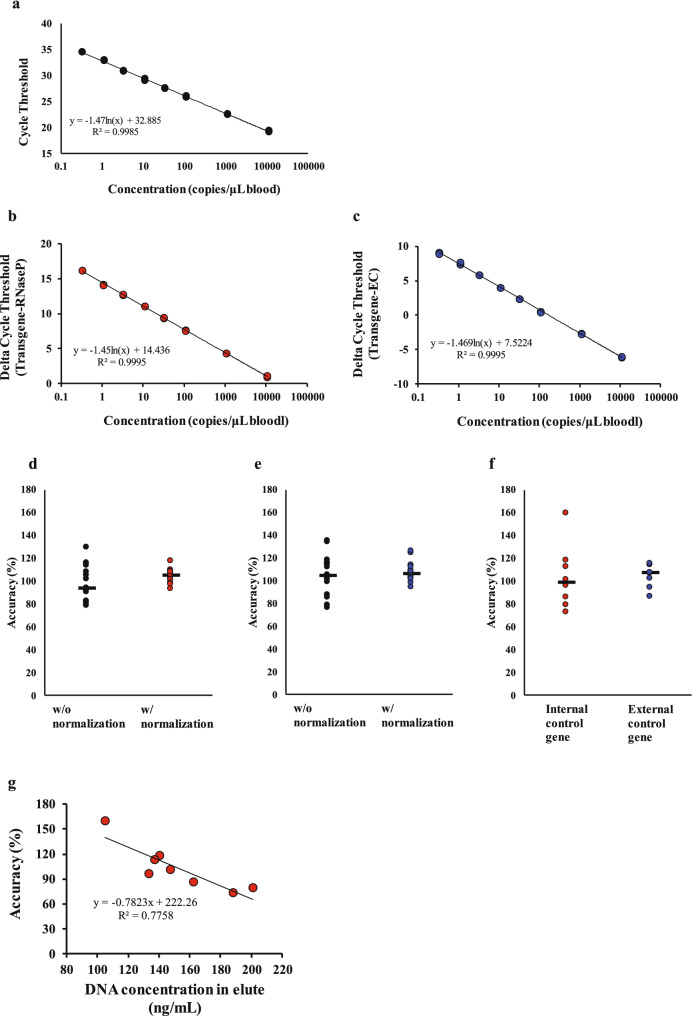
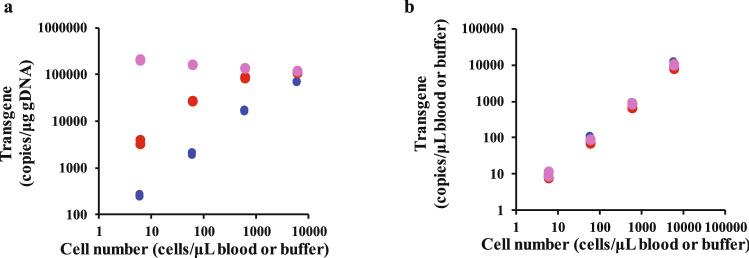
Although the cellular kinetics of chimeric antigen receptor T (CAR T) cells are expressed in units of copies/μg gDNA, this notation carries the risk of misrepresentation owing to dramatic changes in blood gDNA levels after lymphocyte-depleting chemotherapy and rapid expansion of CAR T cells. Therefore, we aimed to establish a novel qPCR methodology incorporating a spike-in calibration curve that expresses cellular kinetics in units of copies/μL blood, as is the case for conventional pharmacokinetic studies of small molecules and other biologics. Dog gDNA was used as an external control gene. Our methodology enables more accurate evaluation of in vivo CAR T-cell expansion than the conventional approach; the unit "copies/μL blood" is therefore more appropriate for evaluating cellular kinetics than the unit "copies/μg gDNA." The results of the present study provide new insights into the relationship between cellular kinetics and treatment efficacy, thereby greatly benefiting patients undergoing CAR T-cell therapy.
虽然嵌合抗原受体 T(CAR T)细胞的细胞动力学以拷贝数/μg gDNA 为单位表示,但由于淋巴细胞耗竭化疗后血液 gDNA 水平的剧烈变化和 CAR T 细胞的快速扩增,这种表示方法存在误报的风险。因此,我们旨在建立一种新的 qPCR 方法,该方法包含一个内参校准曲线,以拷贝数/μL 血液为单位表示细胞动力学,这与小分子和其他生物制品的常规药代动力学研究相同。狗 gDNA 被用作外部对照基因。与传统方法相比,我们的方法能够更准确地评估体内 CAR T 细胞的扩增,因此,与拷贝数/μg gDNA 相比,拷贝数/μL 血液更适合评估细胞动力学。本研究的结果为细胞动力学与治疗效果之间的关系提供了新的见解,从而使接受 CAR T 细胞治疗的患者受益匪浅。