Dahab Mohammed A, Hegazy Mostafa M, Abbass Hatem S
Department of Pharmaceutical Medicinal Chemistry and Drug Design, Faculty of Pharmacy, Al-Azhar University (Boys), Cairo, 11884, Egypt.
Department of Pharmacognosy, Faculty of Pharmacy, Al-Azhar University (Boys), Cairo, 11884, Egypt.
Nat Prod Bioprospect. 2020 Dec;10(6):453-462. doi: 10.1007/s13659-020-00275-9. Epub 2020 Oct 22.
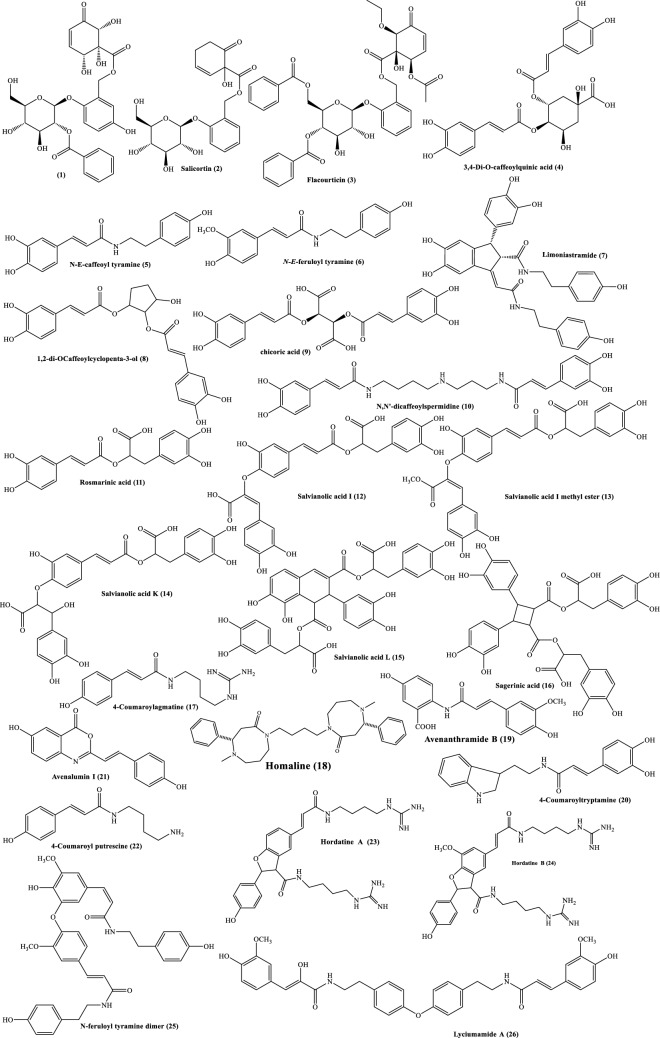
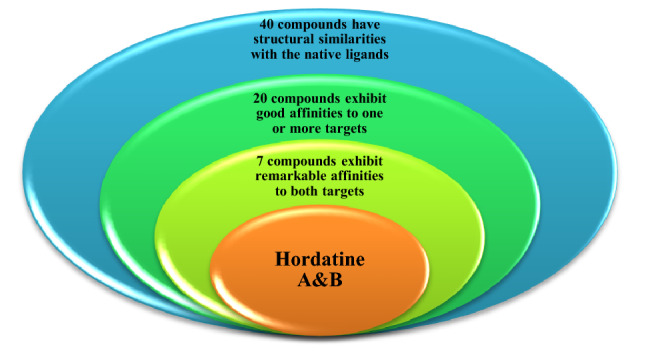
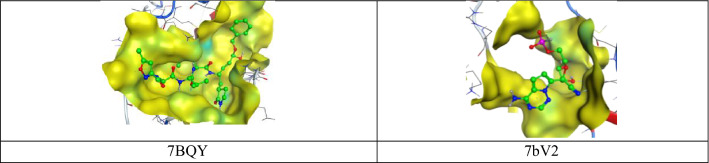
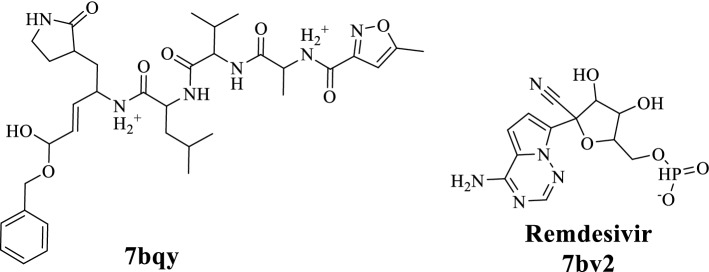
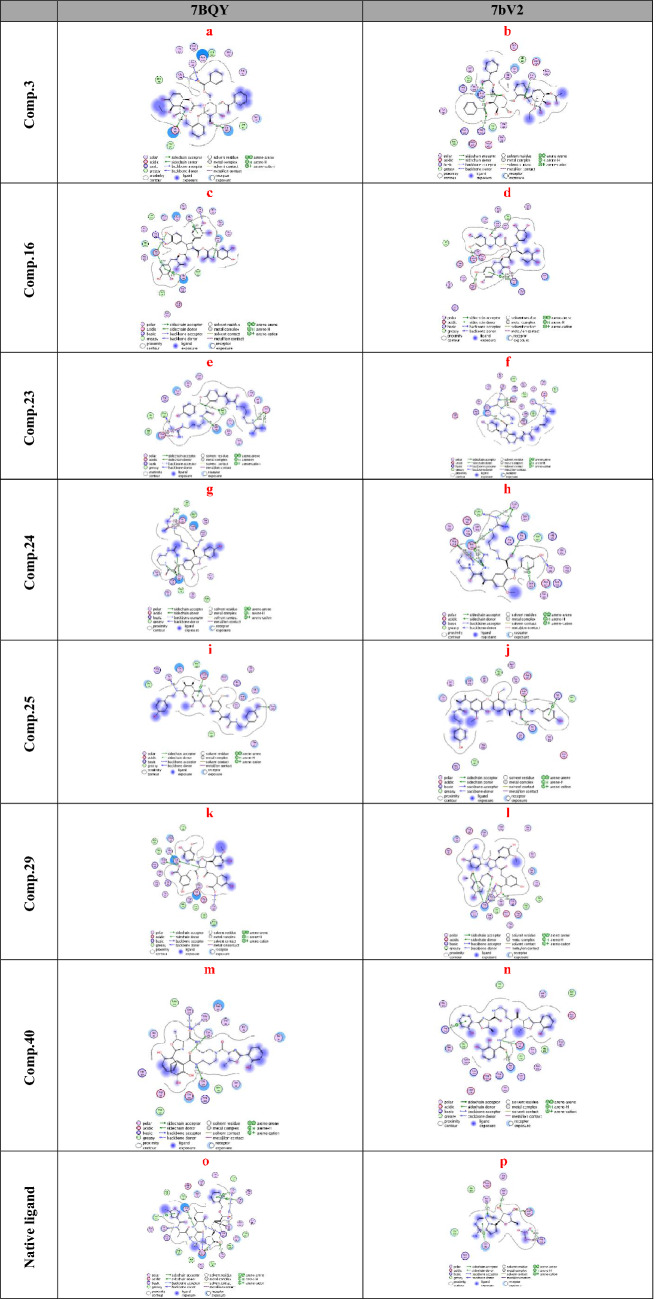
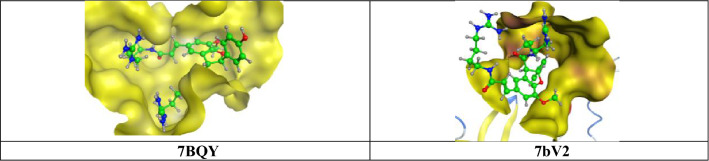
Total 40 natural compounds were selected to perform the molecular docking studies to screen and identify the potent antiviral agents specifically for Severe Acute Respiratory Syndrome Coronavirus 2 that causes coronavirus disease 2019 (COVID-19). The key targets of COVID-19, protease (PDB ID: 7BQY) and RNA polymerase (PDB ID: 7bV2) were used to dock our target compounds by Molecular Operating Environment (MOE) version 2014.09. We used 3 different conformations of protease target (6M0K, 6Y2F and 7BQY) and two different score functions to strengthen the probability of inhibitors discovery. After an extensive screening analysis, 20 compounds exhibit good binding affinities to one or both COVID-19 targets. 7 out of 20 compounds were predicted to overcome the activity of both targets. The top 7 hits are, flacourticin (3), sagerinic acid (16), hordatine A (23), hordatine B (24), N-feruloyl tyramine dimer (25), bisavenanthramides B-5 (29) and vulnibactins (40). According to our results, all these top hits was found to have a better binding scores than remdesivir, the native ligand in RNA polymerase target (PDB ID: 7bV2). Hordatines are phenolic compounds present in barley, were found to exhibit the highest binding affinity to both protease and polymerase through forming strong hydrogen bonds with the catalytic residues, as well as significant interactions with other receptor-binding residues. These results probably provided an excellent lead candidate for the development of therapeutic drugs against COVID-19. Eventually, animal experiment and accurate clinical trials are needed to confirm the preventive potentials of these compounds.
总共选择了40种天然化合物进行分子对接研究,以筛选和鉴定专门针对导致2019冠状病毒病(COVID-19)的严重急性呼吸综合征冠状病毒2的有效抗病毒剂。通过2014.09版分子操作环境(MOE),使用COVID-19的关键靶点蛋白酶(PDB ID:7BQY)和RNA聚合酶(PDB ID:7bV2)对我们的目标化合物进行对接。我们使用了蛋白酶靶点的3种不同构象(6M0K、6Y2F和7BQY)和两种不同的评分函数,以提高发现抑制剂的概率。经过广泛的筛选分析,20种化合物对一个或两个COVID-19靶点表现出良好的结合亲和力。20种化合物中有7种预计能克服两个靶点的活性。排名前7的化合物是,flacourticin(3)、sagerinic acid(16)、hordatine A(23)、hordatine B(24)、N-阿魏酰酪胺二聚体(25)、双燕麦酰胺B-5(29)和vulnibactins(40)。根据我们的结果,发现所有这些排名靠前的化合物的结合分数都比瑞德西韦好,瑞德西韦是RNA聚合酶靶点(PDB ID:7bV2)中的天然配体。大麦中存在的酚类化合物hordatines被发现通过与催化残基形成强氢键以及与其他受体结合残基的显著相互作用,对蛋白酶和聚合酶都表现出最高的结合亲和力。这些结果可能为开发抗COVID-19治疗药物提供了一个极好的潜在先导化合物。最终,需要进行动物实验和准确的临床试验来确认这些化合物的预防潜力。