Sharip Aigul, Kunz Jeannette
Department of Biology, School of Sciences and Humanities, Nazarbayev University, Nur-Sultan 010000, Kazakhstan.
Biomolecules. 2020 Oct 20;10(10):1461. doi: 10.3390/biom10101461.
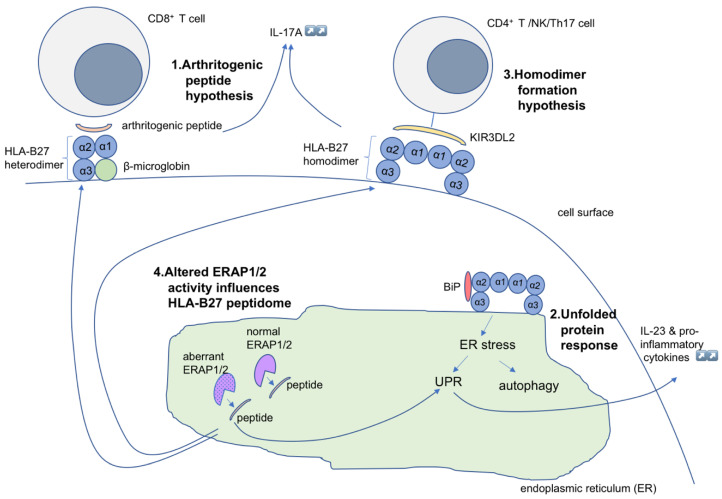
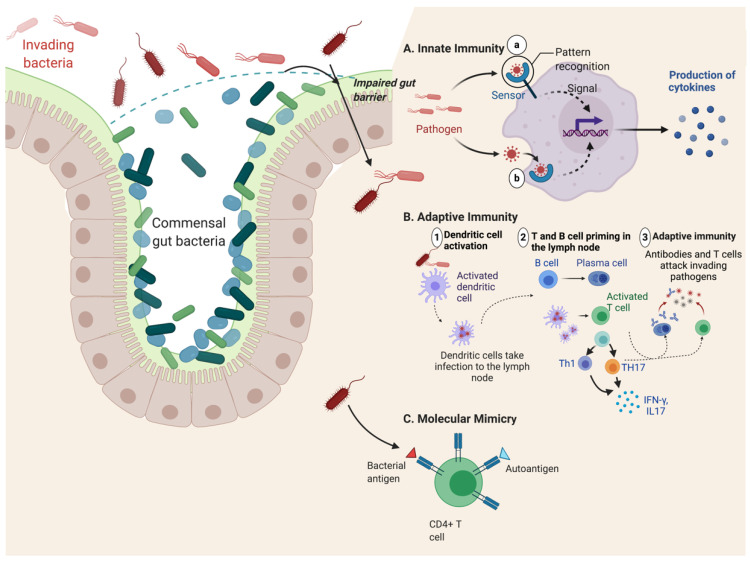
Spondyloarthritis comprises a group of inflammatory diseases of the joints and spine, with various clinical manifestations. The group includes ankylosing spondylitis, reactive arthritis, psoriatic arthritis, arthritis associated with inflammatory bowel disease, and undifferentiated spondyloarthritis. The exact etiology and pathogenesis of spondyloarthritis are still unknown, but five hypotheses explaining the pathogenesis exist. These hypotheses suggest that spondyloarthritis is caused by arthritogenic peptides, an unfolded protein response, HLA-B27 homodimer formation, malfunctioning endoplasmic reticulum aminopeptidases, and, last but not least, gut inflammation and dysbiosis. Here we discuss the five hypotheses and the evidence supporting each. In all of these hypotheses, HLA-B27 plays a central role. It is likely that a combination of these hypotheses, with HLA-B*27 taking center stage, will eventually explain the development of spondyloarthritis in predisposed individuals.
脊柱关节炎是一组关节和脊柱的炎性疾病,具有多种临床表现。该组疾病包括强直性脊柱炎、反应性关节炎、银屑病关节炎、与炎症性肠病相关的关节炎以及未分化脊柱关节炎。脊柱关节炎的确切病因和发病机制仍不清楚,但存在五种解释其发病机制的假说。这些假说认为,脊柱关节炎是由致关节炎肽、未折叠蛋白反应、HLA-B27同二聚体形成、内质网氨肽酶功能异常以及最后但同样重要的肠道炎症和微生物群失调引起的。在此,我们讨论这五种假说以及支持每种假说的证据。在所有这些假说中,HLA-B27都起着核心作用。很可能这些假说的结合,以HLA-B*27为核心,最终将解释易感个体中脊柱关节炎的发生发展。