Department of Neuroscience and Pathobiology, Research Institute of Environmental Medicine, Nagoya University, Nagoya, Aichi, 464-8601, Japan.
Department of Neuroscience and Pathobiology, Nagoya University Graduate School of Medicine, Nagoya, Aichi, 466-8550, Japan.
Cell Death Dis. 2020 Oct 23;11(10):909. doi: 10.1038/s41419-020-03116-2.
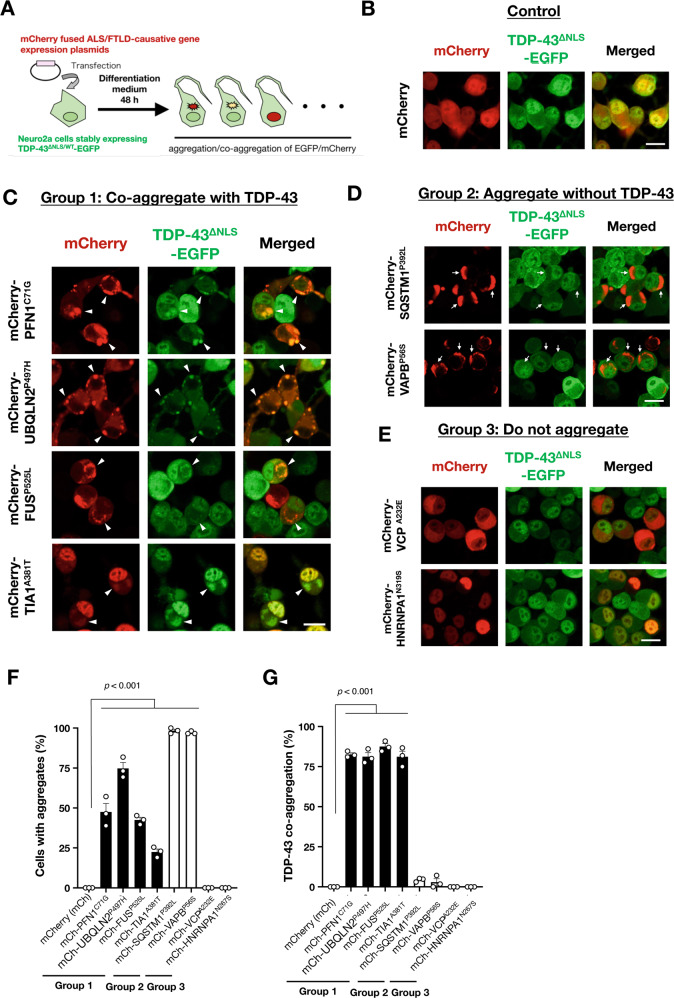
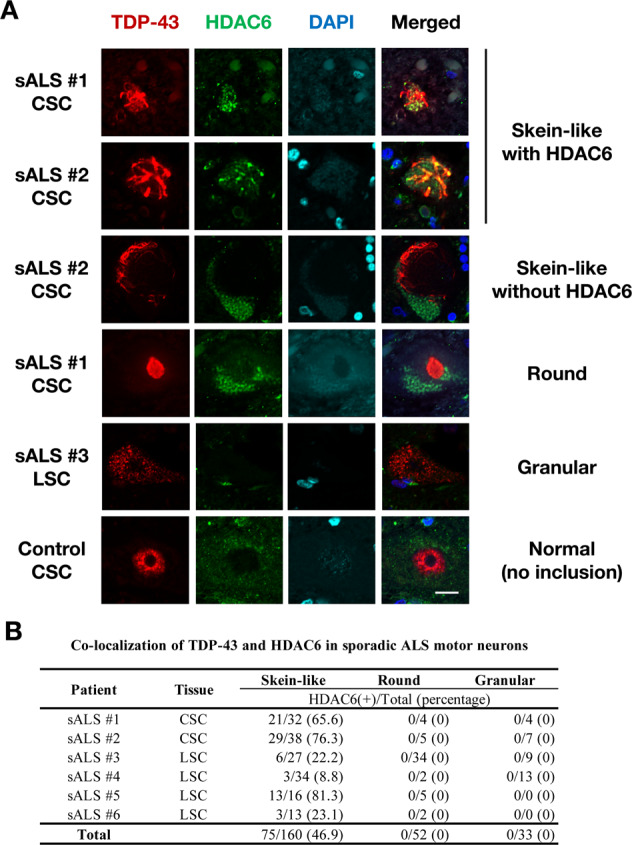
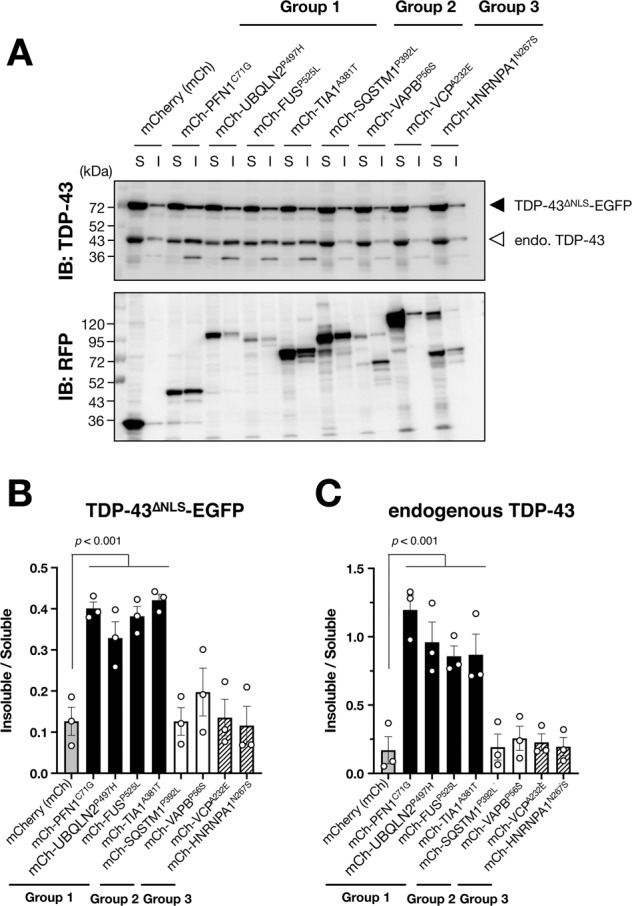
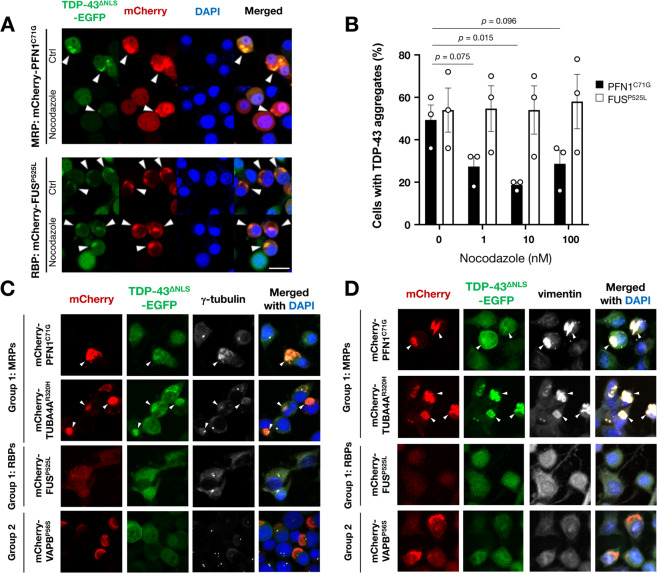
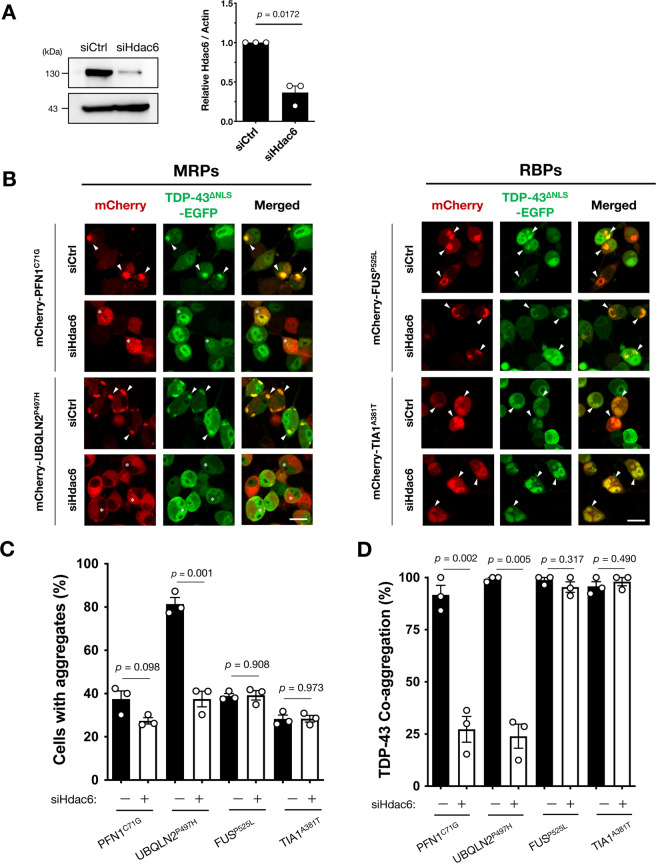
Cytoplasmic inclusion of TAR DNA-binding protein 43 (TDP-43) is a pathological hallmark of amyotrophic lateral sclerosis (ALS) and a subtype of frontotemporal lobar degeneration (FTLD). Recent studies have suggested that the formation of cytoplasmic TDP-43 aggregates is dependent on a liquid-liquid phase separation (LLPS) mechanism. However, it is unclear whether TDP-43 pathology is induced through a single intracellular mechanism such as LLPS. To identify intracellular mechanisms responsible for TDP-43 aggregation, we established a TDP-43 aggregation screening system using a cultured neuronal cell line stably expressing EGFP-fused TDP-43 and a mammalian expression library of the inherited ALS/FTLD causative genes, and performed a screening. We found that microtubule-related proteins (MRPs) and RNA-binding proteins (RBPs) co-aggregated with TDP-43. MRPs and RBPs sequestered TDP-43 into the cytoplasmic aggregates through distinct mechanisms, such as microtubules and LLPS, respectively. The MRPs-induced TDP-43 aggregates were co-localized with aggresomal markers and dependent on histone deacetylase 6 (HDAC6), suggesting that aggresome formation induced the co-aggregation. However, the MRPs-induced aggregates were not affected by 1,6-hexanediol, an LLPS inhibitor. On the other hand, the RBPs-induced TDP-43 aggregates were sensitive to 1,6-hexanediol, but not dependent on microtubules or HDAC6. In sporadic ALS patients, approximately half of skein-like TDP-43 inclusions were co-localized with HDAC6, but round and granular type inclusion were not. Moreover, HDAC6-positive and HDAC6-negative inclusions were found in the same ALS patient, suggesting that the two distinct pathways are both involved in TDP-43 pathology. Our findings suggest that at least two distinct pathways (i.e., aggresome formation and LLPS) are involved in inducing the TDP-43 pathologies.
细胞质中 TAR DNA 结合蛋白 43(TDP-43)的包涵物是肌萎缩侧索硬化症(ALS)和额颞叶变性(FTLD)的一种亚型的病理学标志。最近的研究表明,细胞质 TDP-43 聚集的形成依赖于液-液相分离(LLPS)机制。然而,尚不清楚 TDP-43 病理学是否通过 LLPS 等单一细胞内机制诱导。为了确定负责 TDP-43 聚集的细胞内机制,我们使用稳定表达 EGFP 融合 TDP-43 的培养神经元细胞系和遗传性 ALS/FTLD 致病基因的哺乳动物表达文库建立了 TDP-43 聚集筛选系统,并进行了筛选。我们发现微管相关蛋白(MRP)和 RNA 结合蛋白(RBP)与 TDP-43 共聚集。MRP 和 RBP 通过不同的机制将 TDP-43 隔离到细胞质聚集物中,例如微管和 LLPS。MRP 诱导的 TDP-43 聚集物与聚集体标志物共定位,并依赖于组蛋白去乙酰化酶 6(HDAC6),表明聚集体形成诱导了共聚集。然而,MRP 诱导的聚集物不受 LLPS 抑制剂 1,6-己二醇的影响。另一方面,RBP 诱导的 TDP-43 聚集物对 1,6-己二醇敏感,但不依赖于微管或 HDAC6。在散发性 ALS 患者中,大约一半的缠结样 TDP-43 包涵物与 HDAC6 共定位,但圆形和颗粒状包涵物则没有。此外,在同一 ALS 患者中发现了 HDAC6 阳性和 HDAC6 阴性包涵物,表明这两种不同的途径都参与了 TDP-43 病理学。我们的研究结果表明,至少有两种不同的途径(即聚集体形成和 LLPS)参与了 TDP-43 病理学的诱导。