Division of Pediatric Gastroenterology, Wilhelmina Children's Hospital, University Medical Center Utrecht, Lundlaan 6, 3584, EA, Utrecht, the Netherlands.
Department of Metabolic Diseases, Wilhelmina Children's Hospital, University Medical Center Utrecht, Lundlaan 6, 3584, EA, Utrecht, the Netherlands.
Nat Commun. 2020 Oct 23;11(1):5352. doi: 10.1038/s41467-020-19136-7.
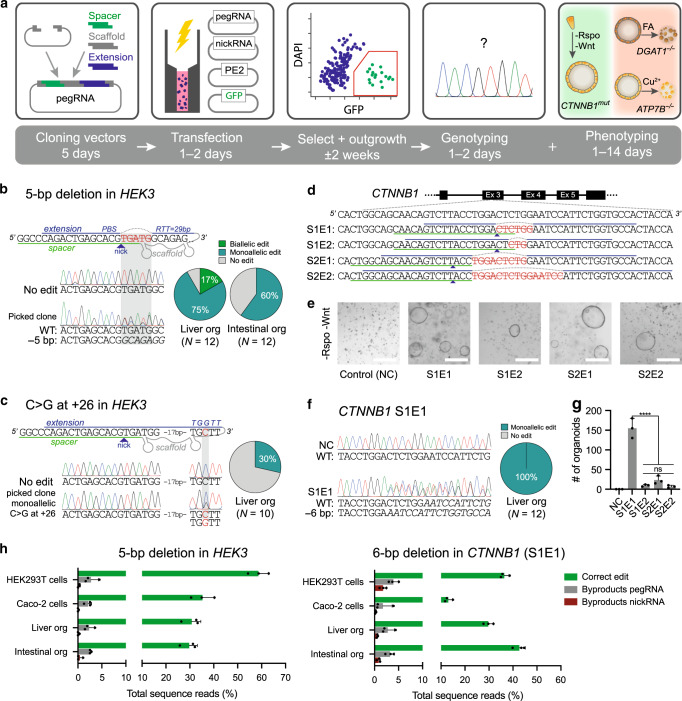
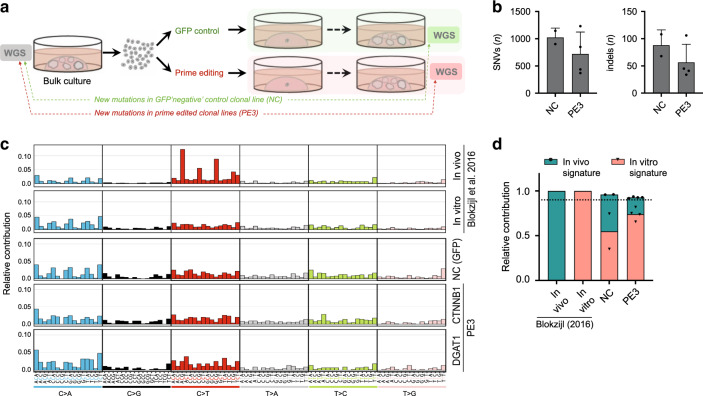
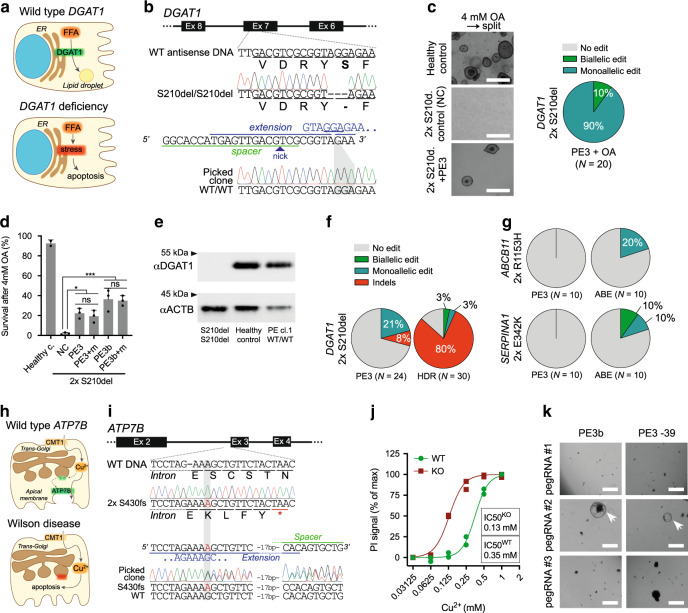
Prime editing is a recent genome editing technology using fusion proteins of Cas9-nickase and reverse transcriptase, that holds promise to correct the vast majority of genetic defects. Here, we develop prime editing for primary adult stem cells grown in organoid culture models. First, we generate precise in-frame deletions in the gene encoding β-catenin (CTNNB1) that result in proliferation independent of Wnt-stimuli, mimicking a mechanism of the development of liver cancer. Moreover, prime editing functionally recovers disease-causing mutations in intestinal organoids from patients with DGAT1-deficiency and liver organoids from a patient with Wilson disease (ATP7B). Prime editing is as efficient in 3D grown organoids as in 2D grown cell lines and offers greater precision than Cas9-mediated homology directed repair (HDR). Base editing remains more reliable than prime editing but is restricted to a subgroup of pathogenic mutations. Whole-genome sequencing of four prime-edited clonal organoid lines reveals absence of genome-wide off-target effects underscoring therapeutic potential of this versatile and precise gene editing strategy.
先导编辑是一种使用 Cas9-核酸酶和逆转录酶融合蛋白的新兴基因组编辑技术,有望纠正绝大多数遗传缺陷。在这里,我们在类器官培养模型中生长的原代成年干细胞中开发了先导编辑。首先,我们在编码 β-连环蛋白 (CTNNB1) 的基因中产生精确的框内缺失,导致对 Wnt 刺激不依赖的增殖,模拟肝癌的发展机制。此外,先导编辑在具有 DGAT1 缺乏症的肠类器官和威尔逊病(ATP7B)患者的肝类器官中功能性地恢复了致病突变。先导编辑在 3D 生长的类器官中的效率与在 2D 生长的细胞系中一样高,并且比 Cas9 介导的同源定向修复 (HDR) 具有更高的精度。碱基编辑比先导编辑更可靠,但仅限于一组致病突变。对四个先导编辑克隆类器官系的全基因组测序显示不存在全基因组脱靶效应,这突显了这种多功能和精确的基因编辑策略的治疗潜力。