Centre for Genomic Regulation (CRG), The Barcelona Institute of Science and Technology, Dr. Aiguader 88, 08003, Barcelona, Spain.
Department of Experimental and Health Sciences, Universitat Pompeu Fabra (UPF), 08003, Barcelona, Spain.
BMC Biol. 2020 Oct 26;18(1):148. doi: 10.1186/s12915-020-00881-6.
Olive tree (Olea europaea L. subsp. europaea, Oleaceae) has been the most emblematic perennial crop for Mediterranean countries since its domestication around 6000 years ago in the Levant. Two taxonomic varieties are currently recognized: cultivated (var. europaea) and wild (var. sylvestris) trees. However, it remains unclear whether olive cultivars derive from a single initial domestication event followed by secondary diversification, or whether cultivated lineages are the result of more than a single, independent primary domestication event. To shed light into the recent evolution and domestication of the olive tree, here we analyze a group of newly sequenced and available genomes using a phylogenomics and population genomics framework.
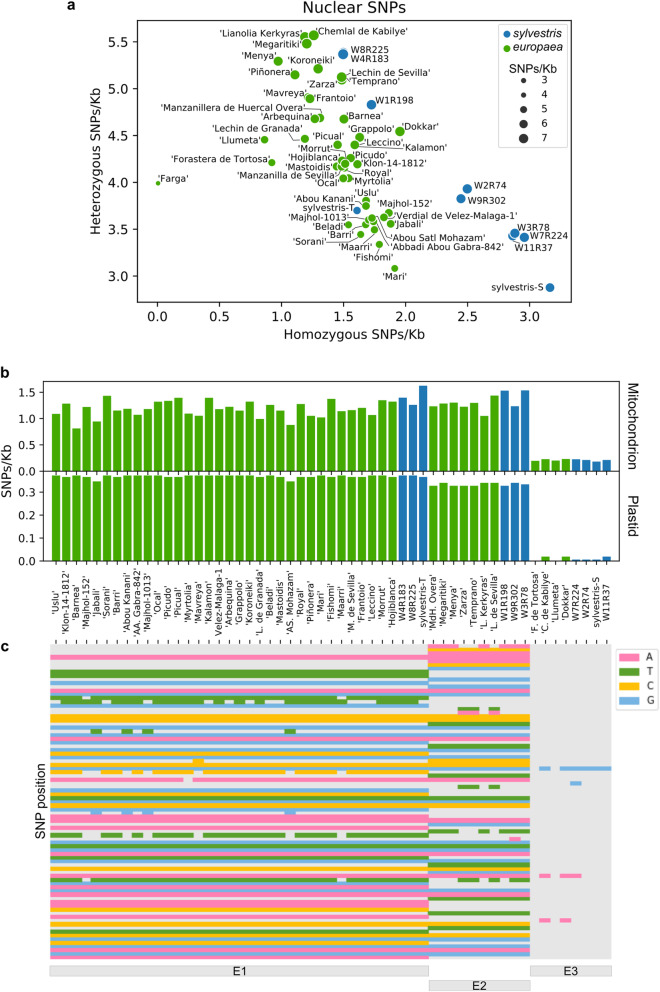
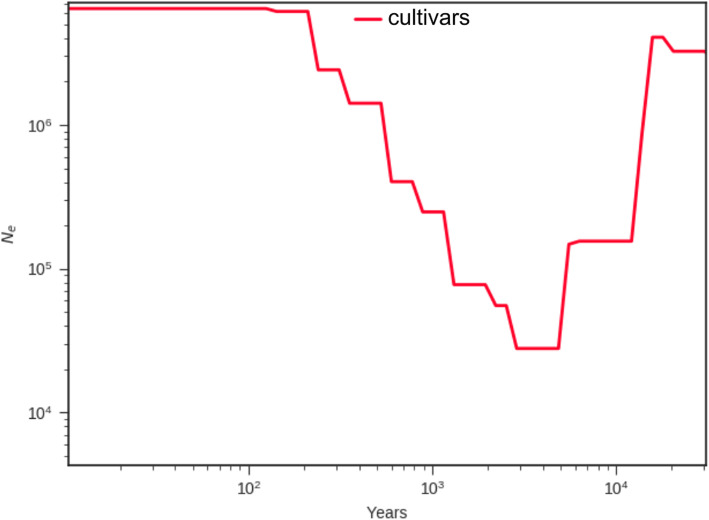
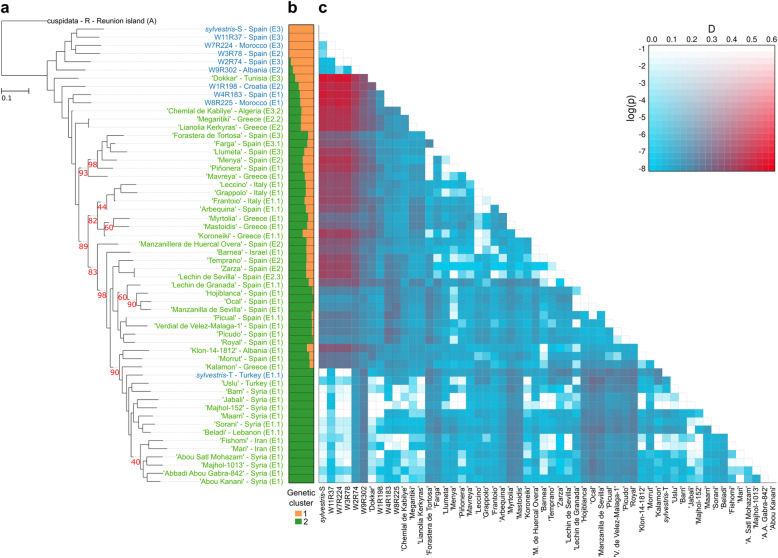
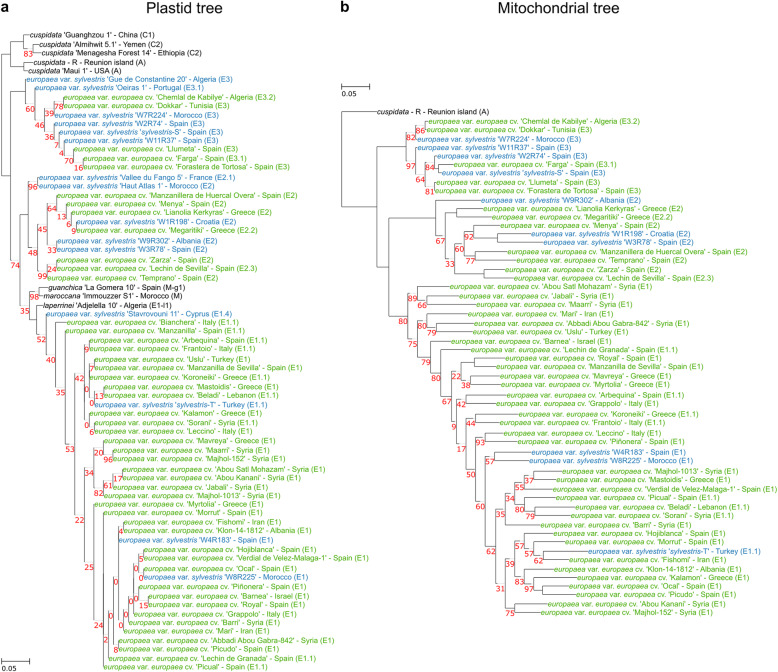
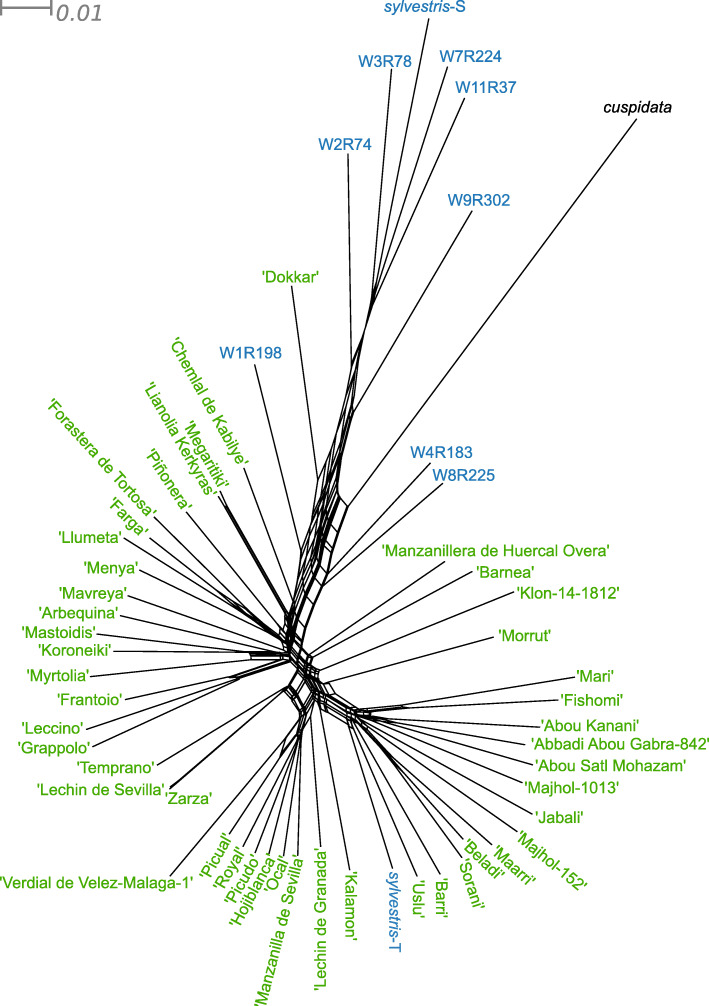
We improved the assembly and annotation of the reference genome, newly sequenced the genomes of twelve individuals: ten var. europaea, one var. sylvestris, and one outgroup taxon (subsp. cuspidata)-and assembled a dataset comprising whole genome data from 46 var. europaea and 10 var. sylvestris. Phylogenomic and population structure analyses support a continuous process of olive tree domestication, involving a major domestication event, followed by recurrent independent genetic admixture events with wild populations across the Mediterranean Basin. Cultivated olives exhibit only slightly lower levels of genetic diversity than wild forms, which can be partially explained by the occurrence of a mild population bottleneck 3000-14,000 years ago during the primary domestication period, followed by recurrent introgression from wild populations. Genes associated with stress response and developmental processes were positively selected in cultivars, but we did not find evidence that genes involved in fruit size or oil content were under positive selection. This suggests that complex selective processes other than directional selection of a few genes are in place.
Altogether, our results suggest that a primary domestication area in the eastern Mediterranean basin was followed by numerous secondary events across most countries of southern Europe and northern Africa, often involving genetic admixture with genetically rich wild populations, particularly from the western Mediterranean Basin.
橄榄树(Olea europaea L. subsp. europaea,木樨科)自约 6000 年前在黎凡特地区被驯化以来,一直是地中海国家最具代表性的多年生作物。目前公认有两个分类品种:栽培种(var. europaea)和野生种(var. sylvestris)。然而,橄榄品种是源于单一的初始驯化事件,随后发生了二次多样化,还是栽培品系是多次独立的初始驯化事件的结果,目前仍不清楚。为了深入了解橄榄树的近期进化和驯化,我们在此使用系统基因组学和群体基因组学框架分析了一组新测序和可用的基因组。
我们改进了参考基因组的组装和注释,对 12 个个体的基因组进行了新的测序:10 个 var. europaea、1 个 var. sylvestris 和 1 个外群分类群(subsp. cuspidata)-并组装了一个包含来自 46 个 var. europaea 和 10 个 var. sylvestris 的全基因组数据的数据集。系统基因组学和群体结构分析支持橄榄树驯化的连续过程,涉及一个主要的驯化事件,随后是与地中海盆地各地的野生种群反复发生的独立遗传混合事件。栽培橄榄的遗传多样性仅略低于野生形式,这部分可以解释为在 3000-14000 年前的主要驯化时期发生了轻微的种群瓶颈,随后来自野生种群的反复基因渗入。与应激反应和发育过程相关的基因在栽培品种中受到正选择,但我们没有发现与果实大小或油含量相关的基因受到正选择的证据。这表明,除了少数基因的定向选择外,还有其他复杂的选择过程在起作用。
总之,我们的研究结果表明,在东地中海盆地存在一个主要的驯化区域,随后在欧洲南部和北非的大多数国家发生了多次次要事件,这些事件通常涉及与遗传丰富的野生种群的遗传混合,特别是来自地中海西部的野生种群。