Naseer Muhammad Imran, Abdulkareem Angham Abdulrahman, Jan Mohammed M, Chaudhary Adeel G, Alharazy Shatha, AlQahtani Mohammad H
Center of Excellence in Genomic Medicine Research, King Abdulaziz University, Jeddah, Saudi Arabia.
Department of Medical Laboratory Technology, Faculty of Applied Medical Sciences, King Abdulaziz University, 21589 Jeddah, Saudi Arabia.
Saudi J Biol Sci. 2020 Nov;27(11):3125-3131. doi: 10.1016/j.sjbs.2020.09.033. Epub 2020 Sep 23.
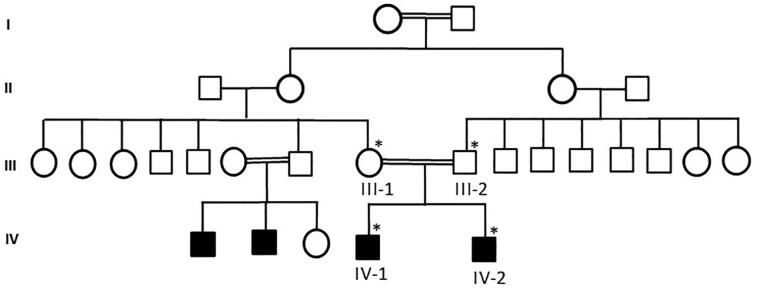
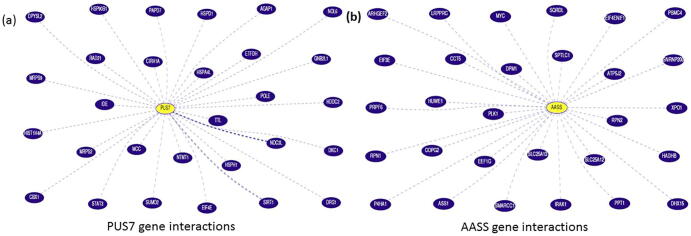
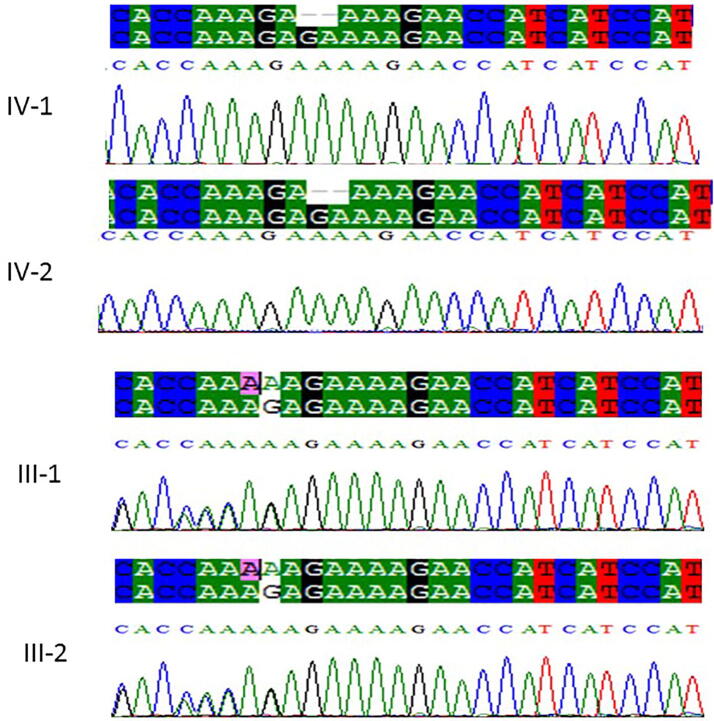
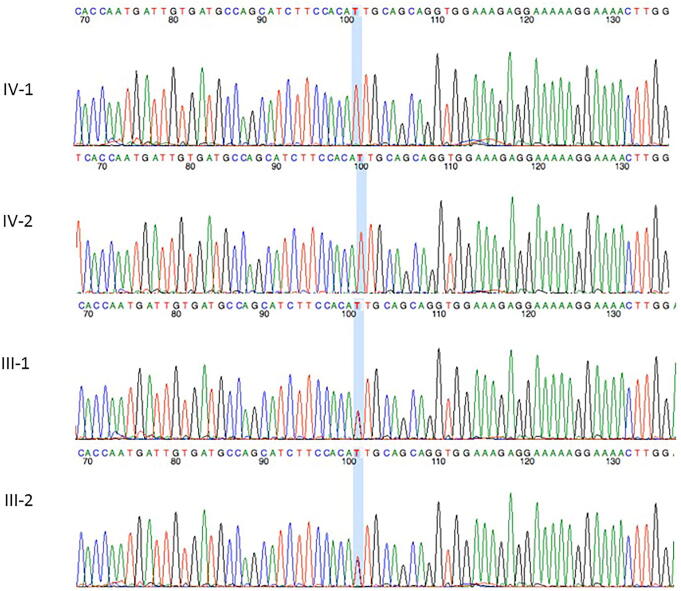
Intellectual developmental disorder with abnormal behavior, microcephaly and short stature (IDDABS), (OMIM# 618342) is an autosomal recessive condition described as developmental delay, poor or absent speech, intellectual disability, short stature, mild to progressive microcephaly, delayed psychomotor development, hyperactivity, seizure, along with mild to swear aggressive behavior. Homozygous frameshift mutation in Pseudouridine Synthase 7, Putative; (PUS7) OMIM# 616,261 NM_019042.3 and splice acceptor variants in Alpha-Aminoadipic Semialdehyde Synthase; (AASS) OMIM# 605,113 NM_005763.3 was funded. Whole exome sequencing (WES) technique was used as tool to identify the molecular diagnostic test. Different bioinformatics analysis done for WES data and we identified two novel mutations one as frameshift mutation c.606_607delGA, p.Ser282CysfsTer9 in the gene and splice acceptor variants c.1767-1 G > A in the gene has been reported. The pattern of family segregation maintained the pathogenicity of this variation associated with abnormal behavior, intellectual developmental disorder, microcephaly along with short stature IDDABS. Further, the WES data was validated in the family having other affected individuals and healthy controls (n = 100) was done using Sanger sequencing. Finally, our results further explained the role of WES in the disease diagnosis and elucidated that the mutation in and genes may lead an important role for the development of IDDABS in Saudi family.
伴有异常行为、小头畸形和身材矮小的智力发育障碍(IDDABS)(OMIM#618342)是一种常染色体隐性疾病,其特征为发育迟缓、语言能力差或无语言能力、智力残疾、身材矮小、轻度至进行性小头畸形、精神运动发育迟缓、多动、癫痫发作,以及轻度至严重的攻击性行为。假尿苷合酶7(推定)(PUS7)(OMIM#616261,NM_019042.3)中的纯合移码突变和α-氨基己二酸半醛合酶(AASS)(OMIM#605113,NM_005763.3)中的剪接受体变异已得到证实。全外显子组测序(WES)技术被用作识别分子诊断测试的工具。对WES数据进行了不同的生物信息学分析,我们鉴定出两个新突变,一个是基因中的移码突变c.606_607delGA,p.Ser282CysfsTer9,另一个是基因中的剪接受体变异c.1767-1 G>A。家系分离模式证实了这种与异常行为、智力发育障碍、小头畸形以及身材矮小的IDDABS相关变异的致病性。此外,在有其他受影响个体的家系中对WES数据进行了验证,并使用桑格测序法对100名健康对照进行了检测。最后,我们的结果进一步解释了WES在疾病诊断中的作用,并阐明了沙特家族中这两个基因的突变可能在IDDABS发病过程中起重要作用。