Liu Sheng, Shen Jikui, Fang Shuyi, Li Kailing, Liu Juli, Yang Lei, Hu Chang-Deng, Wan Jun
Department of Medical and Molecular Genetics, Indiana University School of Medicine, Indianapolis, IN, United States.
Collaborative Core for Cancer Bioinformatics (C3B) shared by Indiana University Simon Comprehensive Cancer Center and Purdue University Center for Cancer Research, Indianapolis, IN, United States.
Front Microbiol. 2020 Sep 25;11:593548. doi: 10.3389/fmicb.2020.593548. eCollection 2020.
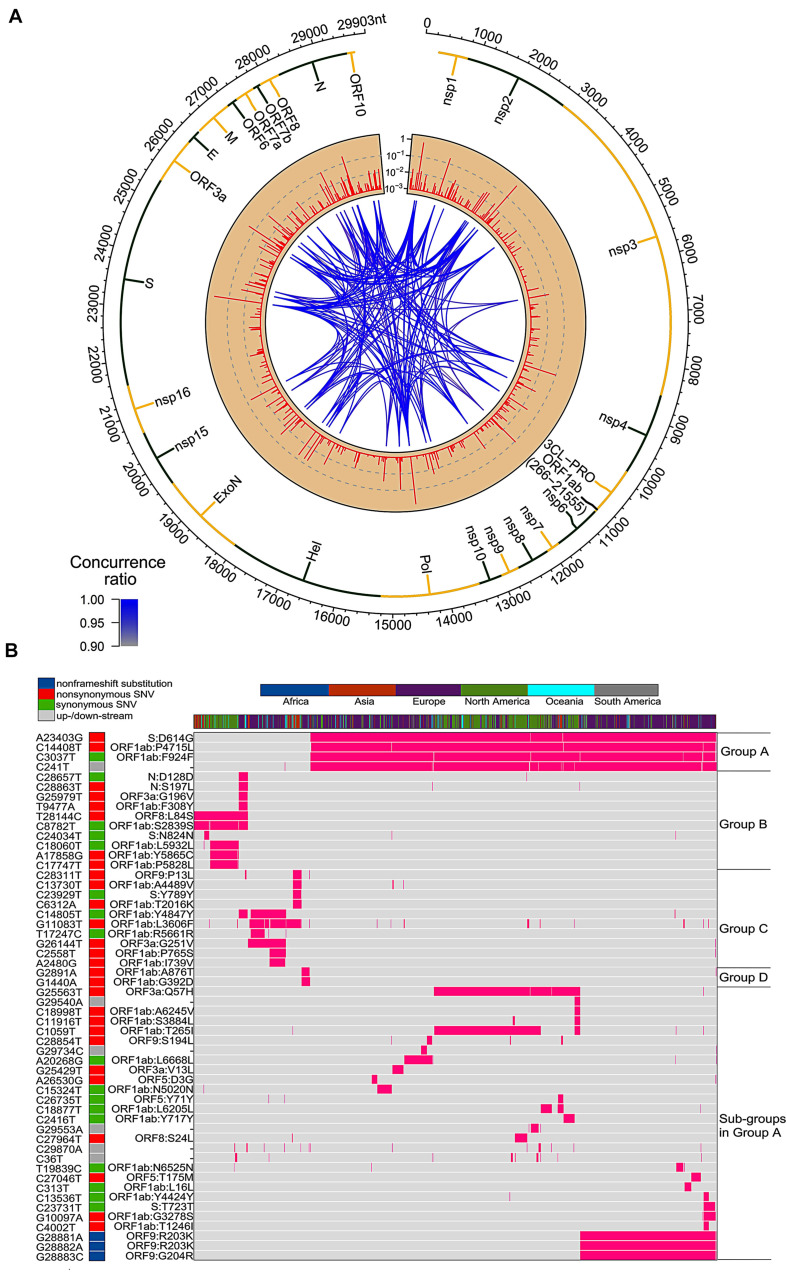
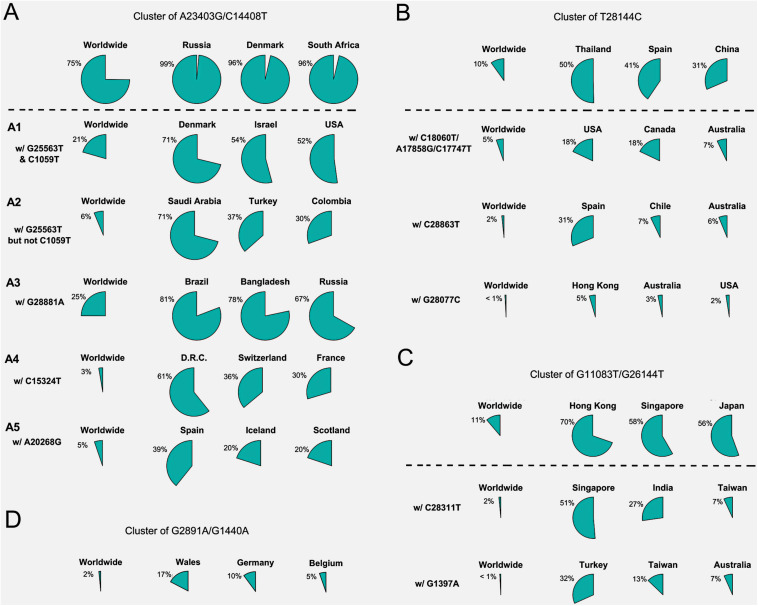
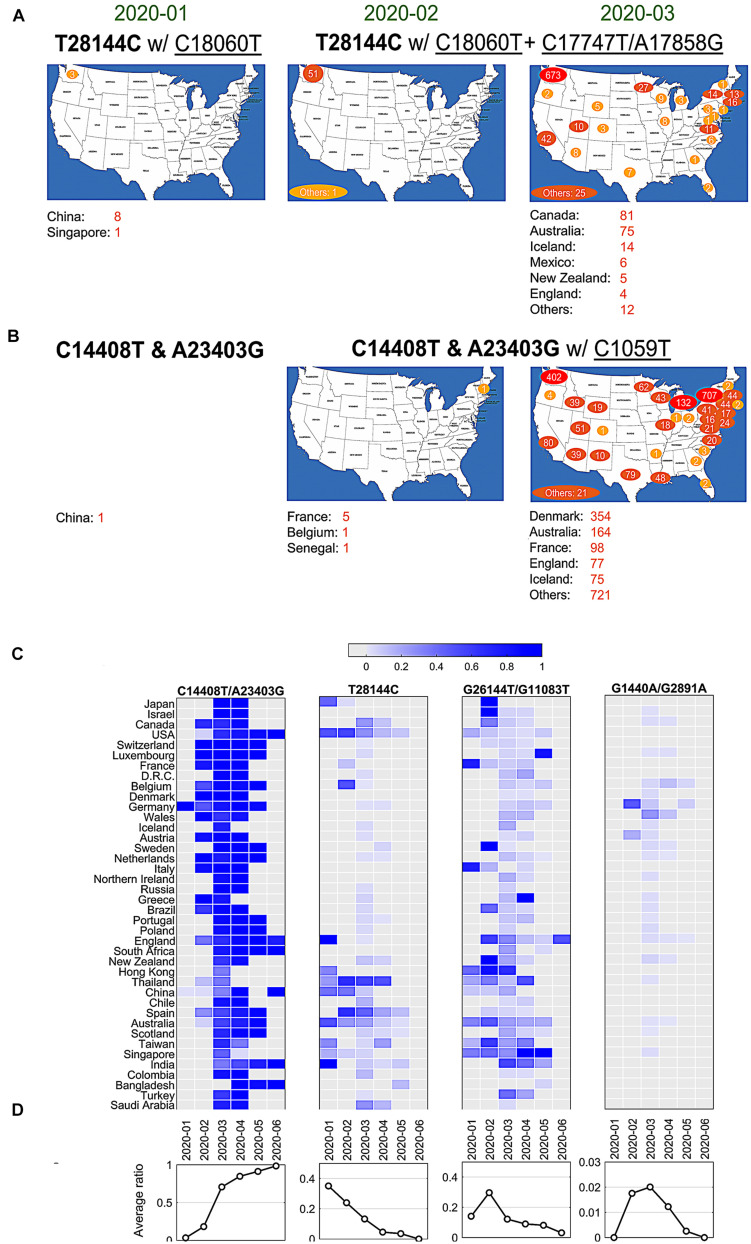
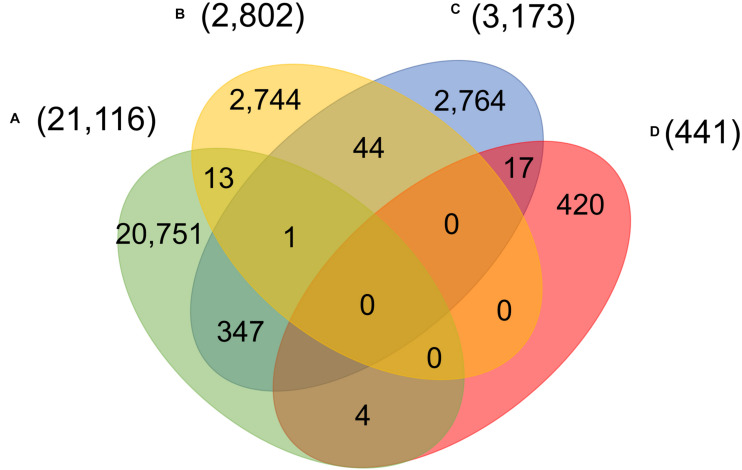
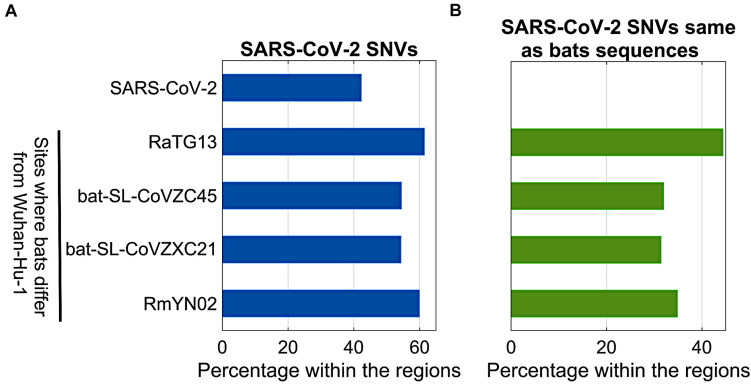
Four signature groups of frequently occurred single-nucleotide variants (SNVs) were identified in over twenty-eight thousand high-quality and high-coverage SARS-CoV-2 complete genome sequences, representing different viral strains. Some SNVs predominated but were mutually exclusively presented in patients from different countries and areas. These major SNV signatures exhibited distinguishable evolution patterns over time. A few hundred patients were detected with multiple viral strain-representing mutations simultaneously, which may stand for possible co-infection or potential homogenous recombination of SARS-CoV-2 in environment or within the viral host. Interestingly nucleotide substitutions among SARS-CoV-2 genomes tended to switch between bat RaTG13 coronavirus sequence and Wuhan-Hu-1 genome, indicating the higher genetic instability or tolerance of mutations on those sites or suggesting that major viral strains might exist between Wuhan-Hu-1 and RaTG13 coronavirus.
在超过两万八千个高质量、高覆盖度的新型冠状病毒(SARS-CoV-2)全基因组序列中,鉴定出了四组常见的单核苷酸变异(SNV)特征群,它们代表了不同的病毒株。一些SNV占主导地位,但在来自不同国家和地区的患者中相互排斥出现。这些主要的SNV特征随着时间呈现出可区分的进化模式。检测到数百名患者同时携带多种代表病毒株的突变,这可能代表了新型冠状病毒在环境中或病毒宿主内可能的共同感染或潜在的同源重组。有趣的是,新型冠状病毒基因组之间的核苷酸替换倾向于在蝙蝠RaTG13冠状病毒序列和武汉-胡-1基因组之间切换,这表明这些位点上的遗传不稳定性或对突变的耐受性较高,或者表明武汉-胡-1和RaTG13冠状病毒之间可能存在主要的病毒株。