Ontoria-Oviedo Imelda, Palacios Itziar, Panadero Joaquín, Sánchez Belén, García-García Francisco, López-Cerdán Adolfo, Dorronsoro Akaitz, Castellano Delia, Rodríguez-Borlado Luis, Bernad Antonio, Sepúlveda Pilar
Regenerative Medicine and Heart Transplantation Unit, Instituto de Investigación Sanitaria La Fe, 46026 Valencia, Spain.
Coretherapix, SLU, Tres Cantos, 28760 Madrid, Spain.
Stem Cells Int. 2020 Oct 10;2020:8872009. doi: 10.1155/2020/8872009. eCollection 2020.
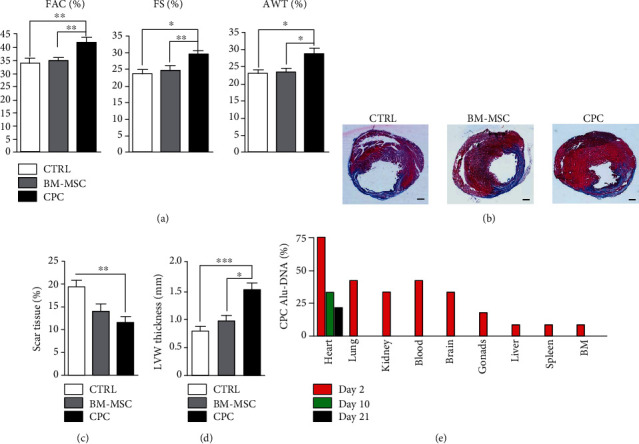
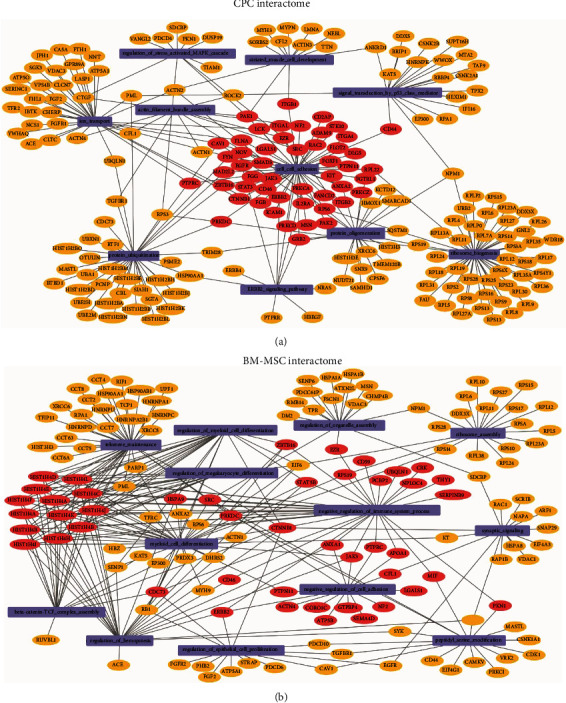
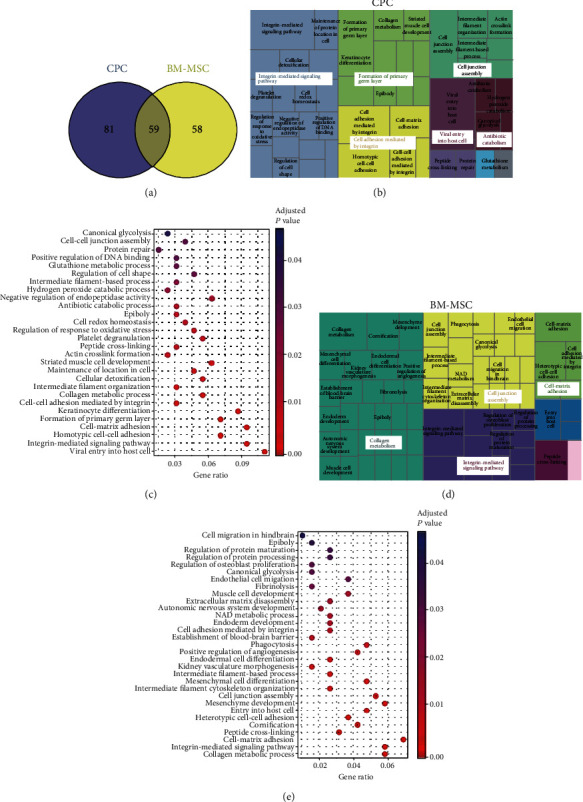
Human bone marrow mesenchymal stem cells (BM-MSCs) and cardiac progenitor/stem cells (CPCs) have been extensively studied as a potential therapeutic treatment for myocardial infarction (MI). Previous reports suggest that lower doses of CPCs are needed to improve cardiac function relative to their bone marrow counterparts. Here, we confirmed this observations and investigated the surface protein expression profile that might explain this effect. Myocardial infarction was performed in nude rats by permanent ligation of the left coronary artery. Cardiac function and infarct size before and after cell transplantation were evaluated by echocardiography and morphometry, respectively. The CPC and BM-MSC receptome were analyzed by proteomic analysis of biotin-labeled surface proteins. Rats transplanted with CPCs showed a greater improvement in cardiac function after MI than those transplanted with BM-MSCs, and this was associated with a smaller infarct size. Analysis of the receptome of CPCs and BM-MSCs showed that gene ontology biological processes and KEGG pathways associated with adhesion mechanisms were upregulated in CPCs compared with BM-MSCs. Moreover, the membrane protein interactome in CPCs showed a strong relationship with biological processes related to cell adhesion whereas the BM-MSCs interactome was more related to immune regulation processes. We conclude that the stronger capacity of CPCs over BM-MSCs to engraft in the infarcted area is likely linked to a more pronounced cell adhesion expression program.
人骨髓间充质干细胞(BM-MSCs)和心脏祖细胞/干细胞(CPCs)作为心肌梗死(MI)的一种潜在治疗方法已被广泛研究。先前的报告表明,相对于其骨髓对应物,改善心脏功能所需的CPCs剂量更低。在此,我们证实了这一观察结果,并研究了可能解释这种效应的表面蛋白表达谱。通过永久性结扎左冠状动脉在裸鼠中制造心肌梗死。分别通过超声心动图和形态测量法评估细胞移植前后的心脏功能和梗死面积。通过对生物素标记的表面蛋白进行蛋白质组学分析来分析CPCs和BM-MSCs的受体组。与移植BM-MSCs的大鼠相比,移植CPCs的大鼠在心肌梗死后心脏功能改善更大,且这与更小的梗死面积相关。对CPCs和BM-MSCs受体组的分析表明,与黏附机制相关的基因本体生物学过程和KEGG通路在CPCs中比在BM-MSCs中上调。此外,CPCs中的膜蛋白相互作用组与细胞黏附相关的生物学过程显示出强烈的关系,而BM-MSCs相互作用组与免疫调节过程更相关。我们得出结论,CPCs比BM-MSCs在梗死区域中更强的植入能力可能与更明显的细胞黏附表达程序有关。