Mbanefo Evaristus C, Agbo Chinwike Terry, Zhao Yuanlong, Lamanna Olivia K, Thai Kim H, Karinshak Shannon E, Khan Mohammad Afzal, Fu Chi-Ling, Odegaard Justin I, Saltikova Irina V, Smout Michael J, Pennington Luke F, Nicolls Mark R, Jardetzky Theodore S, Loukas Alex, Brindley Paul J, Falcone Franco H, Hsieh Michael H
Division of Urology, Department of Surgery, Children's National Hospital, West Wing, 4th Floor, 111 Michigan Avenue NW, Washington, DC 20010 USA.
Carney Hospital, Boston, MA USA.
Infect Agent Cancer. 2020 Oct 22;15:63. doi: 10.1186/s13027-020-00331-6. eCollection 2020.
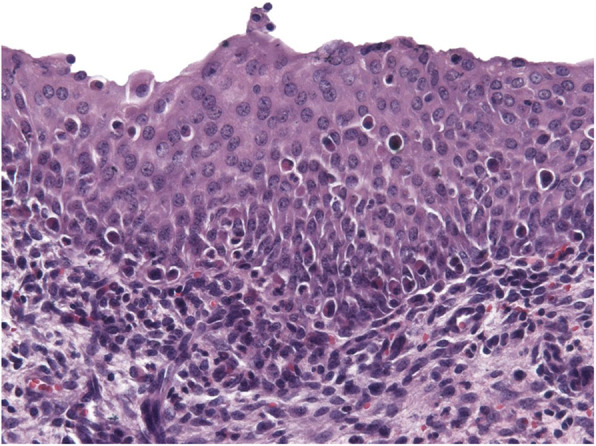
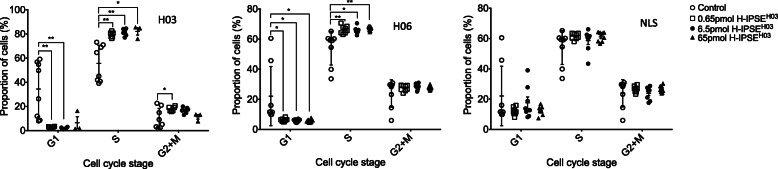
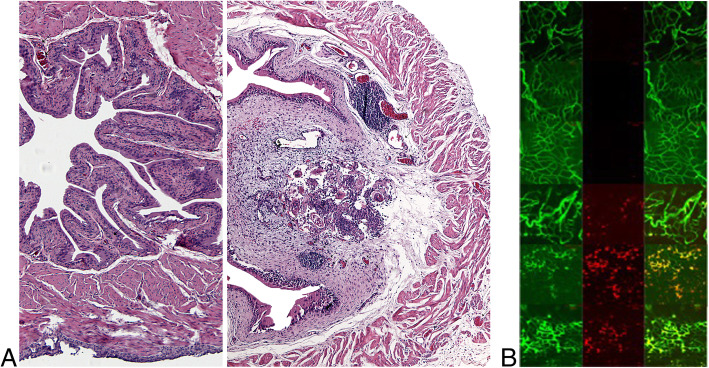
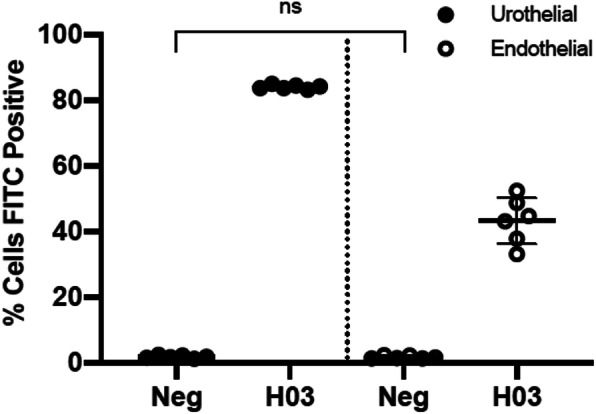
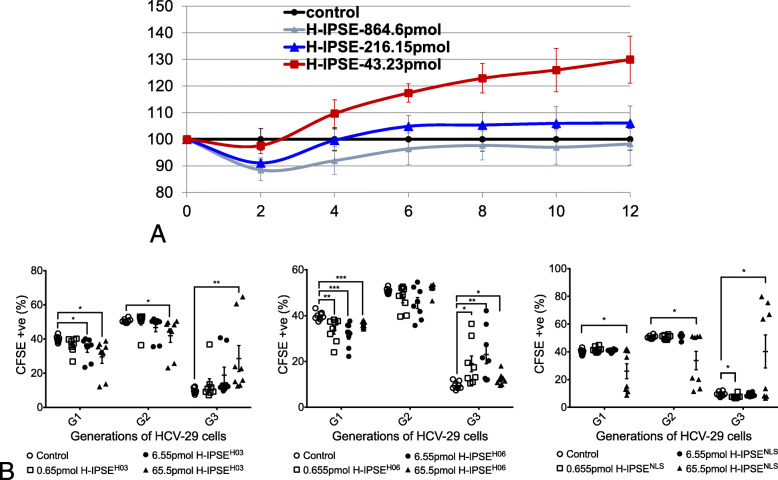
the helminth causing urogenital schistosomiasis, is a known bladder carcinogen. Despite the causal link between and bladder cancer, the underlying mechanisms are poorly understood. oviposition in the bladder is associated with angiogenesis and urothelial hyperplasia. These changes may be pre-carcinogenic events in the bladder. We hypothesized that the Interleukin-4-inducing principle of eggs (IPSE), an egg-secreted "infiltrin" protein that enters host cell nuclei to alter cellular activity, is sufficient to induce angiogenesis and urothelial hyperplasia. Methods: Mouse bladders injected with eggs were analyzed via microscopy for angiogenesis and urothelial hyperplasia. Endothelial and urothelial cell lines were incubated with recombinant IPSE protein or an IPSE mutant protein that lacks the native nuclear localization sequence (NLS-) and proliferation measured using CFSE staining and real-time monitoring of cell growth. IPSE's effects on urothelial cell cycle status was assayed through propidium iodide staining. Endothelial and urothelial cell uptake of fluorophore-labeled IPSE was measured. Findings: Injection of eggs into the bladder triggers angiogenesis, enhances leakiness of bladder blood vessels, and drives urothelial hyperplasia. Wild type IPSE, but not NLS-, increases proliferation of endothelial and urothelial cells and skews urothelial cells towards S phase. Finally, IPSE is internalized by both endothelial and urothelial cells. Interpretation: IPSE drives endothelial and urothelial proliferation, which may depend on internalization of the molecule. The urothelial effects of IPSE depend upon its NLS. Thus, IPSE is a candidate pro-carcinogenic molecule of
acts as a bladder carcinogen through unclear mechanisms. The homolog of IPSE, a secreted schistosome egg immunomodulatory molecule, enhances angiogenesis and urothelial proliferation, hallmarks of pre-carcinogenesis, suggesting IPSE is a key pro-oncogenic molecule of
导致泌尿生殖系统血吸虫病的蠕虫是一种已知的膀胱癌致癌物。尽管[蠕虫名称]与膀胱癌之间存在因果联系,但其潜在机制仍知之甚少。[蠕虫名称]在膀胱中的产卵与血管生成和尿路上皮增生有关。这些变化可能是膀胱中的致癌前事件。我们假设,[蠕虫名称]卵的白细胞介素-4诱导原理(IPSE),一种由[蠕虫名称]卵分泌的“渗透素”蛋白,可进入宿主细胞核以改变细胞活性,足以诱导血管生成和尿路上皮增生。
通过显微镜分析注射了[蠕虫名称]卵的小鼠膀胱的血管生成和尿路上皮增生情况。将内皮细胞和尿路上皮细胞系与重组IPSE蛋白或缺乏天然核定位序列的IPSE突变蛋白(NLS-)一起孵育,并使用CFSE染色和细胞生长实时监测来测量增殖情况。通过碘化丙啶染色测定IPSE对尿路上皮细胞周期状态的影响。测量荧光团标记的IPSE在内皮细胞和尿路上皮细胞中的摄取情况。
将[蠕虫名称]卵注射到膀胱中会引发血管生成,增强膀胱血管的渗漏,并促使尿路上皮增生。野生型IPSE而非NLS-可增加内皮细胞和尿路上皮细胞的增殖,并使尿路上皮细胞偏向S期。最后,IPSE被内皮细胞和尿路上皮细胞内化。
IPSE驱动内皮细胞和尿路上皮细胞增殖,这可能取决于该分子的内化。IPSE对尿路上皮的作用取决于其核定位序列。因此,IPSE是[蠕虫名称]的一种潜在致癌分子候选物。
[蠕虫名称]通过不明机制充当膀胱癌致癌物。IPSE的[蠕虫名称]同源物是一种分泌的血吸虫卵免疫调节分子,可增强血管生成和尿路上皮增殖,这是致癌前的标志,表明IPSE是[蠕虫名称]的关键促癌分子。