Wu Yinan, Yu Chengcheng, Luo Meng, Cen Chen, Qiu Jili, Zhang Suzhan, Hu Kaimin
Department of Breast Surgery, The Second Affiliated Hospital, Zhejiang University School of Medicine, Hangzhou, China.
The Key Laboratory of Cancer Prevention and Intervention, China National Ministry of Education, Zhejiang University School of Medicine, Hangzhou, China.
Front Oncol. 2020 Sep 25;10:571127. doi: 10.3389/fonc.2020.571127. eCollection 2020.
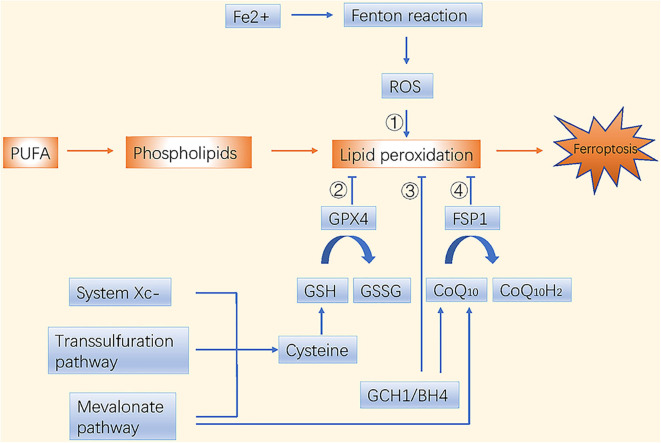
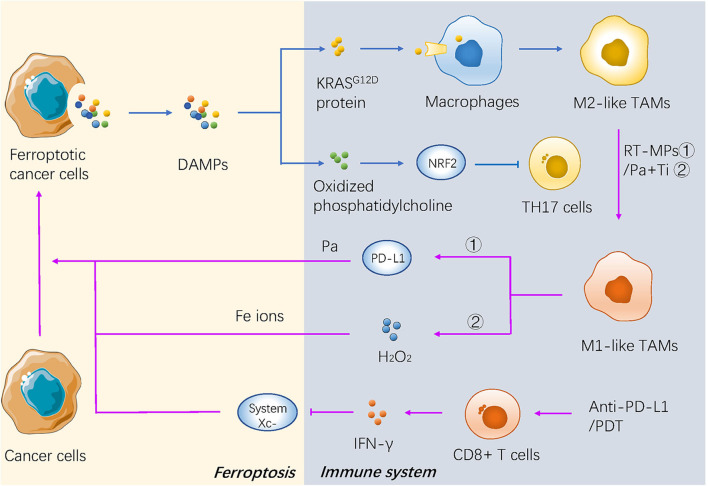
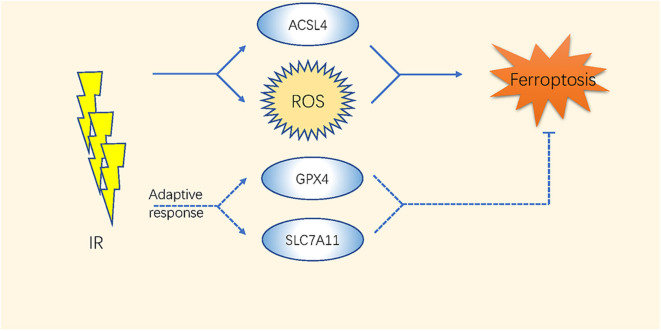
Ferroptosis is a newly described type of programmed cell death and intensively related to both maintaining homeostasis and the development of diseases, especially cancers. Inducing ferroptosis leads to mitochondrial dysfunction and toxic lipid peroxidation in cells, which plays a pivotal role in suppressing cancer growth and progression. Here, we reviewed the existing studies about the molecular mechanisms of ferroptosis involved in different antitumor treatments, such as chemotherapy, targeted therapy, radiotherapy, and immunotherapy. We focused in particular on the distinct combinatorial therapeutic effects such as the synergistic sensitization effect and the drug-resistance reversal achieved when using ferroptosis inducers with conventional cancer therapy. Finally, we discussed the challenges and opportunities in clinical applications of ferroptosis. The application of nanotechnolgy and other novel technologies may provide a new direction in ferroptosis-driven cancer therapies.
铁死亡是一种新描述的程序性细胞死亡类型,与维持体内平衡和疾病尤其是癌症的发展密切相关。诱导铁死亡会导致细胞内线粒体功能障碍和有毒脂质过氧化,这在抑制癌症生长和进展中起关键作用。在此,我们综述了现有关于铁死亡分子机制的研究,这些机制涉及不同的抗肿瘤治疗,如化疗、靶向治疗、放疗和免疫治疗。我们特别关注了独特的联合治疗效果,例如使用铁死亡诱导剂与传统癌症治疗时所实现的协同增敏作用和耐药逆转。最后,我们讨论了铁死亡临床应用中的挑战与机遇。纳米技术和其他新技术的应用可能为铁死亡驱动的癌症治疗提供新方向。