Qi Tao, Wu Fujian, Xie Yuquan, Gao Siqi, Li Miaomiao, Pu Jun, Li Dali, Lan Feng, Wang Yongming
State Key Laboratory of Genetic Engineering, School of Life Sciences, Zhongshan Hospital, Fudan University, Shanghai, China.
State Key Laboratory of Cardiovascular Disease, Fuwai Hospital, National Center for Cardiovascular Diseases, Chinese Academy of Medical Sciences and Peking Union Medical College, Beijing, China.
Front Cell Dev Biol. 2020 Sep 25;8:590581. doi: 10.3389/fcell.2020.590581. eCollection 2020.
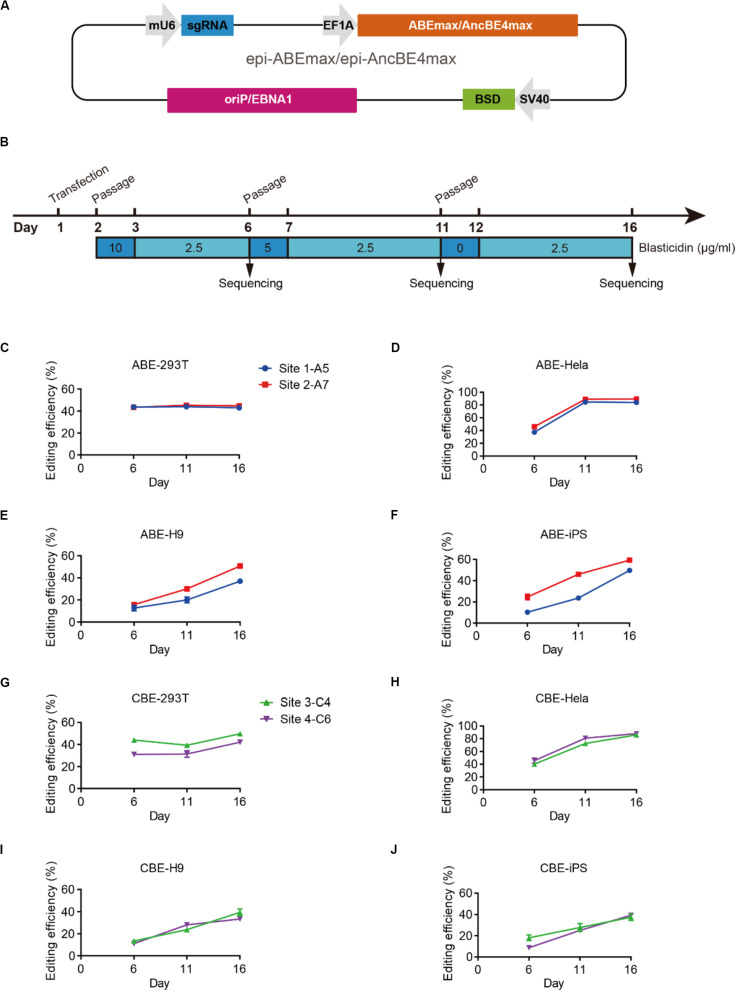
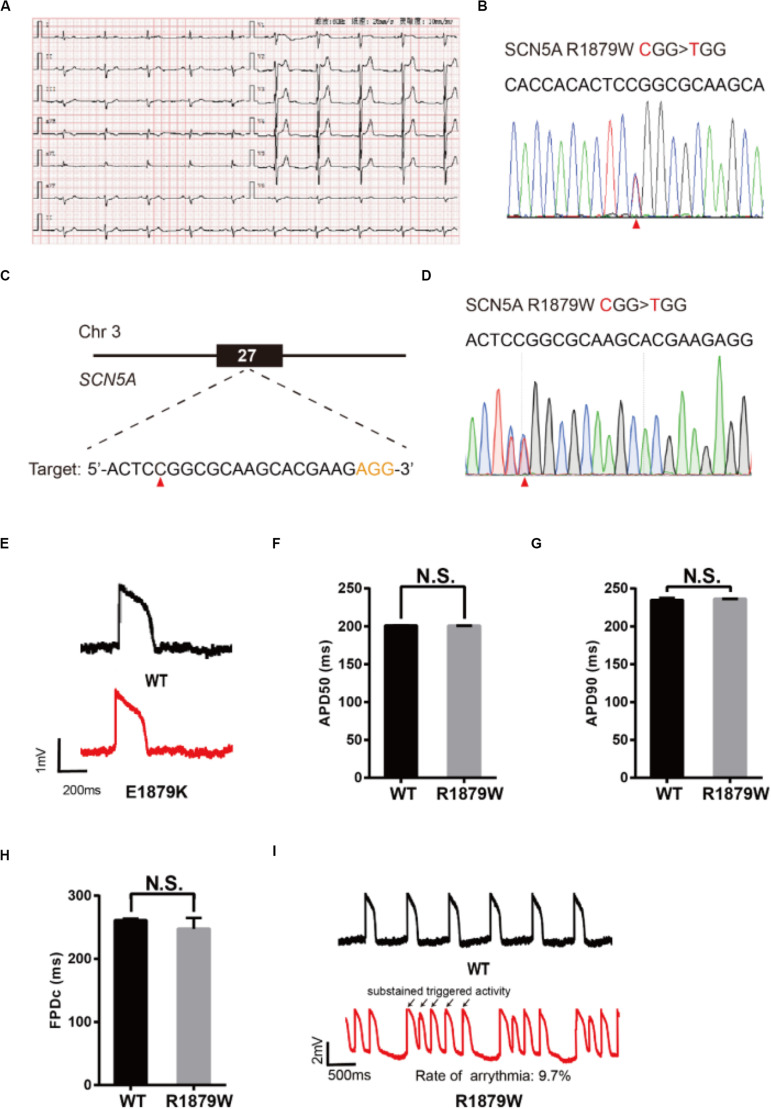
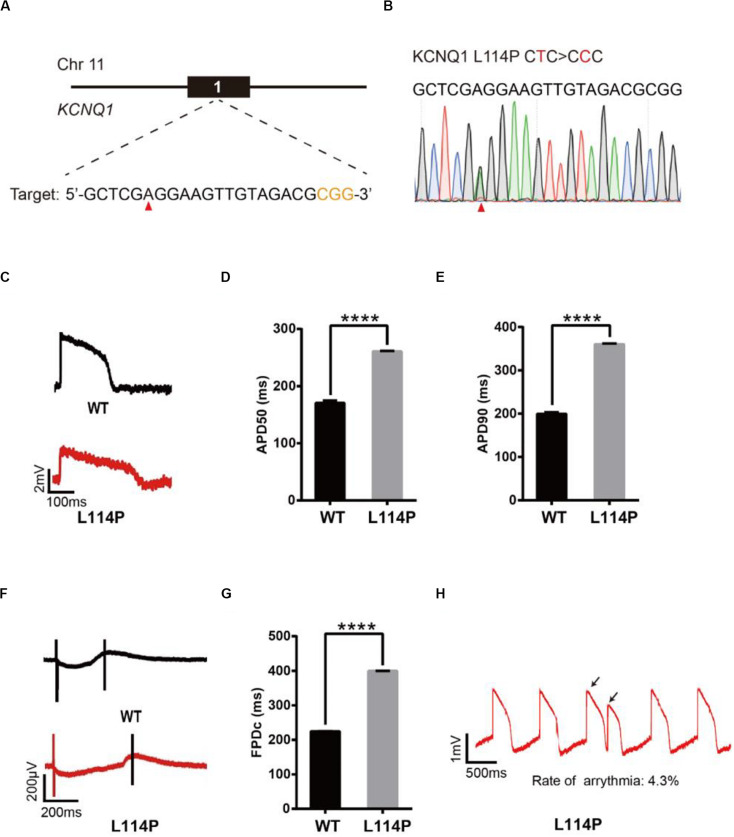
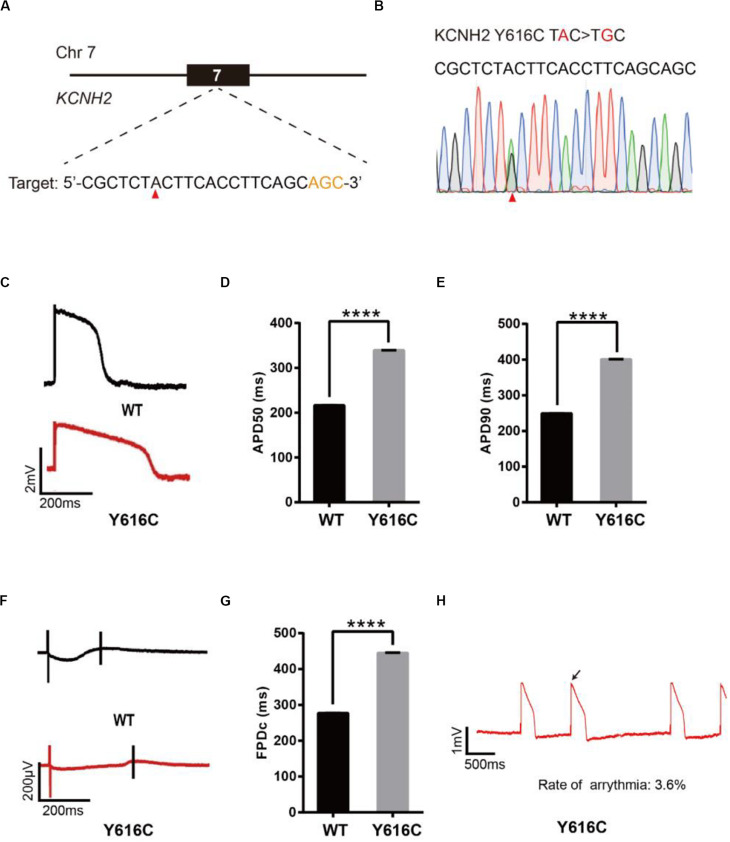
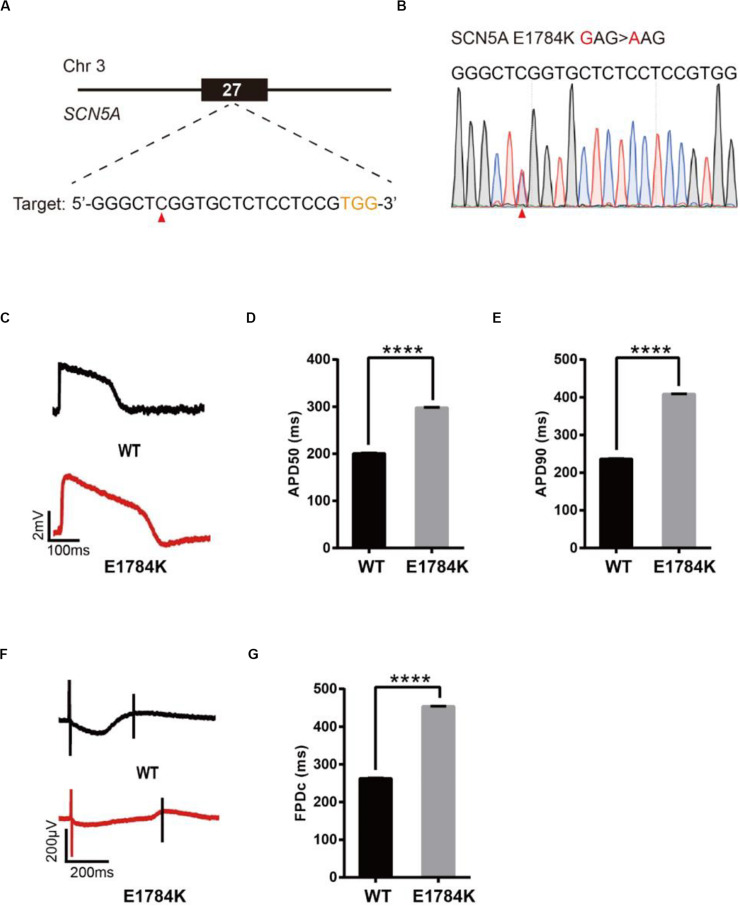
Human pluripotent stem cells (hPSCs) are a powerful platform for disease modeling and drug discovery. However, the introduction of known pathogenic mutations into hPSCs is a time-consuming and labor-intensive process. Base editing is a newly developed technology that enables facile introduction of point mutations into specific loci within the genome of living cells. Here, we design an all-in-one episomal vector that expresses a single guide RNA (sgRNA) with an adenine base editor (ABE) or a cytosine base editor (CBE). Both ABE and CBE can efficiently introduce mutations into cells, A-to-G and C-to-T, respectively. We introduce disease-specific mutations of long QT syndrome into hPSCs to model LQT1, LQT2, and LQT3. Electrophysiological analysis of hPSC-derived cardiomyocytes (hPSC-CMs) using multi-electrode arrays (MEAs) reveals that edited hPSC-CMs display significant increases in duration of the action potential. Finally, we introduce the novel Brugada syndrome-associated mutation into hPSCs, demonstrating that this mutation can cause abnormal electrophysiology. Our study demonstrates that episomal encoded base editors (epi-BEs) can efficiently generate mutation-specific disease hPSC models.
人多能干细胞(hPSCs)是疾病建模和药物发现的强大平台。然而,将已知致病突变引入hPSCs是一个耗时且费力的过程。碱基编辑是一项新开发的技术,能够将点突变轻松引入活细胞基因组内的特定位点。在此,我们设计了一种一体化附加型载体,其表达带有腺嘌呤碱基编辑器(ABE)或胞嘧啶碱基编辑器(CBE)的单向导RNA(sgRNA)。ABE和CBE均可分别高效地将A-to-G和C-to-T突变引入细胞。我们将长QT综合征的疾病特异性突变引入hPSCs以模拟LQT1、LQT2和LQT3。使用多电极阵列(MEA)对hPSC来源的心肌细胞(hPSC-CMs)进行电生理分析发现,经编辑的hPSC-CMs动作电位持续时间显著增加。最后,我们将新型Brugada综合征相关突变引入hPSCs,证明该突变可导致异常电生理。我们的研究表明,附加型编码碱基编辑器(epi-BEs)能够高效生成突变特异性疾病hPSC模型。