Rizkallah Maroun, Bachour Falah, Khoury Mirvat El, Sebaaly Amer, Finianos Boutros, Hage Rawad El, Maalouf Ghassan
Department of Orthopedic Surgery, Bellevue Medical Center, Faculty of Medicine, Saint Joseph University, Beirut, Lebanon.
Department of Musculoskeletal Health, Bellevue Medical Center, Saint Joseph University, Beirut, Lebanon.
Osteoporos Sarcopenia. 2020 Sep;6(3):146-150. doi: 10.1016/j.afos.2020.07.002. Epub 2020 Aug 8.
Hip fragility fractures were regarded as one of the most severe, but recent papers report on the underestimated burden of vertebral compression fractures. This study aims to compare morbidity and mortality of hip and vertebral fragility fractures in patients treated in the same setting.
Patients aged ≥50 years with hip fracture, and those with vertebral fracture presenting to our hospital between January 2014 and January 2017 were included. Patients were evaluated 1 year after their index fracture. SF-36 scores, mortality, and institutionalization are then recorded. Patients were divided into 2 groups: hip fractures and vertebral fractures.
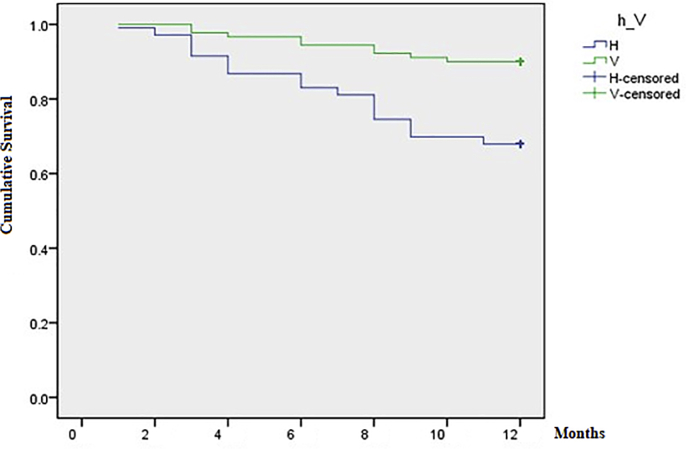
There were 106 and 90 patients respectively evaluated in hip and vertebral fracture groups at 1 year. Patients in both groups were comparable for age, sex, comorbidities and neuropsychiatric condition (P > 0.05). At 1 year follow-up, SF-36 showed better averages in all 8 scales in hip fracture group compared to vertebral fracture group. Mortality in the hip fracture group reached 32.1% compared to 10% for the vertebral fracture group (P < 0.01). Fifteen patients were institutionalized in the hip fracture group compared to 18 patients in the vertebral fracture group (P > 0.05).
When comparing patients treated in the same setting, hip fracture is associated with significantly increased mortality than vertebral fracture; however, the latter is associated with more morbidity.
髋部脆性骨折曾被视为最严重的骨折类型之一,但近期有论文报道了椎体压缩性骨折被低估的负担。本研究旨在比较在相同治疗环境下髋部和椎体脆性骨折患者的发病率和死亡率。
纳入2014年1月至2017年1月期间在我院就诊的年龄≥50岁的髋部骨折患者以及椎体骨折患者。在其初次骨折后1年对患者进行评估。记录SF-36评分、死亡率和入住机构情况。将患者分为两组:髋部骨折组和椎体骨折组。
1年后髋部骨折组和椎体骨折组分别有106例和90例患者接受评估。两组患者在年龄、性别、合并症和神经精神状况方面具有可比性(P>0.05)。在1年随访时,与椎体骨折组相比,髋部骨折组在SF-36的所有8个量表上平均得分更高。髋部骨折组的死亡率为32.1%,而椎体骨折组为10%(P<0.01)。髋部骨折组有15例患者入住机构,椎体骨折组有18例患者入住机构(P>0.05)。
在比较相同治疗环境下的患者时,髋部骨折比椎体骨折的死亡率显著增加;然而,椎体骨折的发病率更高。