Department of Plant & Microbial Biology, University of Minnesota, Saint Paul, MN, 55108, USA.
Department of Pharmaceutics and Drug Delivery, School of Pharmacy, University of Mississippi, University, MS, 38677, USA.
Am J Bot. 2020 Oct;107(10):1423-1432. doi: 10.1002/ajb2.1550. Epub 2020 Oct 25.
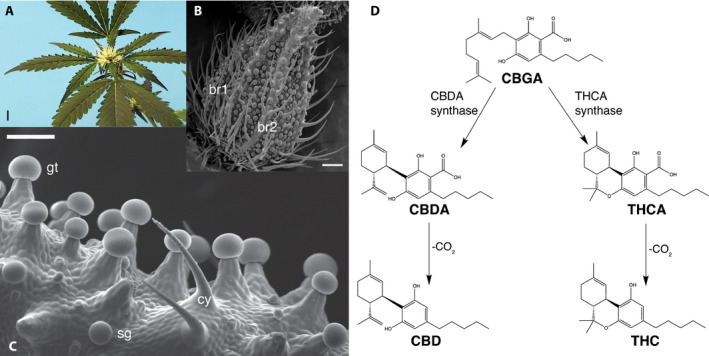
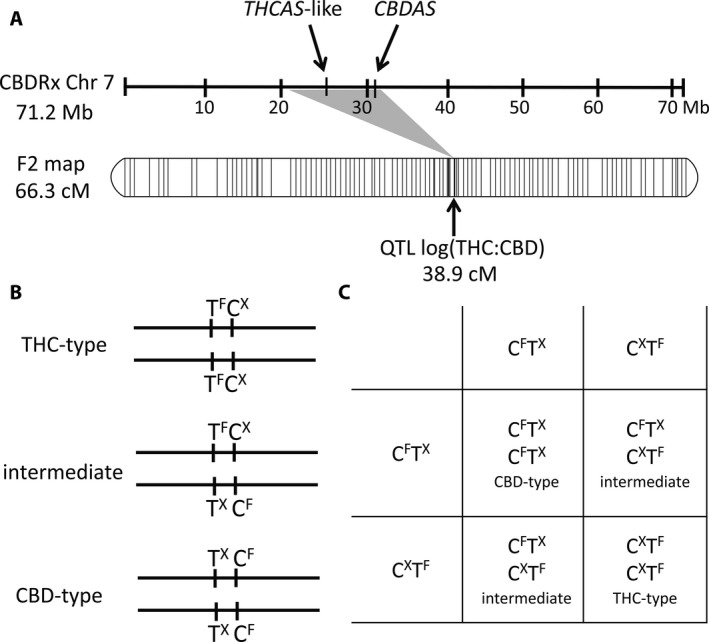
How genetic variation within a species affects phytochemical composition is a fundamental question in botany. The ratio of two specialized metabolites in Cannabis sativa, tetrahydrocannabinol (THC) and cannabidiol (CBD), can be grouped into three main classes (THC-type, CBD-type, and intermediate type). We tested a genetic model associating these three groups with functional and nonfunctional alleles of the cannabidiolic acid synthase gene (CBDAS).
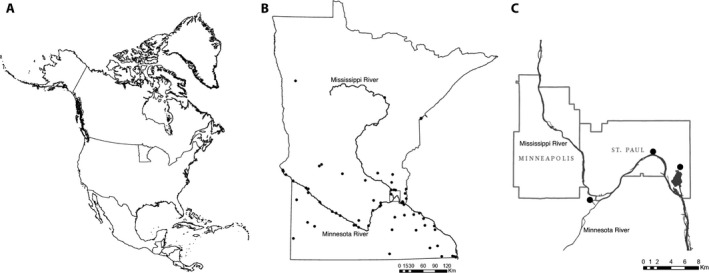
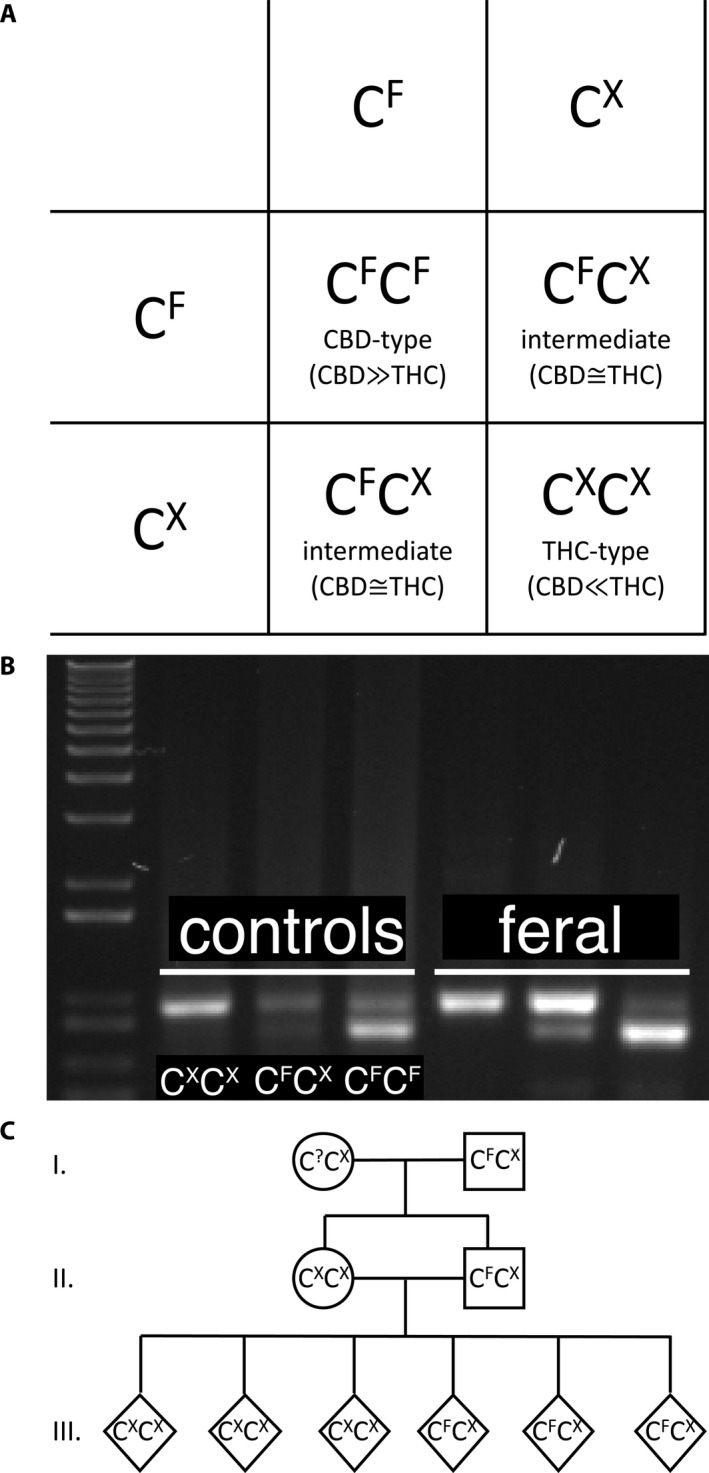
We characterized cannabinoid content and assayed CBDAS genotypes of >300 feral C. sativa plants in Minnesota, United States. We performed a test cross to assess CBDAS inheritance. Twenty clinical cultivars obtained blindly from the National Institute on Drug Abuse and 12 Canadian-certified grain cultivars were also examined.
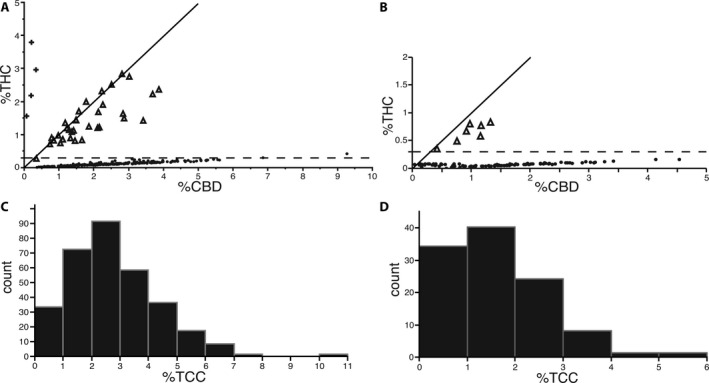
Frequencies of CBD-type, intermediate-type, and THC-type feral plants were 0.88, 0.11, and 0.01, respectively. Although total cannabinoid content varied substantially, the three groupings were perfectly correlated with CBDAS genotypes. Genotype frequencies observed in the test cross were consistent with codominant Mendelian inheritance of the THC:CBD ratio. Despite significant mean differences in total cannabinoid content, CBDAS genotypes blindly predicted the THC:CBD ratio among clinical cultivars, and the same was true for industrial grain cultivars when plants exhibited >0.5% total cannabinoid content.
Our results extend the generality of the inheritance model for THC:CBD to diverse C. sativa accessions and demonstrate that CBDAS genotyping can predict the ratio in a variety of practical applications. Cannabinoid profiles and associated CBDAS segregation patterns suggest that feral C. sativa populations are potentially valuable experimental systems and sources of germplasm.
物种内的遗传变异如何影响植物化学物质组成是植物学中的一个基本问题。大麻(Cannabis sativa)中两种特殊代谢物——四氢大麻酚(THC)和大麻二酚(CBD)的比例可以分为三个主要类别(THC 型、CBD 型和中间型)。我们测试了一个遗传模型,将这三个类别与大麻酸合酶基因(CBDAS)的功能和非功能等位基因相关联。
我们对美国明尼苏达州 300 多株野生大麻的大麻素含量进行了特征描述,并对 CBDAS 基因型进行了检测。我们进行了测交实验,以评估 CBDAS 的遗传。同时还对美国国立药物滥用研究所的 20 个临床品种和 12 个加拿大认证的粮食品种进行了检测。
野生 CBD 型、中间型和 THC 型植物的频率分别为 0.88、0.11 和 0.01。尽管总大麻素含量差异很大,但这三个分组与 CBDAS 基因型完全相关。测交中观察到的基因型频率与 THC:CBD 比值的共显性孟德尔遗传一致。尽管总大麻素含量存在显著的均值差异,但 CBDAS 基因型在临床品种中可以准确预测 THC:CBD 比值,当工业粮食品种的总大麻素含量大于 0.5%时,情况也是如此。
我们的结果将 THC:CBD 的遗传模型扩展到了不同的大麻属植物,并证明了 CBDAS 基因分型可以在各种实际应用中预测比值。大麻素图谱和相关的 CBDAS 分离模式表明,野生大麻种群可能是有价值的实验系统和种质资源。