Lü Mengdie, Qiu Li, Jia Guangshuai, Guo Rongqun, Leng Qibin
Affiliated Cancer Hospital and Institute of Guangzhou Medical University, State Key Laboratory of Respiratory Disease, Guangzhou, China.
Joint National Laboratory for Antibody Drug Engineering, Key Laboratory of Cellular and Molecular Immunology of Henan Province, Institute of Translational Medicine, School of Basic Medicine, Henan University, Kaifeng, China.
Aging (Albany NY). 2020 Oct 26;12(20):19880-19897. doi: 10.18632/aging.104015.
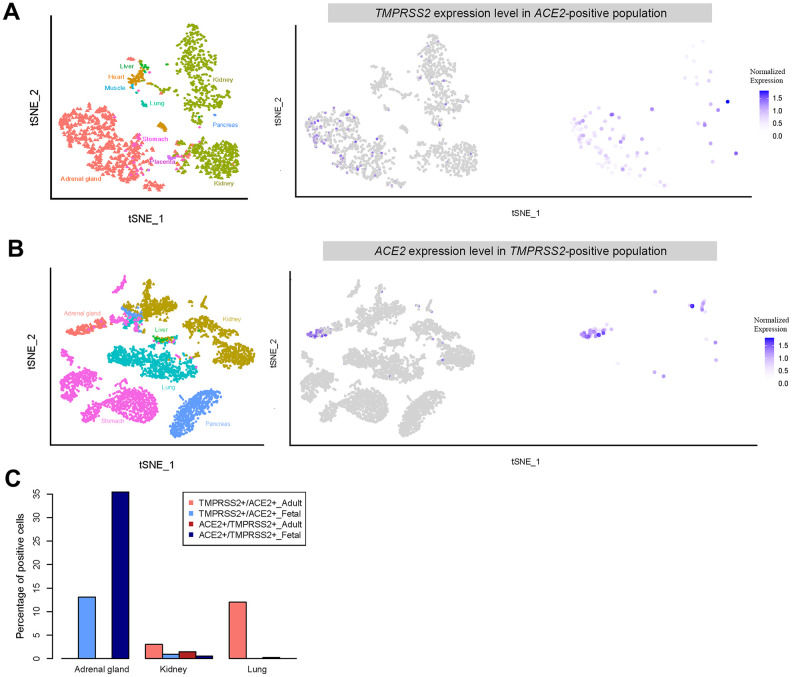
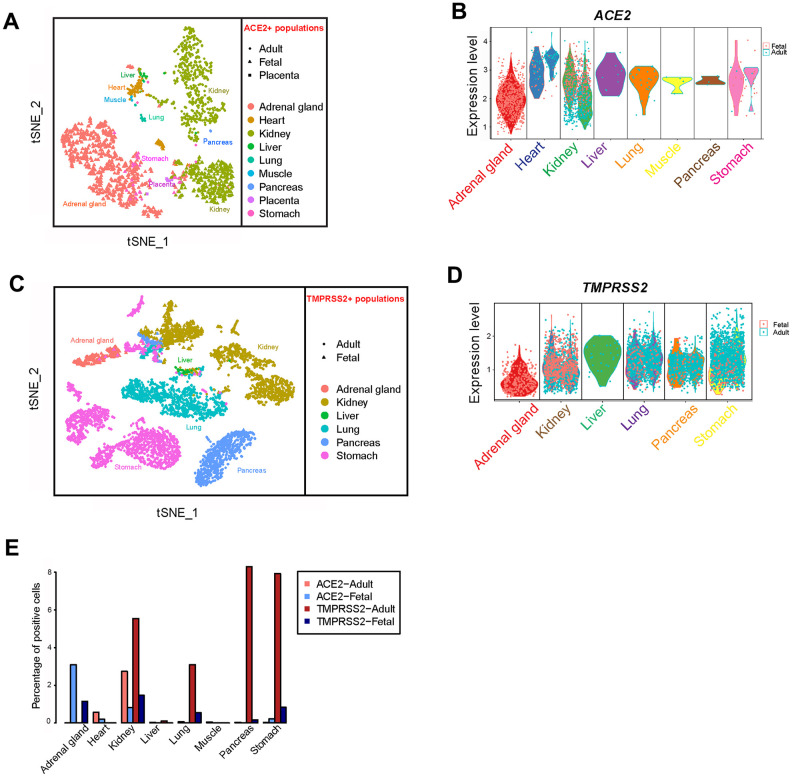
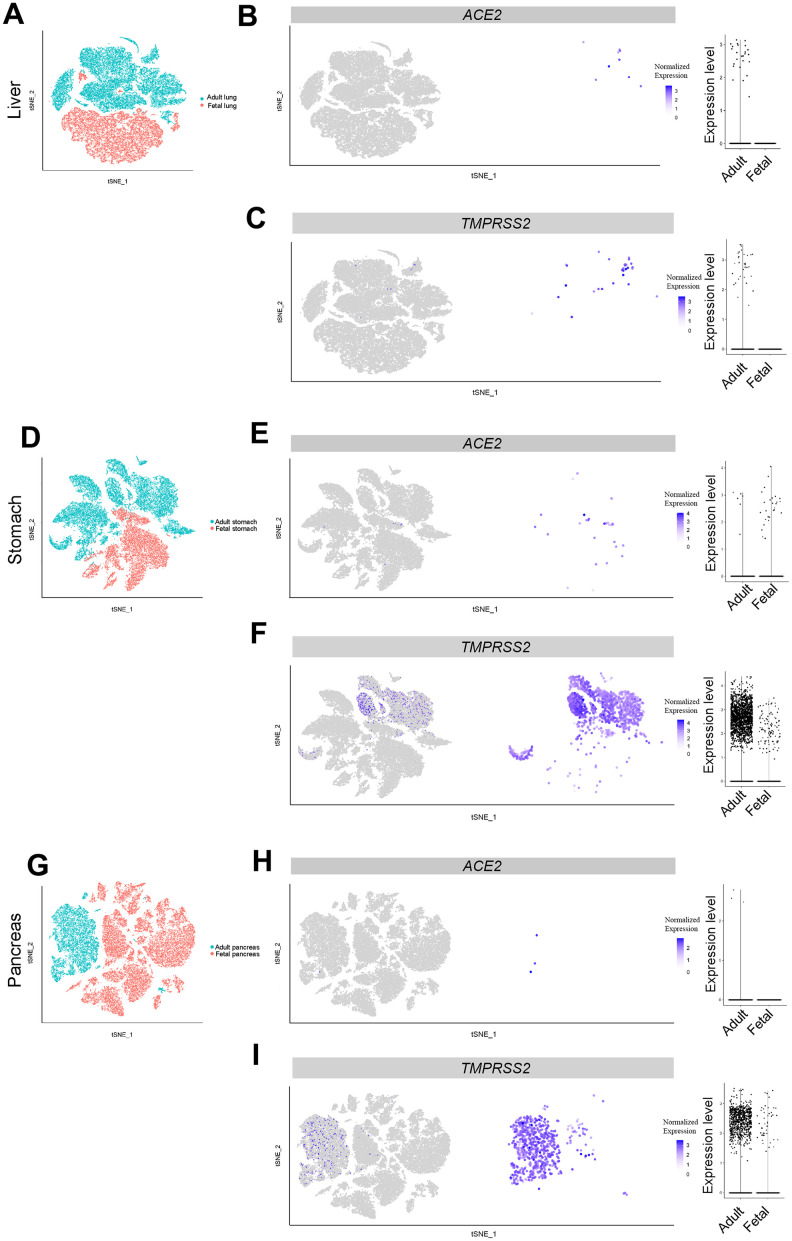
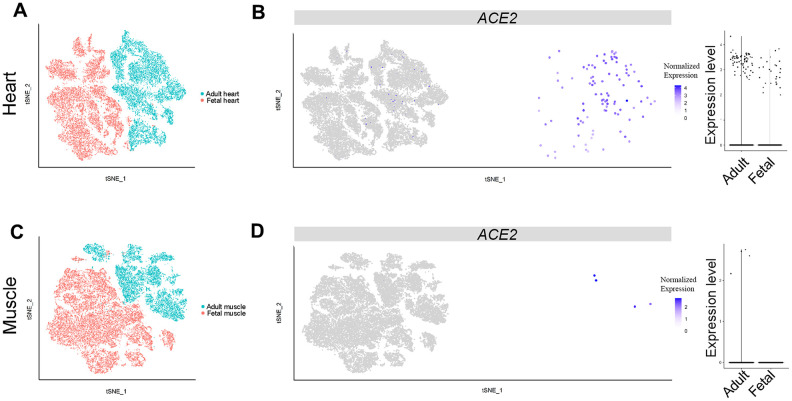
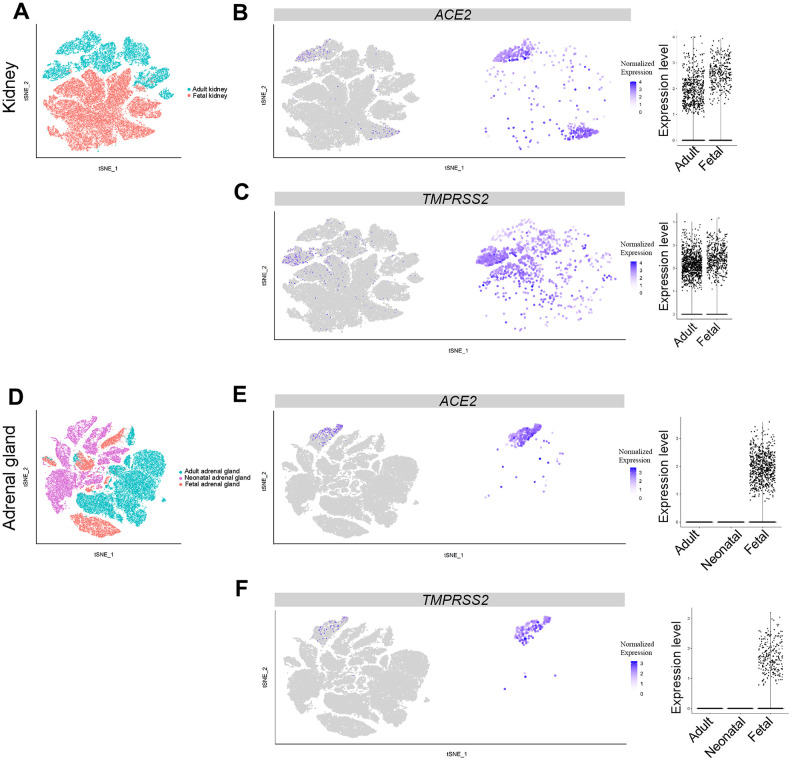
Morbidity and mortality of coronavirus disease 2019 (COVID-19) is age-dependent. It remains unclear whether vertical severe acute respiratory syndrome coronavirus 2 (SARS-CoV-2) occurs during pregnancy and how such infection will affect fetal development. Here, we performed single-cell transcriptomic analysis of placenta and other tissues from fetuses in comparison with those from adults using public-available datasets. Our analysis revealed that a very small proportion of trophoblast cells expressed the () gene, suggesting a low possibility of vertical transmission of SARS-CoV-2 from mother to fetus during pregnancy. We found that the fetal adrenal gland, heart, kidney and stomach were susceptible to SARS-CoV-2 infection, because these organs contained cell clusters that expressed high levels of the gene. In particular, a higher proportion of -expressing cell clusters in the adrenal gland and kidney also expressed the () gene compared with other organs. Surprisingly, -expressing type II alveolar (AT2) equivalent cells were absent in fetal lungs. This is in sharp contrast to adult lungs. As expression is regulated by various conditions, including oxygen concentration, inflammation and smoking, caution is warranted to avoid triggering potential expression in fetal and placental tissue.
2019冠状病毒病(COVID-19)的发病率和死亡率与年龄有关。目前尚不清楚孕期是否会发生垂直传播严重急性呼吸综合征冠状病毒2(SARS-CoV-2),以及这种感染将如何影响胎儿发育。在此,我们使用公开可用数据集,对胎儿与成人的胎盘及其他组织进行了单细胞转录组分析。我们的分析显示,只有极小比例的滋养层细胞表达()基因,这表明孕期SARS-CoV-2从母亲垂直传播给胎儿的可能性较低。我们发现胎儿的肾上腺、心脏、肾脏和胃易受SARS-CoV-2感染,因为这些器官含有表达高水平()基因的细胞簇。特别是,与其他器官相比,肾上腺和肾脏中表达()的细胞簇比例更高,也表达()基因。令人惊讶的是,胎儿肺中不存在表达()的II型肺泡(AT2)等效细胞。这与成人肺形成鲜明对比。由于()的表达受多种条件调控,包括氧浓度、炎症和吸烟,因此有必要谨慎避免在胎儿和胎盘组织中触发潜在的()表达。