Goto Toshiharu, Kishita Mikitaka, Sun Yin, Sako Takeshi, Okajima Idzumi
Innovation Exploring Dept., R&D Business Unit, Maxell, Ltd., Koizumi, Oyamazaki, Otokuni-gun, Kyoto 618-8525, Japan.
Applied Chemistry and Biochemical Engineering Course, Department of Engineering, Graduate School of Integrated Science and Technology Shizuoka University, Hamamatsu 432-8561, Japan.
Polymers (Basel). 2020 Oct 22;12(11):2434. doi: 10.3390/polym12112434.
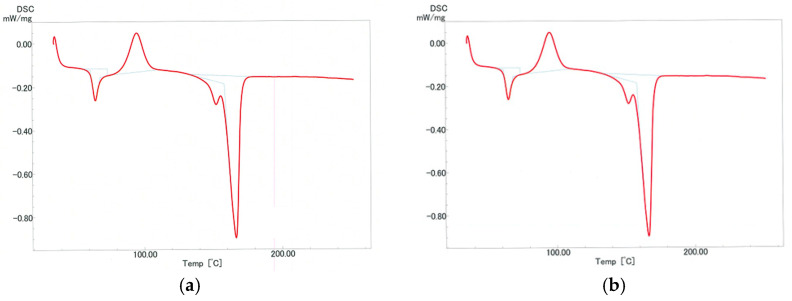
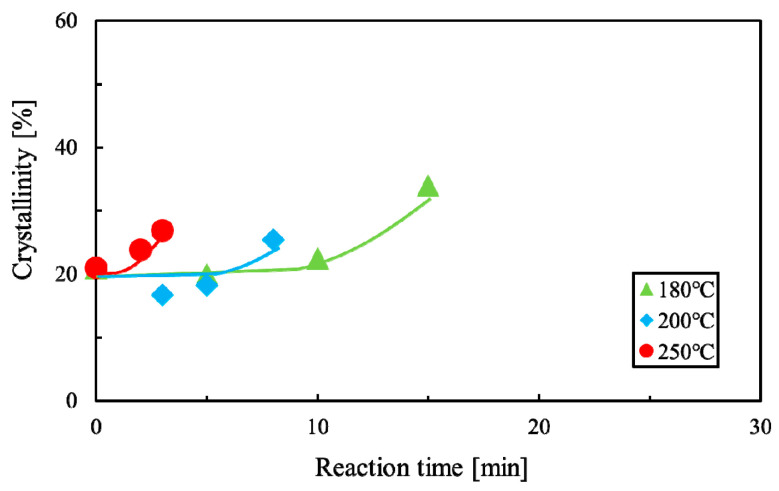
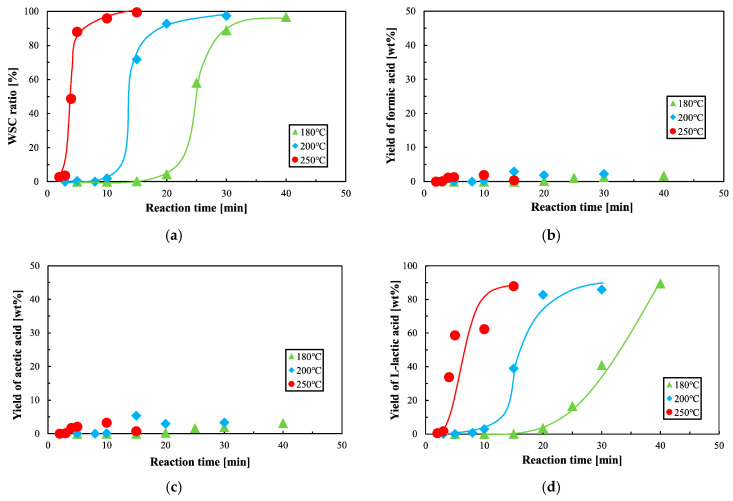
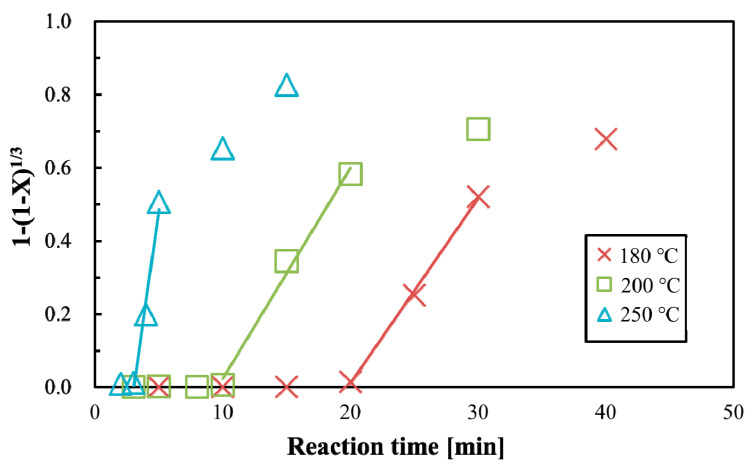
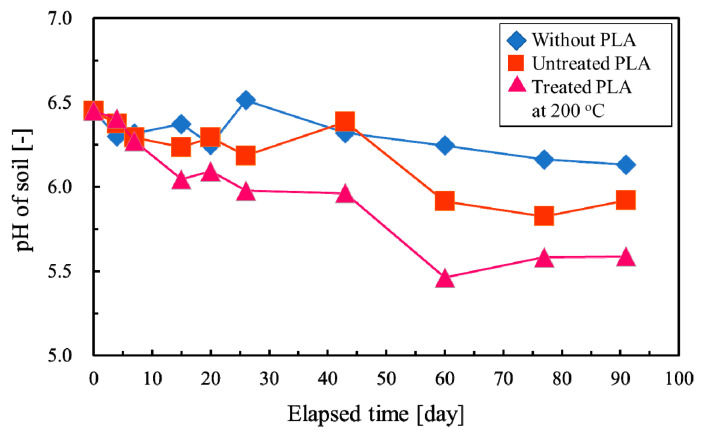
Polylactic acid (PLA) is expected to replace many general-purpose plastics, especially those used for food packaging and agricultural mulch. In composting, the degradation speed of PLA is affected by the molecular weight, crystallinity, and microbial activity. PLA with a molecular weight of less than 10,000 has been reported to have higher decomposition rates than those with higher molecular weight. However, PLA degradation generates water-soluble products, including lactic acid, that decrease the pH of soil or compost. As acidification of soil or compost affects farm products, their pH should be controlled. Therefore, a method for determining suitable reaction conditions to achieve ideal decomposition products is necessary. This study aimed to determine suitable reaction conditions for generating preprocessed PLA with a molecular weight lower than 10,000 without producing water-soluble contents. To this end, we investigated the degradation of PLA using sub-critical water. The molecular weight and ratio of water-soluble contents (WSCs) affecting the pH of preprocessed products were evaluated through kinetic analysis, and crystallinity was analyzed through differential scanning calorimetry. Preprocessed PLA was prepared under the determined ideal conditions, and its characteristics in soil were observed. The results showed that the crystallization rate increased with PLA decomposition but remained lower than 30%. In addition, the pH of compost mixed with 40% of preprocessed PLA could be controlled within pH 5.4-5.5 over 90 days. Overall, soil mixed with the preprocessed PLA prepared under the determined ideal conditions remains suitable for plant growth.
聚乳酸(PLA)有望取代许多通用塑料,尤其是用于食品包装和农用薄膜的塑料。在堆肥过程中,PLA的降解速度受分子量、结晶度和微生物活性的影响。据报道,分子量小于10000的PLA比分子量较高的PLA具有更高的分解速率。然而,PLA降解会产生包括乳酸在内的水溶性产物,这些产物会降低土壤或堆肥的pH值。由于土壤或堆肥的酸化会影响农产品,因此需要控制它们的pH值。因此,有必要找到一种确定合适反应条件以获得理想分解产物的方法。本研究旨在确定合适的反应条件,以生成分子量低于10000且不产生水溶性成分的预处理PLA。为此,我们研究了亚临界水对PLA的降解作用。通过动力学分析评估了影响预处理产物pH值的分子量和水溶性成分(WSCs)比例,并通过差示扫描量热法分析了结晶度。在确定的理想条件下制备了预处理PLA,并观察了其在土壤中的特性。结果表明,结晶速率随PLA分解而增加,但仍低于30%。此外,在90天内,与40%预处理PLA混合的堆肥pH值可控制在5.4 - 5.5之间。总体而言,与在确定的理想条件下制备的预处理PLA混合的土壤仍适合植物生长。