State Key Laboratory of Reproductive Medicine, Suzhou Municipal Hospital, Nanjing Medical University, Nanjing, China.
School of Nursing, Nanjing Medical University, Nanjing, China.
Cell Prolif. 2021 Jan;54(1):e12940. doi: 10.1111/cpr.12940. Epub 2020 Oct 26.
It has been widely reported that maternal diabetes impairs oocyte quality. However, the responsible mechanisms remain to be explored. In the present study, we focused on whether SIRT3-GSK3β pathway mediates the meiotic defects in oocytes from diabetic mice.
GSK3β functions in mouse oocyte meiosis were first detected by targeted siRNA knockdown. Spindle assembly and chromosome alignment were visualized by immunostaining and analysed under the confocal microscope. PCR-based site mutation of specific GSK3β lysine residues was used to confirm which lysine residues function in oocyte meiosis. siRNA knockdown coupled with cRNA overexpression was performed to detect SIRT3-GSK3β pathway functions in oocyte meiosis. Immunofluorescence was performed to detect ROS levels. T1DM mouse models were induced by a single intraperitoneal injection of streptozotocin.
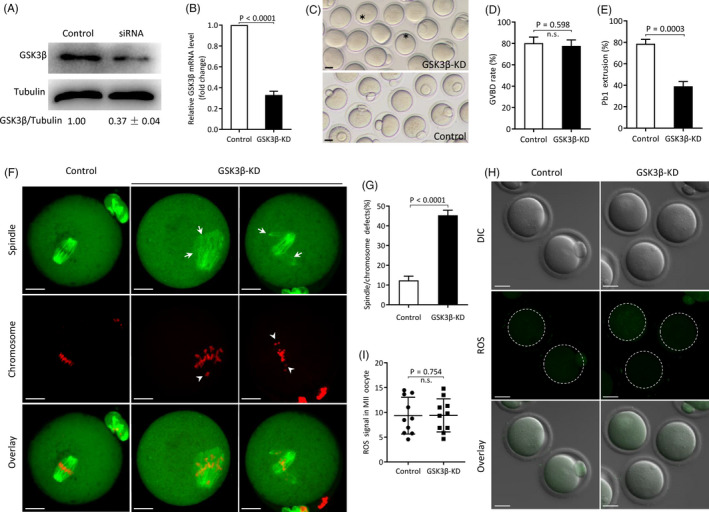
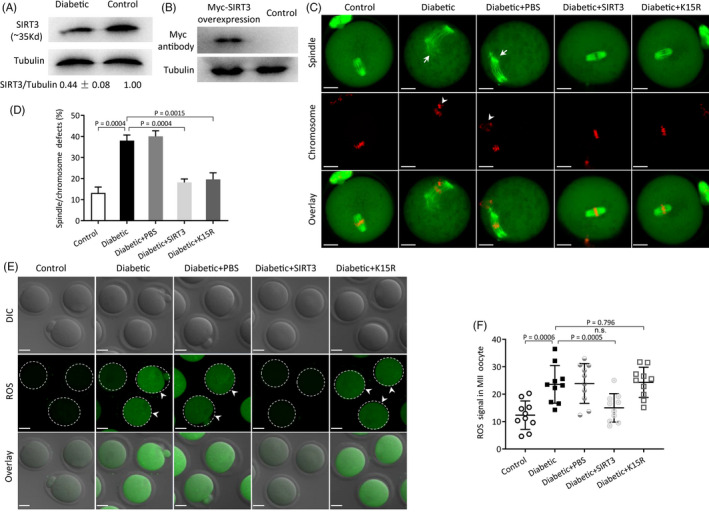
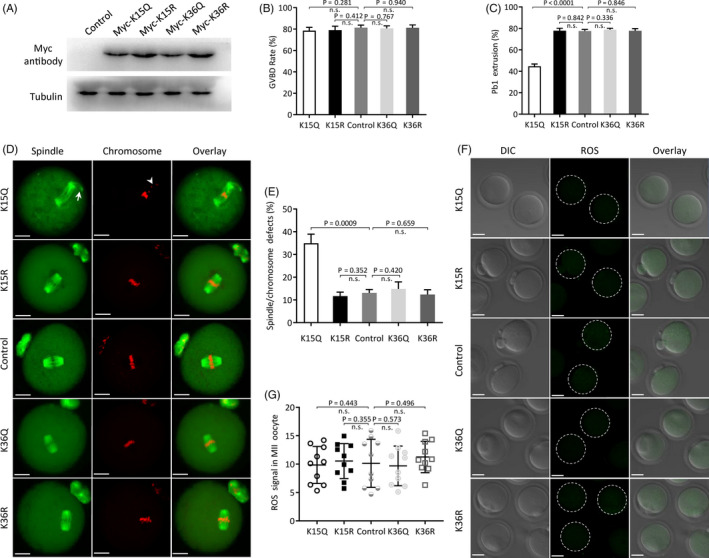
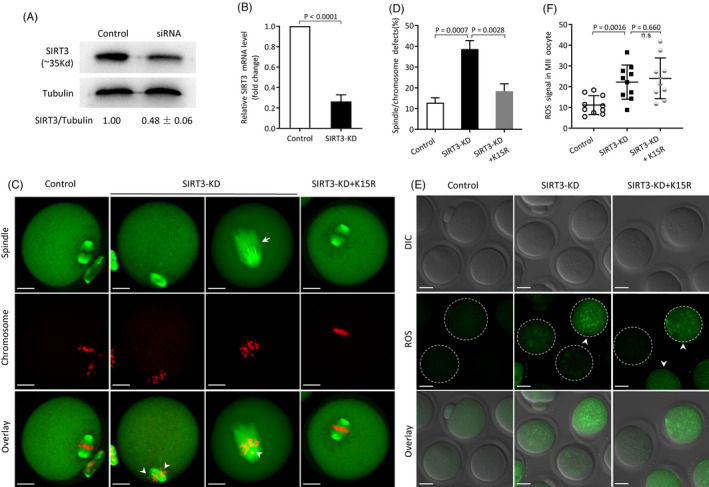
In the present study, we found that specific depletion of GSK3β disrupts maturational progression and meiotic apparatus in mouse oocytes. By constructing site-specific mutants, we further revealed that acetylation state of lysine (K) 15 on GSK3β is essential for spindle assembly and chromosome alignment during oocyte meiosis. Moreover, non-acetylation-mimetic mutant GSK3β-K15R is capable of partly preventing the spindle/chromosome anomalies in oocytes with SIRT3 knockdown. A significant reduction in SIRT3 protein was detected in oocytes from diabetic mice. Of note, forced expression of GSK3β-K15R ameliorates maternal diabetes-associated meiotic defects in mouse oocytes, with no evident effects on oxidative stress.
Our data identify GSK3β as a cytoskeletal regulator that is required for the assembly of meiotic apparatus, and discover a beneficial effect of SIRT3-dependent GSK3β deacetylation on oocyte quality from diabetic mice.
大量研究表明,母体糖尿病会损害卵母细胞质量。然而,其具体的作用机制仍需进一步探索。本研究聚焦于 SIRT3-GSK3β 通路是否介导糖尿病小鼠卵母细胞的减数分裂缺陷。
首先通过靶向 siRNA 敲低检测 GSK3β 在小鼠卵母细胞减数分裂中的作用。通过免疫染色和共聚焦显微镜分析来可视化纺锤体组装和染色体排列。使用基于 PCR 的特定 GSK3β 赖氨酸残基的点突变来确认哪些赖氨酸残基在卵母细胞减数分裂中起作用。进行 siRNA 敲低和 cRNA 过表达来检测 SIRT3-GSK3β 通路在卵母细胞减数分裂中的作用。进行免疫荧光检测 ROS 水平。通过单次腹腔注射链脲佐菌素诱导 T1DM 小鼠模型。
在本研究中,我们发现特异性耗尽 GSK3β 会破坏小鼠卵母细胞的成熟进程和减数分裂装置。通过构建定点突变体,我们进一步揭示 GSK3β 赖氨酸(K)15 的乙酰化状态对于卵母细胞减数分裂过程中的纺锤体组装和染色体排列是必需的。此外,非乙酰化模拟突变体 GSK3β-K15R 能够部分预防 SIRT3 敲低卵母细胞中的纺锤体/染色体异常。在糖尿病小鼠的卵母细胞中检测到 SIRT3 蛋白的显著减少。值得注意的是,GSK3β-K15R 的强制表达改善了来自糖尿病小鼠的卵母细胞的减数分裂缺陷,对氧化应激没有明显影响。
我们的数据确定 GSK3β 是一种细胞骨架调节剂,对于减数分裂装置的组装是必需的,并发现 SIRT3 依赖性 GSK3β 去乙酰化对糖尿病小鼠卵母细胞质量具有有益作用。