Division of Otolaryngology and Head and Neck Surgery, IEO, European Institute of Oncology, IRCCS, Via Ripamonti 435, 20141, Milan, Italy.
Division of Pathology, IEO, European Institute of Oncology IRCCS, Via Ripamonti 435, 20141, Milan, Italy.
Sci Rep. 2020 Oct 27;10(1):18327. doi: 10.1038/s41598-020-73747-0.
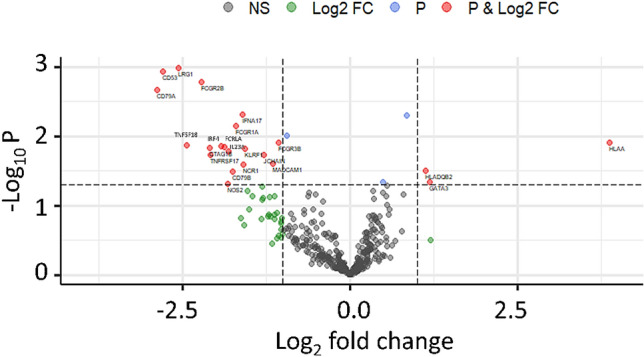
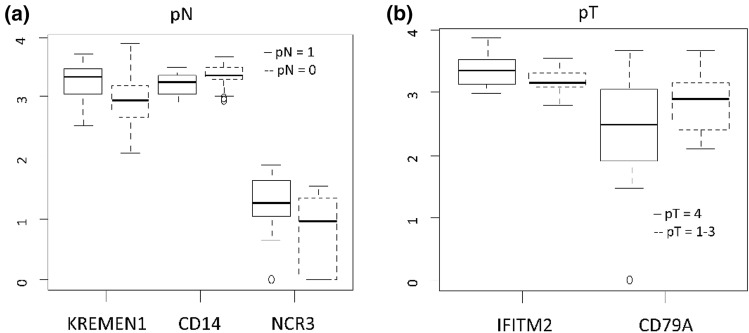
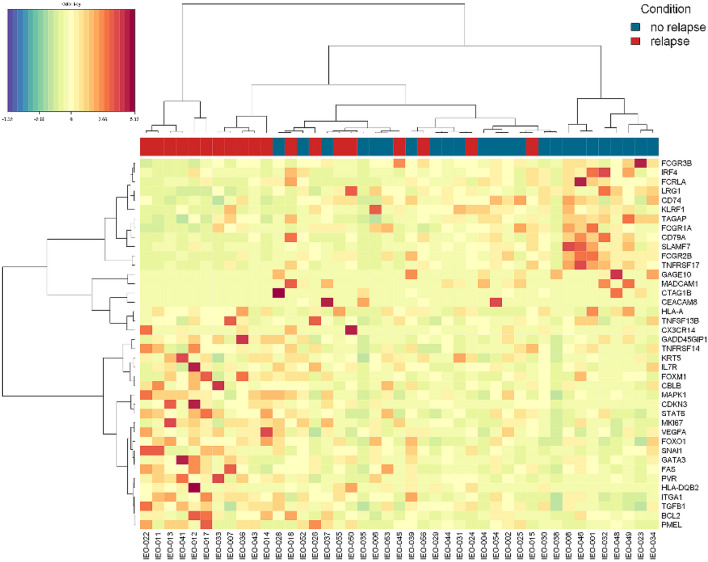
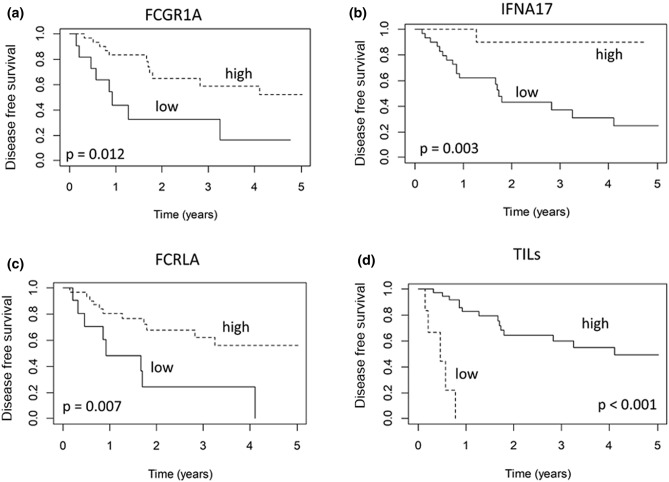
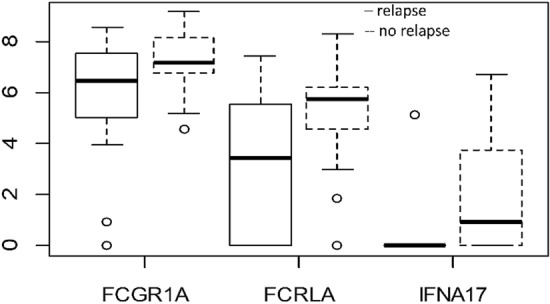
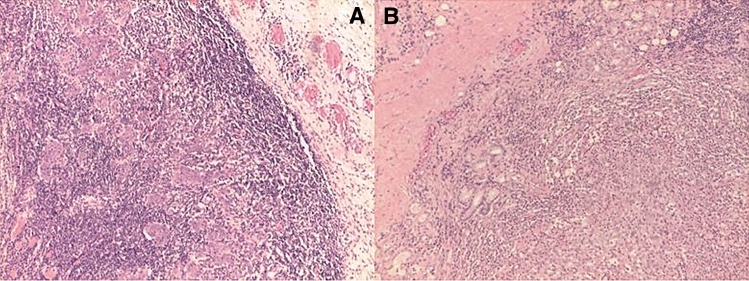
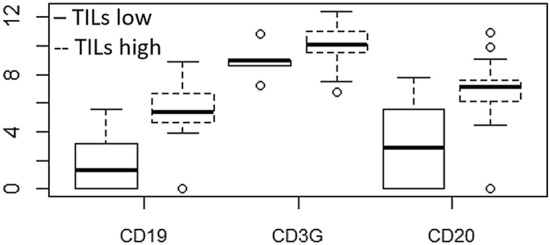
To investigate the role of the altered activation of the immune system in the prognosis of patients affected by laryngeal squamous cell carcinoma (LSCC). We analyzed 56 patients with advanced LSCC divided into two groups according to their prognosis: the first group relapsed within 24 months after treatment, the second group had no evidence of disease at 2 years. The presence of stromal tumor infiltrating lymphocytes (TILs) at the tumor-host border was investigated. In 43 patients we evaluated the expression of 395 genes related to immune system activation through a next generation sequencing panel. Priority-LASSO models and clustering analyses were integrated with multivariate Cox proportional hazard modeling to identify independent genes associated with relapse and estimate hazard ratios in relation to gene expression and TILs. TILs and the expression of genes related with immune system activation (FCGR1A, IFNA17, FCRLA, NCR3, KREMEN1, CD14, CD3G, CD19, CD20 and CD79A) were significantly associated with prognostic factors or disease specific survival. In patients with lymph node metastases and advanced T stage (pT4), the expression of other genes was altered. Low TILs count was highly associated with relapse within 2 years (p < 0.001). Low TILs and altered expression of specific genes associated with tumor-immune systems interactions emerged as independent risk factors, associated to poor prognosis and relapse within 2 years in advanced LSCC. Evaluation of patients' immune profile could be useful for prognosis and future therapeutic approaches towards personalized therapy.
为了探究免疫系统激活改变在喉鳞状细胞癌(LSCC)患者预后中的作用,我们分析了 56 例晚期 LSCC 患者,根据预后将其分为两组:第一组患者在治疗后 24 个月内复发,第二组患者在 2 年内无疾病证据。研究了肿瘤-宿主边界处基质肿瘤浸润淋巴细胞(TILs)的存在。在 43 例患者中,我们通过下一代测序面板评估了 395 个与免疫系统激活相关的基因的表达。通过多变量 Cox 比例风险建模整合优先 LASSO 模型和聚类分析,以识别与复发相关的独立基因,并估计与基因表达和 TILs 相关的风险比。TILs 和与免疫系统激活相关的基因(FCGR1A、IFNA17、FCRLA、NCR3、KREMEN1、CD14、CD3G、CD19、CD20 和 CD79A)的表达与预后因素或疾病特异性生存显著相关。在有淋巴结转移和晚期 T 分期(pT4)的患者中,其他基因的表达发生改变。TILs 计数低与 2 年内复发高度相关(p<0.001)。低 TILs 和与肿瘤-免疫系统相互作用相关的特定基因表达改变是独立的危险因素,与晚期 LSCC 2 年内预后不良和复发相关。评估患者的免疫状况可能有助于预后和未来针对个体化治疗的治疗方法。