Nephrology Dialysis and Transplantation Unit, University of Foggia, Viale Luigi Pinto, 251, 71122, Foggia, Italy.
Nephrology, Dialysis and Transplantation Unit, Department of Medical and Surgical Sciences, University of Foggia, Viale Luigi Pinto, 251, 71122, Foggia, Italy.
Sci Rep. 2020 Oct 27;10(1):18400. doi: 10.1038/s41598-020-75376-z.
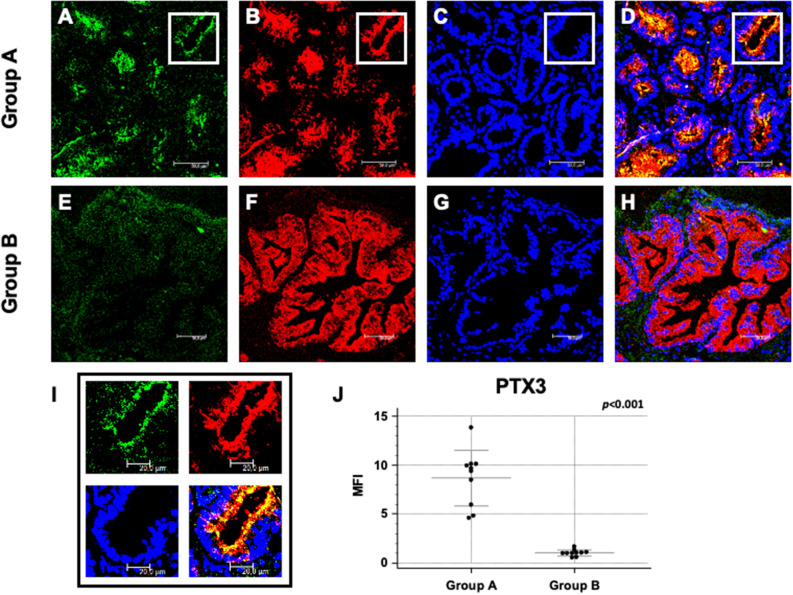
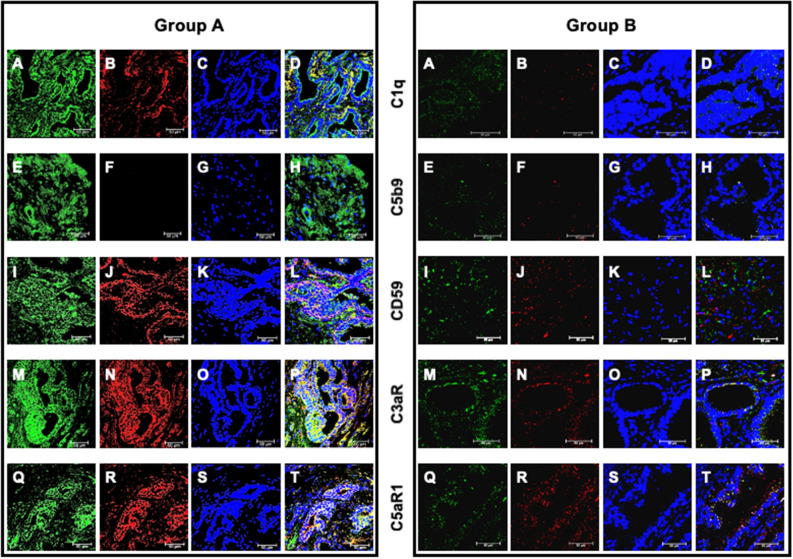
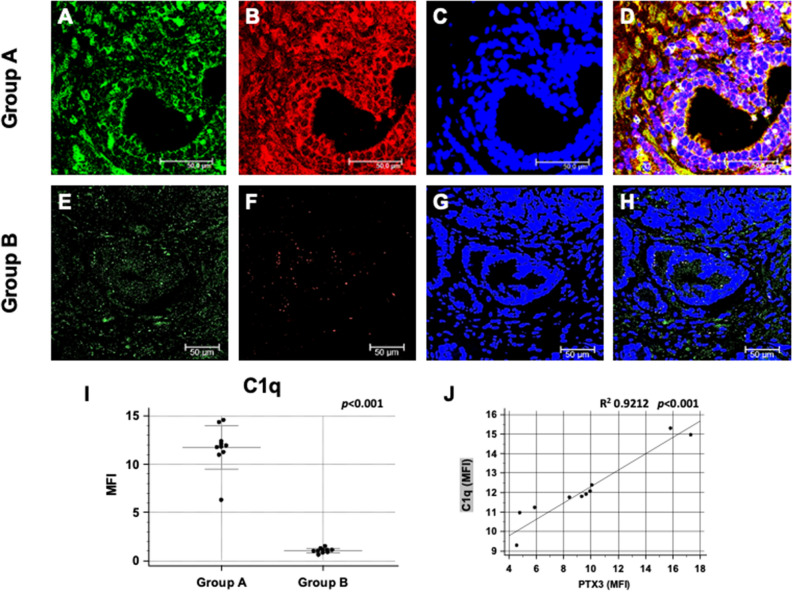
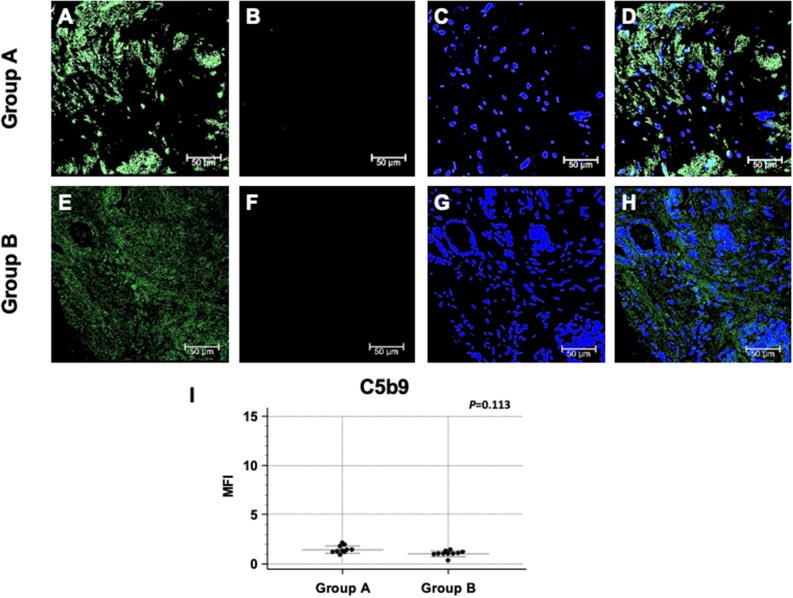
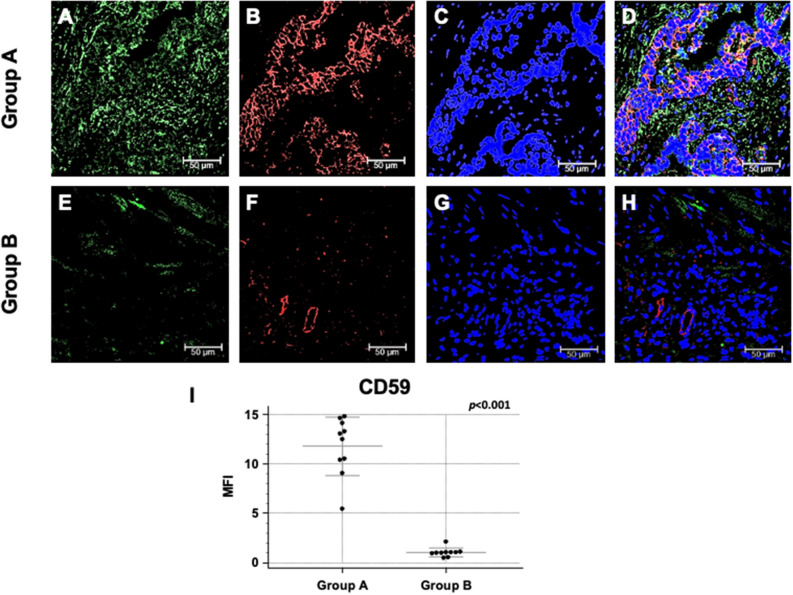
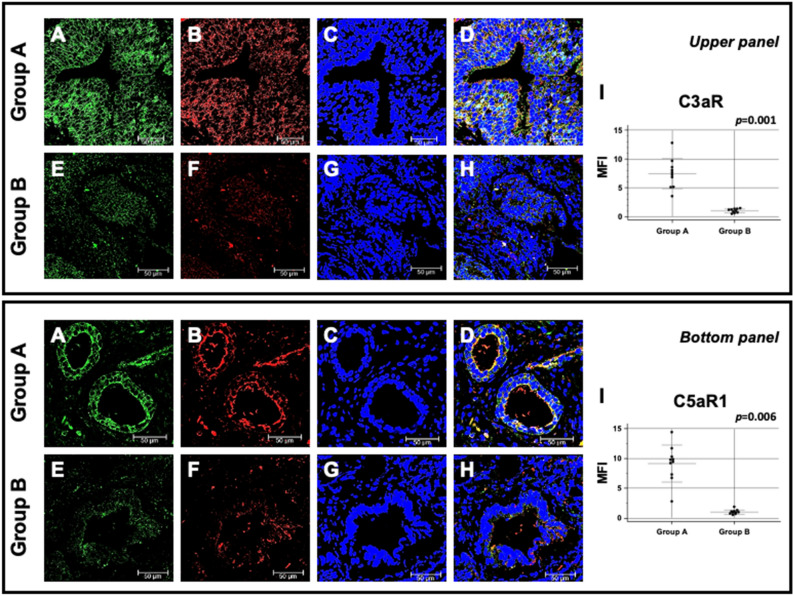
Pentraxin 3 (PTX3) is an essential component of the innate immune system and a recognized modulator of Complement cascade. The role of Complement system in the pathogenesis of prostate cancer has been largely underestimated. The aim of our study was to investigate the role of PTX3 as possible modulator of Complement activation in the development of this neoplasia. We performed a single center cohort study; from January 2017 through December 2018, serum and prostate tissue samples were obtained from 620 patients undergoing prostate biopsy. A group of patients with benign prostatic hyperplasia (BPH) underwent a second biopsy within 12-36 months demonstrating the presence of a prostate cancer (Group A, n = 40) or confirming the diagnosis of BPH (Group B, N = 40). We measured tissue PTX3 protein expression together with complement activation by confocal microscopy in the first and second biopsy in group A and B patients. We confirmed that that PTX3 tissue expression in the first biopsy was increased in group A compared to group B patients. C1q deposits were extensively present in group A patients co-localizing and significantly correlating with PTX3 deposits; on the contrary, C1q/PTX3 deposits were negative in group B. Moreover, we found a significantly increased expression of C3a and C5a receptors within resident cells in group A patient. Interestingly, C1q/PTX3 deposits were not associated with activation of the terminal Complement complex C5b-9; moreover, we found a significant increase of Complement inhibitor CD59 in cancer tissue. Our data indicate that PTX3 might play a significant pathogenic role in the development of this neoplasia through recruitment of the early components of Complement cascade with hampered activation of terminal Complement pathway associated with the upregulation of CD59. This alteration might lead to the PTX3-mediated promotion of cellular proliferation, angiogenesis and insensitivity to apoptosis possible leading to cancer cell invasion and migration.
五聚素 3(PTX3)是先天免疫系统的重要组成部分,也是补体级联反应的公认调节剂。补体系统在前列腺癌发病机制中的作用在很大程度上被低估了。我们的研究目的是研究 PTX3 作为补体激活的可能调节剂在这种肿瘤发生中的作用。我们进行了一项单中心队列研究;2017 年 1 月至 2018 年 12 月,从 620 名接受前列腺活检的患者中获得了血清和前列腺组织样本。一组患有良性前列腺增生(BPH)的患者在 12-36 个月内进行了第二次活检,显示出前列腺癌的存在(A 组,n=40)或确认 BPH 的诊断(B 组,n=40)。我们使用共聚焦显微镜测量了 A 组和 B 组患者的第一次和第二次活检中的组织 PTX3 蛋白表达和补体激活。我们证实,与 B 组患者相比,A 组患者的第一次活检中的 PTX3 组织表达增加。C1q 沉积物广泛存在于 A 组患者中,与 PTX3 沉积物共定位并显著相关;相反,在 B 组中 C1q/PTX3 沉积物为阴性。此外,我们发现 A 组患者中驻留细胞内 C3a 和 C5a 受体的表达显著增加。有趣的是,C1q/PTX3 沉积物与末端补体复合物 C5b-9 的激活无关;此外,我们发现癌症组织中补体抑制剂 CD59 的表达显著增加。我们的数据表明,PTX3 可能通过募集补体级联的早期成分在这种肿瘤的发生中发挥重要的致病作用,同时末端补体途径的激活受到阻碍,与 CD59 的上调相关。这种改变可能导致 PTX3 介导的细胞增殖、血管生成和对凋亡的不敏感,从而导致癌细胞侵袭和迁移。