Department of Bioinformatics and Genetics, Swedish Museum of Natural History, Box 50007, 10405, Stockholm, Sweden.
Department of Zoology, Stockholm University, 10691, Stockholm, Sweden.
Sci Rep. 2020 Oct 27;10(1):18347. doi: 10.1038/s41598-020-75315-y.
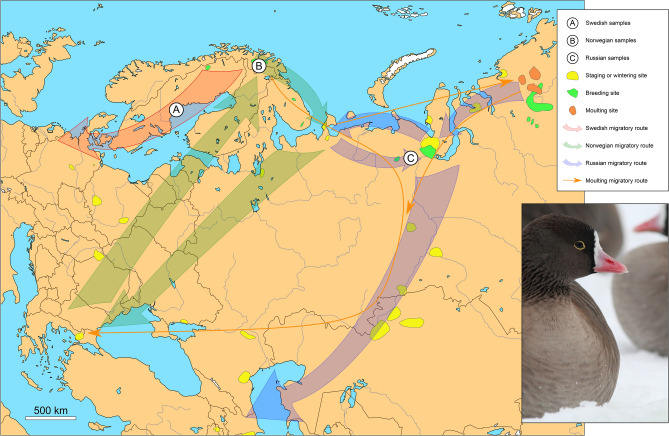
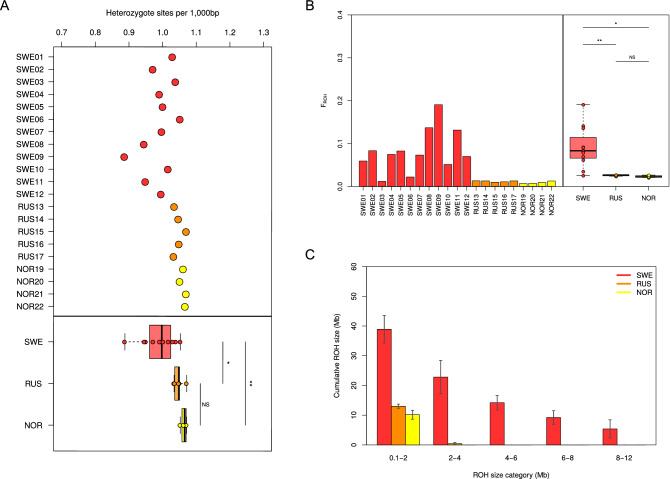
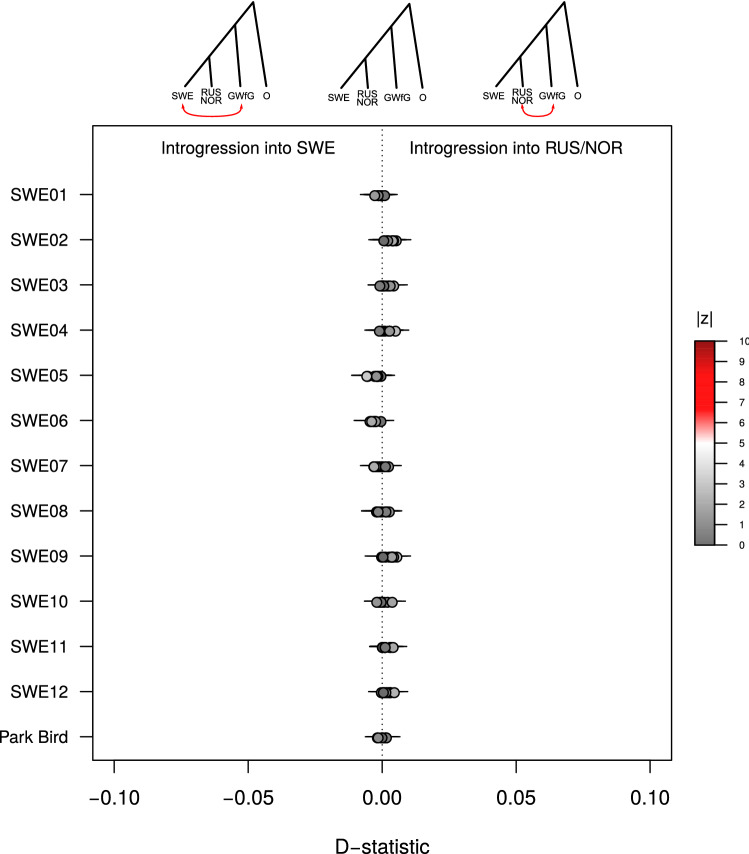
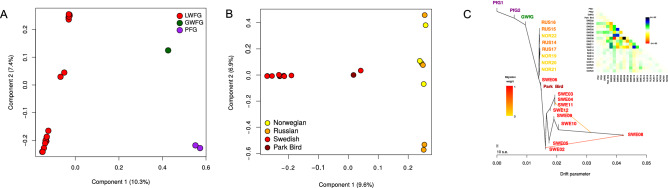
Interspecific introgression is considered a potential threat to endangered taxa. One example where this has had a major impact on conservation policy is the lesser white-fronted goose (LWfG). After a dramatic decline in Sweden, captive breeding birds were released between 1981-1999 with the aim to reinforce the population. However, the detection of greater white-fronted goose (GWfG) mitochondrial DNA in the LWfG breeding stock led to the release program being dismantled, even though the presence of GWfG introgression in the actual wild Swedish LWfG population was never documented. To examine this, we sequenced the complete genomes of 21 LWfG birds from the Swedish, Russian and Norwegian populations, and compared these with genomes from other goose species, including the GWfG. We found no evidence of interspecific introgression into the wild Swedish LWfG population in either nuclear genomic or mitochondrial data. Moreover, Swedish LWfG birds are genetically distinct from the Russian and Norwegian populations and display comparatively low genomic diversity and high levels of inbreeding. Our findings highlight the utility of genomic approaches in providing scientific evidence that can help improve conservation management as well as policies for breeding and reinforcement programmes.
种间基因渗入被认为是濒危分类单元的潜在威胁。一个对此产生重大影响的保护政策的例子是小白额雁(LWfG)。在瑞典数量急剧下降后,1981 年至 1999 年间,人们通过圈养繁殖鸟类并释放它们,以加强种群。然而,在 LWfG 的繁殖种群中检测到了大天鹅(GWfG)的线粒体 DNA,这导致了释放计划被取消,尽管 GWfG 基因渗入实际的瑞典野生 LWfG 种群从未被记录过。为了研究这一现象,我们对来自瑞典、俄罗斯和挪威的 21 只 LWfG 鸟的完整基因组进行了测序,并将这些基因组与包括 GWfG 在内的其他鹅类物种的基因组进行了比较。我们在核基因组或线粒体数据中均未发现种间基因渗入野生瑞典 LWfG 种群的证据。此外,瑞典 LWfG 鸟类在遗传上与俄罗斯和挪威种群不同,其基因组多样性相对较低,近亲繁殖程度较高。我们的研究结果突出了基因组方法在提供科学证据方面的作用,这些证据有助于改进保护管理以及繁殖和强化计划的政策。