Gutiérrez-Romero Roxana, Ahamed Mostak
Queen Mary University of London, School of Business and Management, London, UK.
University of Sussex, Business School, University of Sussex, Brighton, UK.
World Dev. 2021 Feb;138:105229. doi: 10.1016/j.worlddev.2020.105229. Epub 2020 Oct 22.
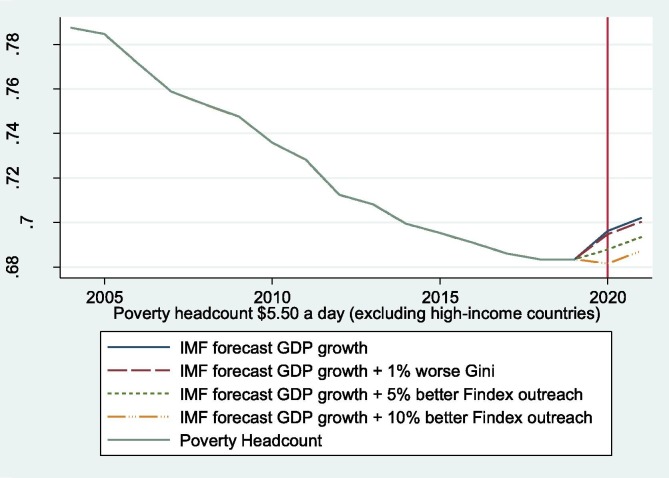
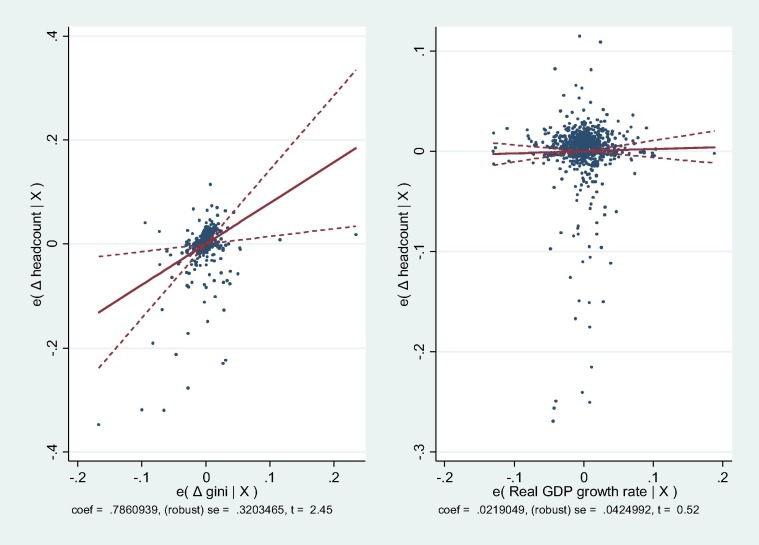
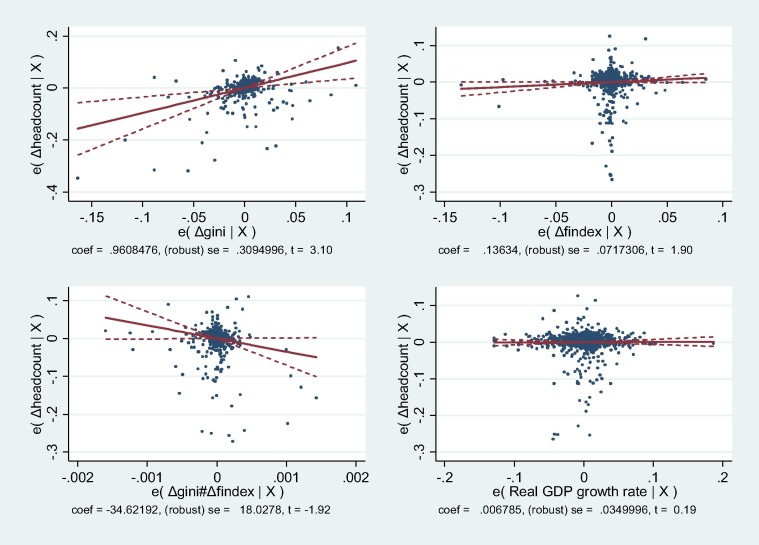
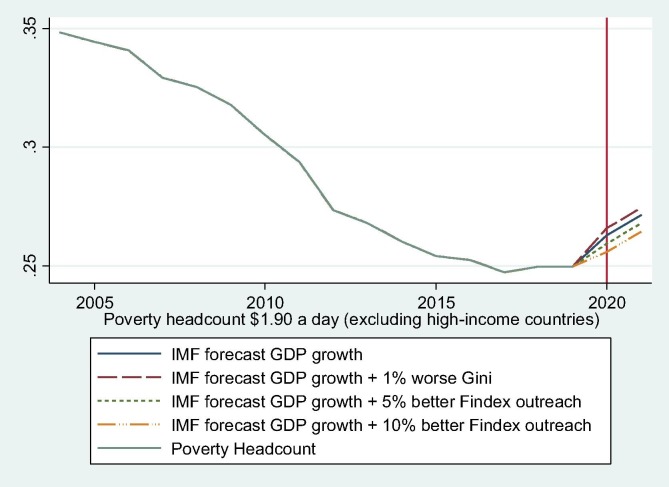
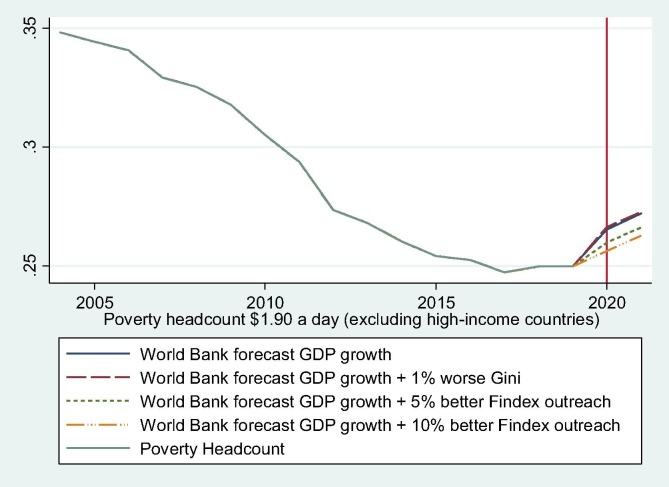
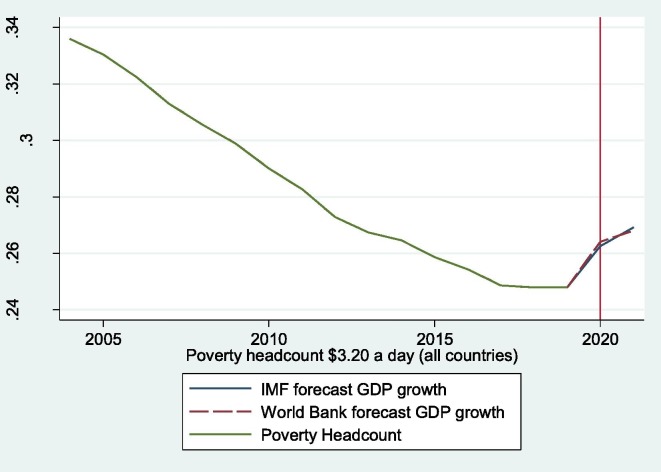
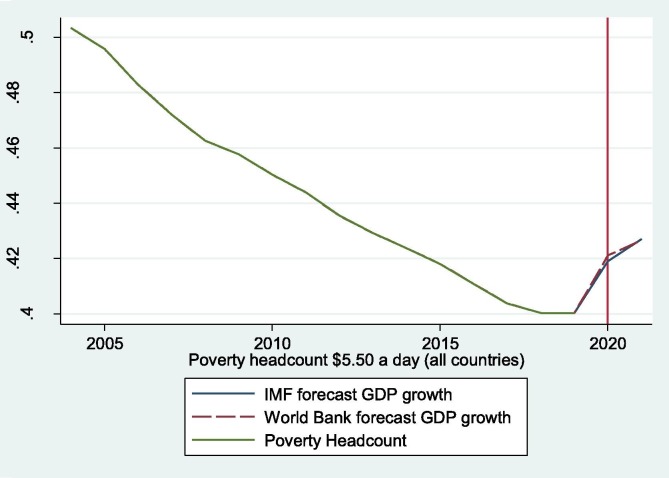
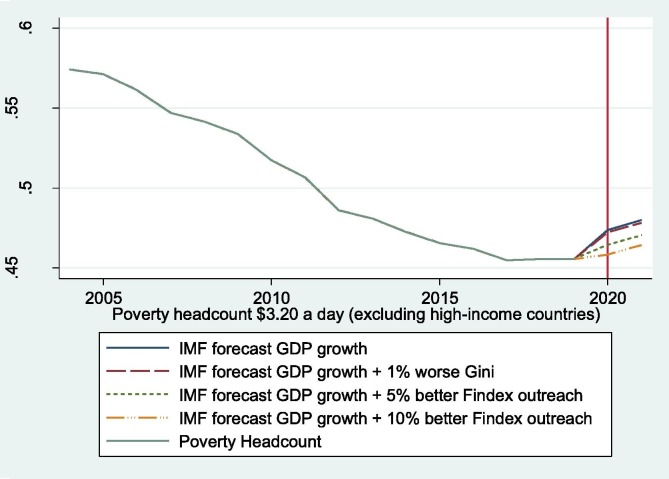
The ongoing COVID-19 pandemic risks wiping out years of progress made in reducing global poverty. In this paper, we explore to what extent financial inclusion could help mitigate the increase in poverty using cross-country data across 79 low- and lower-middle-income countries. Unlike other recent cross-country studies, we show that financial inclusion, particularly financial outreach, is a key driver of poverty reduction in these countries. This effect is not direct, but indirect, by mitigating the detrimental effect that inequality has on poverty. Our findings are consistent across all the different measures of poverty used and robust to instrumental variables. Our forecasts suggest that by 2021 the world's population living on less than $5.50 dollars a day would increase by 231 million people, of which nearly 107.8 million people would be pushed into extreme poverty living on less than $1.90 per day. However, urgent improvements in financial inclusion could substantially reduce the impact on poverty.
持续的新冠疫情有可能抹去在减少全球贫困方面取得的多年进展。在本文中,我们利用79个低收入和中低收入国家的跨国数据,探讨金融包容性在多大程度上有助于缓解贫困加剧的问题。与近期其他跨国研究不同的是,我们表明,金融包容性,尤其是金融服务覆盖范围,是这些国家减贫的关键驱动力。这种影响不是直接的,而是间接的,即通过减轻不平等对贫困产生的不利影响来实现。我们的研究结果在所有不同的贫困衡量标准中都是一致的,并且对工具变量具有稳健性。我们的预测表明,到2021年,全球每天生活费不足5.50美元的人口将增加2.31亿,其中近1.078亿人将陷入每天生活费不足1.90美元的极端贫困。然而,金融包容性的紧急改善可以大幅减少对贫困的影响。