Cai Zhenzhen, He Fengyu, Feng Xin, Liang Tong, Wang Hongwei, Ding Shuangcheng, Tian Xiaohai
Engineering Research Center of Ecology and Agricultural Use of Wetland, Ministry of Education, Agricultural College, Yangtze University, Jingzhou, China.
Hubei Key Laboratory of Waterlogging Disaster and Agricultural Use of Wetland, Agricultural College, Yangtze University, Jingzhou, China.
Front Genet. 2020 Sep 15;11:562937. doi: 10.3389/fgene.2020.562937. eCollection 2020.
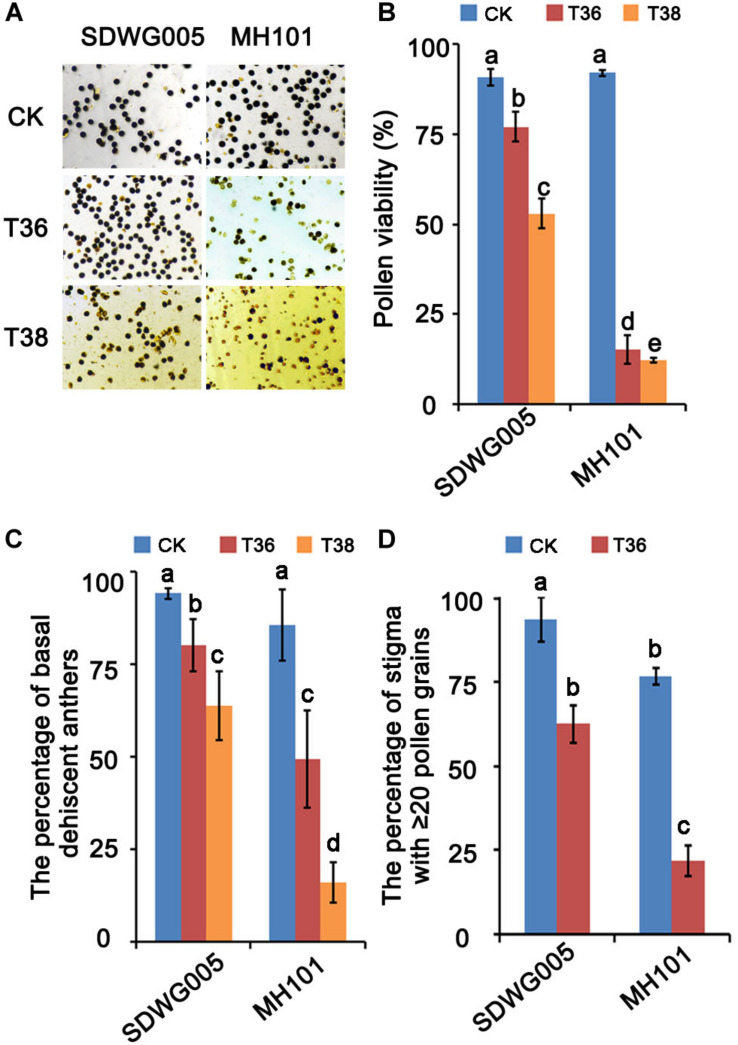
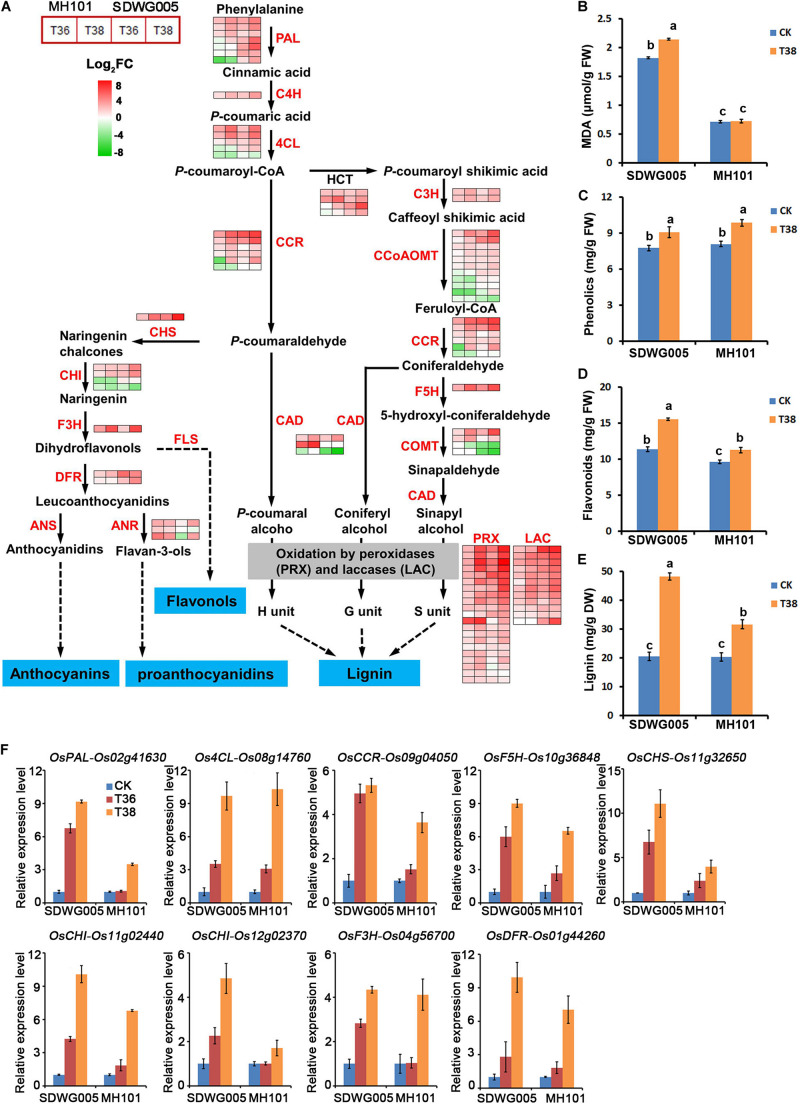
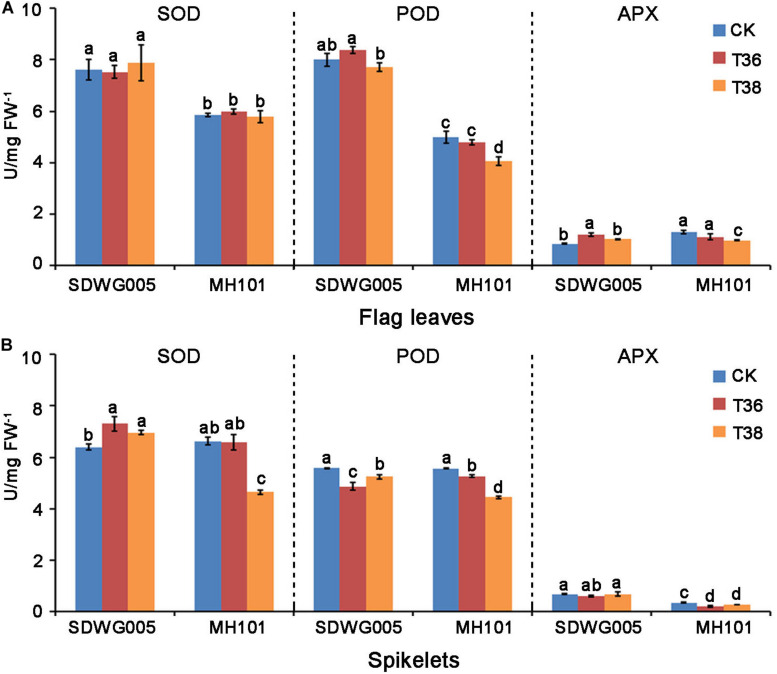
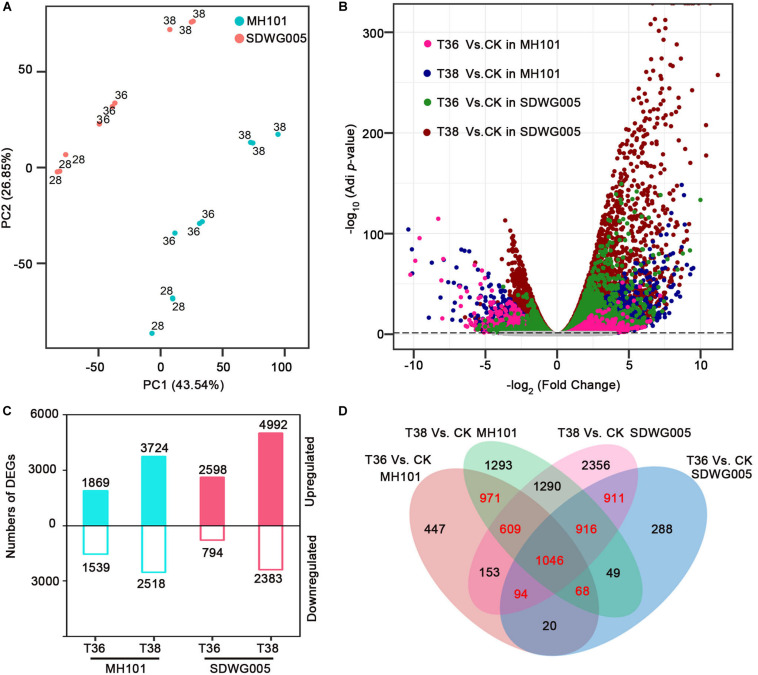
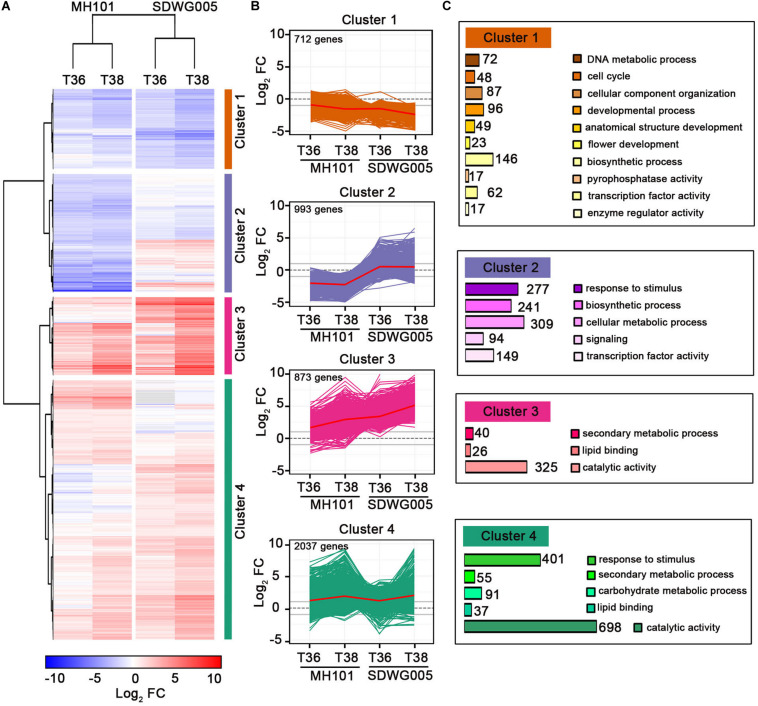
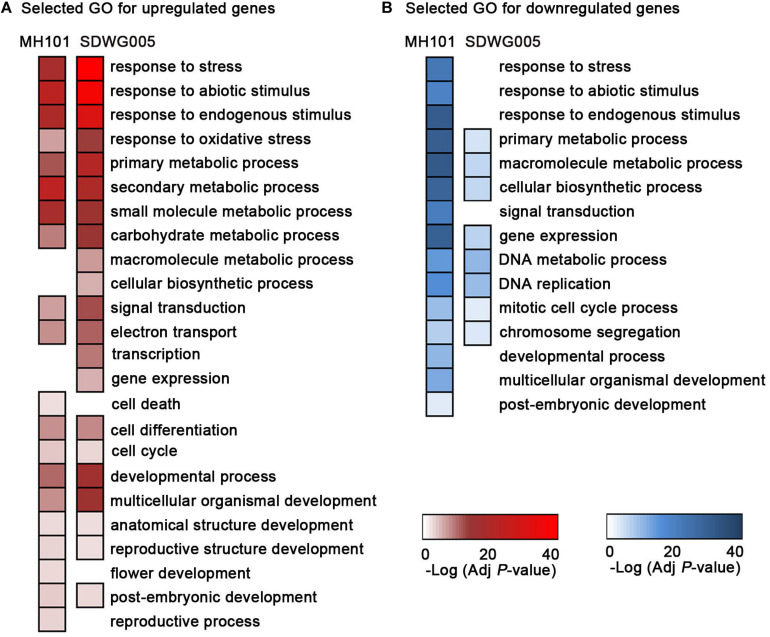
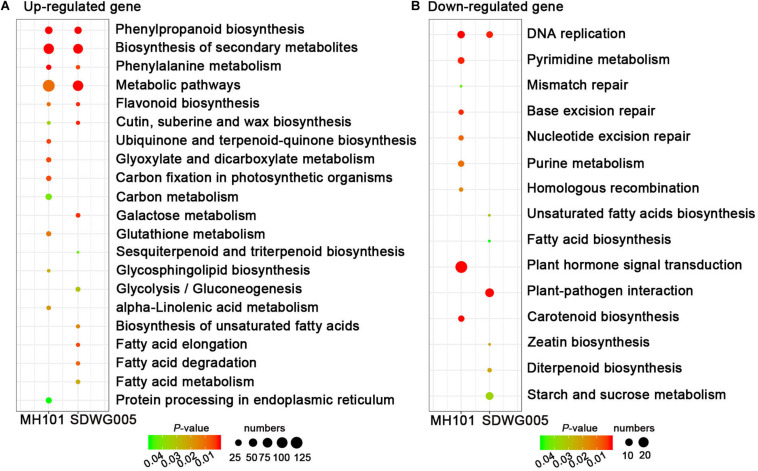
Rice is one of the major staple cereals in the world, but heat stress is increasingly threatening its yield. Analyzing the thermotolerance mechanism from new thermotolerant germplasms is very important for rice improvement. Here, physiological and transcriptome analyses were used to characterize the difference between two germplasms, heat-sensitive MH101 and heat-tolerant SDWG005. Two genotypes exhibited diverse heat responses in pollen viability, pollination characteristics, and antioxidant enzymatic activity in leaves and spikelets. Through cluster analysis, the global transcriptomic changes indicated that the ability of SDWG005 to maintain a steady-state balance of metabolic processes played an important role in thermotolerance. After analyses of gene ontology (GO) and Kyoto Encyclopedia of Genes and Genomes (KEGG) pathway enrichment, we found that the thermotolerance mechanism in SDWG00 was associated with reprogramming the cellular activities, such as response to abiotic stress and metabolic reorganization. In contrast, the down-regulated genes in MH101 that appeared to be involved in DNA replication and DNA repair proofreading, could cause serious injury to reproductive development when exposed to high temperature during meiosis. Furthermore, we identified 77 and 11 differentially expressed genes (DEGs) involved in lignin and flavonoids biosynthetic pathways, respectively. Moreover, we found that more lignin deposition and flavonoids accumulation happened in SDWG005 than in MH101 under heat stress. The results indicated that lignin and flavonoid biosynthetic pathways might play important roles in rice heat resistance during meiosis.
水稻是世界主要的谷类主食之一,但热胁迫对其产量的威胁日益增大。从新的耐热种质中分析耐热机制对水稻改良非常重要。在此,利用生理和转录组分析来表征热敏感型种质MH101和耐热型种质SDWG005之间的差异。两种基因型在花粉活力、授粉特性以及叶片和小穗中的抗氧化酶活性方面表现出不同的热响应。通过聚类分析,整体转录组变化表明SDWG005维持代谢过程稳态平衡的能力在耐热性中起重要作用。在对基因本体论(GO)和京都基因与基因组百科全书(KEGG)通路富集进行分析后,我们发现SDWG005中的耐热机制与细胞活动的重新编程有关,如对非生物胁迫的响应和代谢重组。相比之下,MH101中下调的基因似乎参与DNA复制和DNA修复校对,在减数分裂期间暴露于高温时可能对生殖发育造成严重损伤。此外,我们分别鉴定出77个和11个参与木质素和类黄酮生物合成途径的差异表达基因(DEG)。而且,我们发现在热胁迫下,SDWG005中木质素沉积和类黄酮积累比MH101更多。结果表明,木质素和类黄酮生物合成途径可能在减数分裂期间的水稻耐热性中发挥重要作用。