College of Public Health Sciences, Chulalongkorn University, Bangkok, 10330, Thailand.
Faculty of Public Health, Universitas Muhammadiyah Semarang, Kota Semarang, Jawa Tengah, 50273, Indonesia.
F1000Res. 2019 Jul 30;8:1217. doi: 10.12688/f1000research.19341.4. eCollection 2019.
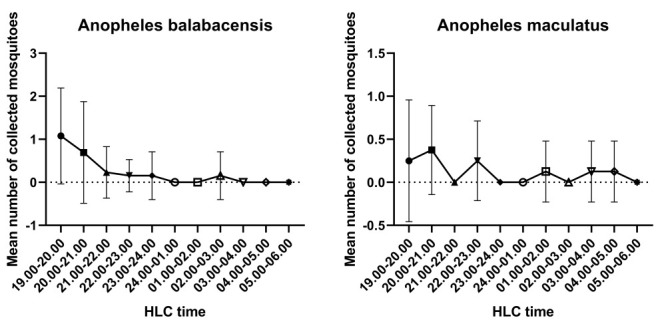
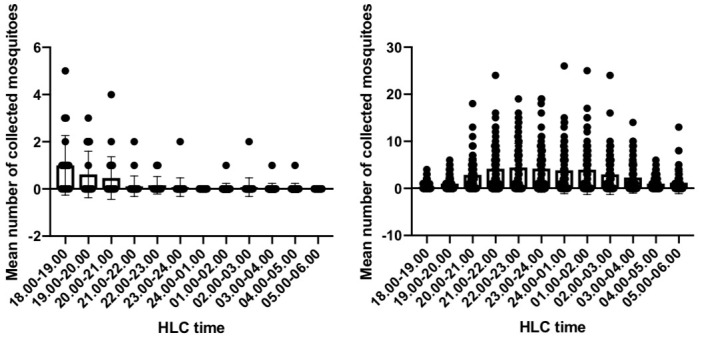
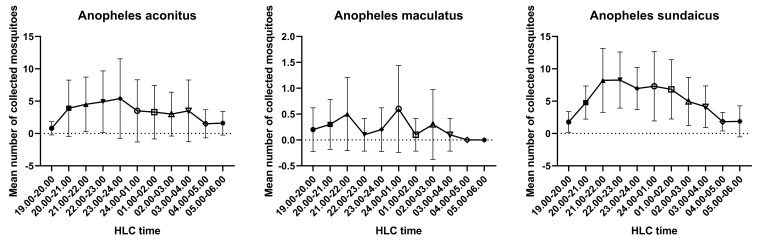
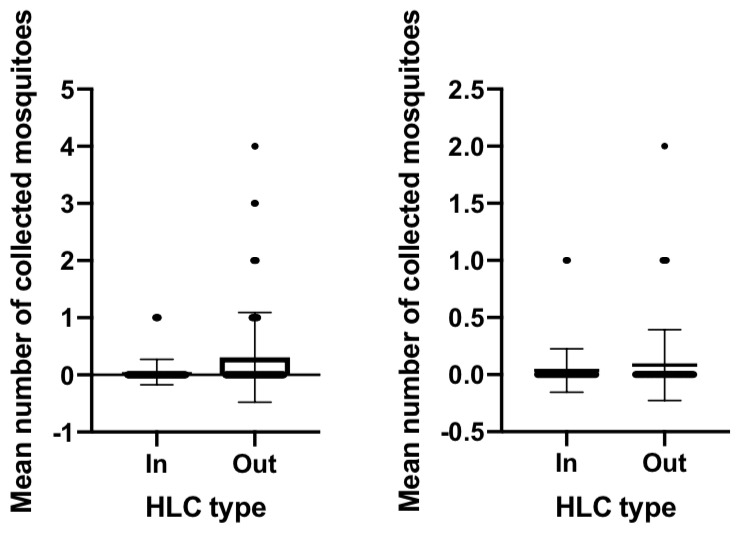
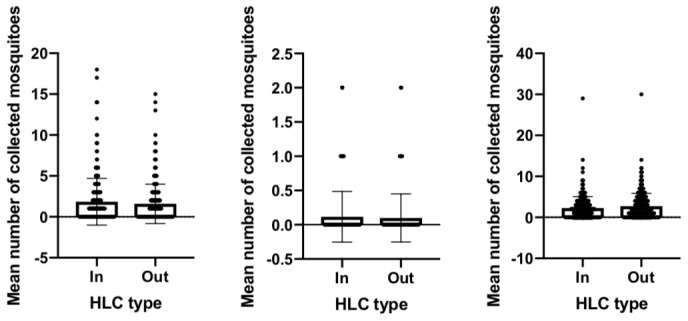
Malaria is a significant health burden for many countries worldwide. Insecticide-treated bed nets and mosquito repellent are considered effective methods for preventing bites. However, changes in the biological properties of the vector have led to a reduction in their effectiveness. The vector has been studied, but the behaviour has been poorly examined. Therefore, this study aims to investigate the importance of primary vector activity for selecting an appropriate malaria protection strategy. Initially, active case detection (ACD) was carried out in western and eastern parts of Indonesia, Jambi and Sumba, to confirm their endemicity level. According to the 2016 national health report of Indonesia, Jambi has an annual parasite index (API) of 0.14 and Sumba has an API of 5.41. A series of entomological observations were carried out to compare the biting activity of vectors in two localities, with a total of 216 houses and 216 catchers (108 at each study site). The results indicated that endemicity at the sub-district level is higher than that at the provincial level. Only was found to be exophagic. Multiple comparisons found different biting times between the sites, suggesting that early evening (18.00-20.00) is most likely to be the time when mosquitoes transmit the parasite in Jambi, while during sleeping hours (21.00-01.00) is the peak biting time of mosquitoes in Sumba. The study demonstrates the importance of species blood feeding patterns in selecting an appropriate malaria protection strategy.
疟疾是全球许多国家的重大健康负担。经杀虫剂处理的蚊帐和驱蚊剂被认为是预防蚊虫叮咬的有效方法。然而,病媒生物的生物学特性发生变化,导致其效果降低。已经对病媒生物进行了研究,但对其行为的研究却很少。因此,本研究旨在探讨主要病媒生物活动在选择适当的疟疾保护策略方面的重要性。
最初,在印度尼西亚的西部和东部、占碑和松巴哇进行了主动病例检测(ACD),以确认其流行程度。根据印度尼西亚 2016 年国家卫生报告,占碑的年寄生虫指数(API)为 0.14,松巴哇的 API 为 5.41。进行了一系列的昆虫学观察,以比较两个地方的病媒生物叮咬活动,总共观察了 216 所房屋和 216 个捕蚊器(每个研究地点 108 个)。结果表明,在分区一级的流行程度高于省级。只有一种是外食性的。多项比较发现两个地点的叮咬时间不同,这表明在傍晚(18.00-20.00)蚊子最有可能传播疟原虫,而在松巴哇,蚊子的叮咬高峰期是在睡眠时间(21.00-01.00)。
该研究表明,在选择适当的疟疾保护策略时,了解病媒生物的吸血模式非常重要。