Bodéré Céline, Cabon Mathilde, Woda Alain, Giroux-Metges Marie-Agnès, Bodéré Youenn, Saliou Philippe, Quinio Bertrand, Misery Laurent, Le Fur-Bonnabesse Anais
Laboratory Interactions Epitheliums Neurones (LIEN), Université de Bretagne Occidentale, Brest, France.
Centre d'évaluation et de traitement de la douleur, CHRU Brest, Brest, France.
SAGE Open Med. 2020 Oct 7;8:2050312120943072. doi: 10.1177/2050312120943072. eCollection 2020.
We studied the effects of a specific cardio training program lasting 5 years on pain and quality of life in fibromyalgia patients.
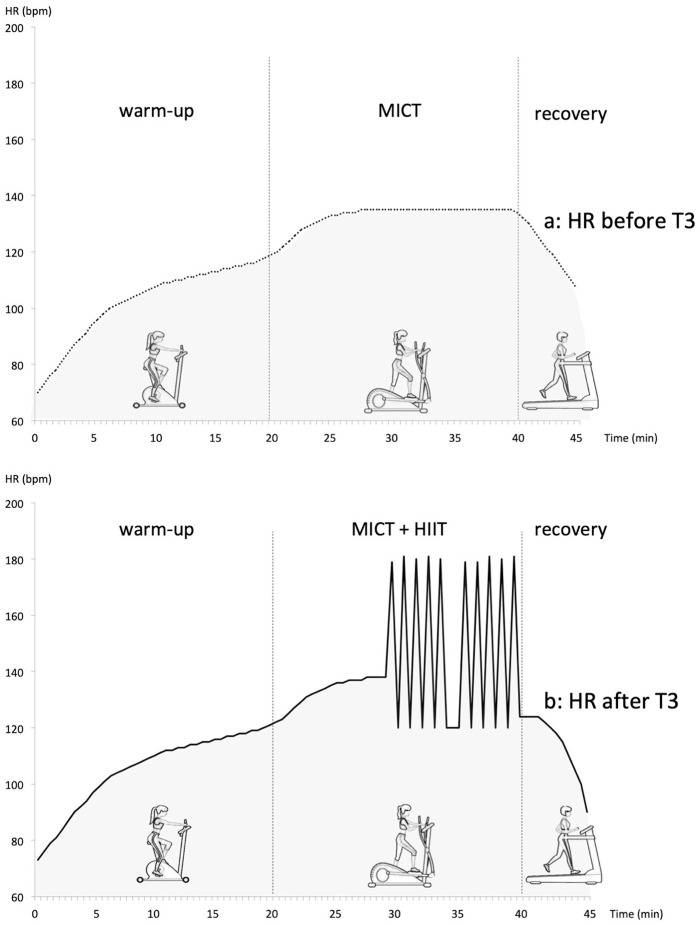
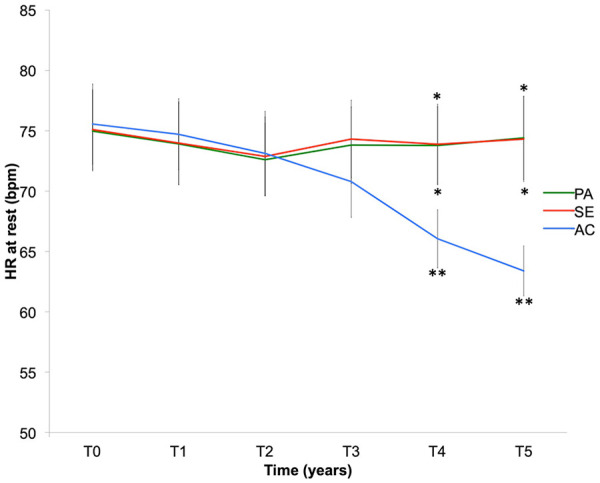
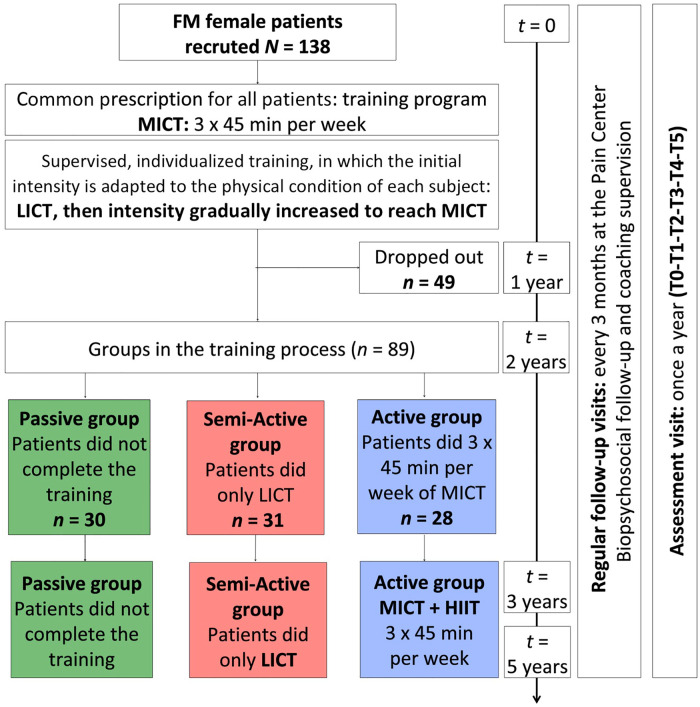
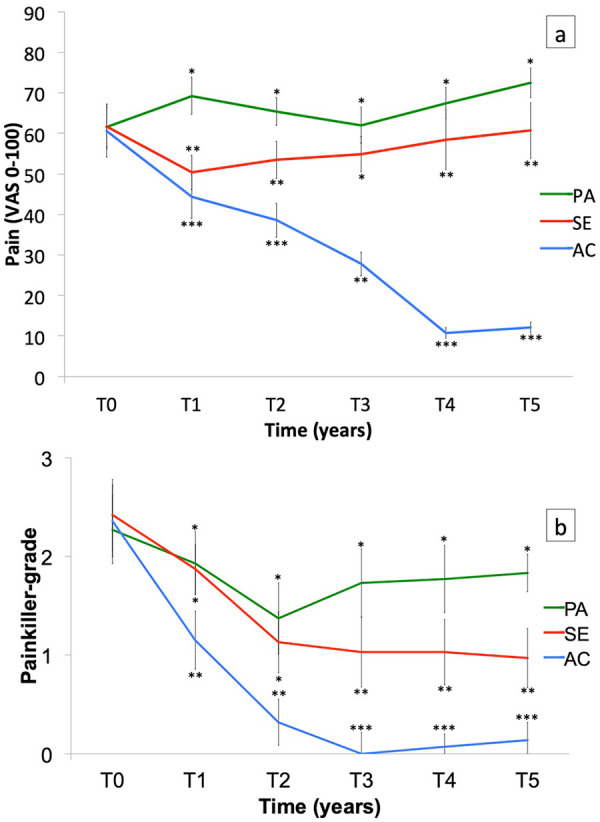
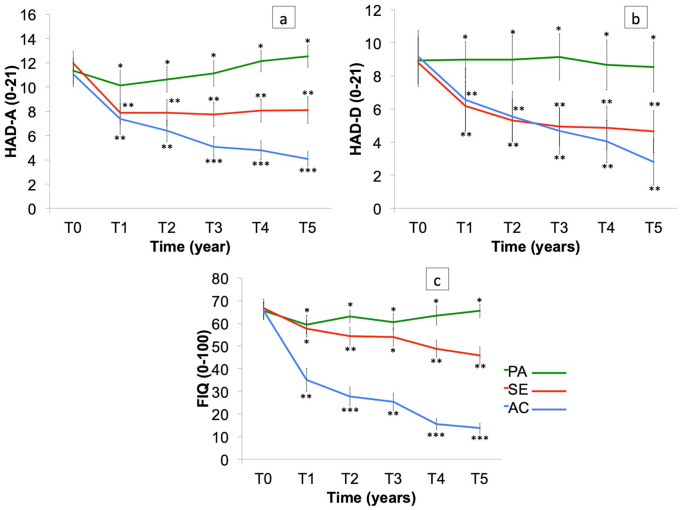
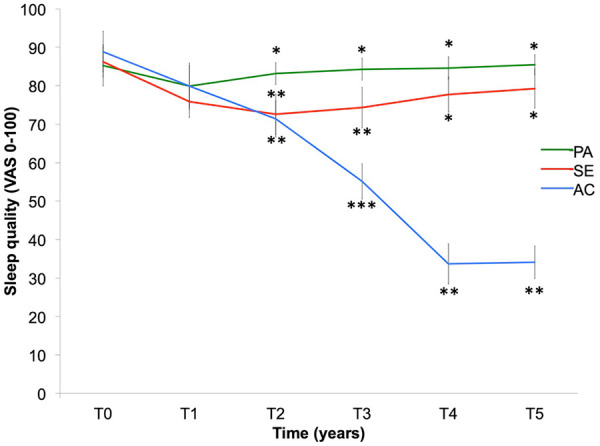
An observational longitudinal pilot study was conducted in 138 fibromyalgia women. Fibromyalgia women recruited were asked to carry out three sessions per week, each lasting 45 min, of moderate-intensity continuous training (64%-75% Maximal Heart rate [HRmax]). During the first year, the patients progressively increased their training intensity. During the last 2 years, the patients were asked to associate moderate-intensity continuous training and high-intensity interval training (85%-90% HRmax). Pain on a visual analog scale, anxiety and depression state on the Hospital Anxiety and Depression Scale, impact of fibromyalgia on daily life using the Fibromyalgia Impact Questionnaire, heart rate and sleep quality (visual analog scale) were assessed at baseline and each year for 5 years.
Forty-nine patients dropped out in the first year. Depending on their training status, the remaining 89 patients were retrospectively assigned to one of the three groups: Active (moderate-intensity continuous training), Semi-Active (one or two sessions, low-intensity continuous training <60% HRmax) and Passive (non-completion of training), based on their ability to comply with the program. Alleviation of all symptoms ( < 0.0001) was observed in the Active group. Increasing exercise intensity enhanced the effects obtained with moderate-intensity continuous training. Significant change in the Fibromyalgia Impact Questionnaire ( < 0.0001) and depression (Hospital Anxiety and Depression Scale; < 0.0001), and no significant decrease in pain were noted in the Semi-Active group. No effect of the training was observed in the Passive group.
The study intervention associated with multidisciplinary care alleviated pain, anxiety and depression, and improved both quality of life and quality of sleep, in fibromyalgia patients.
我们研究了一项为期5年的特定心脏训练计划对纤维肌痛患者疼痛和生活质量的影响。
对138名纤维肌痛女性进行了一项观察性纵向试点研究。招募的纤维肌痛女性被要求每周进行三次,每次持续45分钟的中等强度持续训练(最大心率[HRmax]的64%-75%)。在第一年,患者逐渐增加训练强度。在最后两年,要求患者将中等强度持续训练和高强度间歇训练(HRmax的85%-90%)相结合。在基线时以及之后的5年中每年评估视觉模拟量表上的疼痛、医院焦虑抑郁量表上的焦虑和抑郁状态、使用纤维肌痛影响问卷评估纤维肌痛对日常生活的影响、心率和睡眠质量(视觉模拟量表)。
第一年有49名患者退出。根据她们的训练状态,其余89名患者根据其遵守训练计划的能力被回顾性地分为三组之一:活跃组(中等强度持续训练)、半活跃组(一或两次低强度持续训练<60%HRmax)和被动组(未完成训练)。活跃组观察到所有症状均有减轻(<0.0001)。增加运动强度增强了中等强度持续训练的效果。半活跃组纤维肌痛影响问卷有显著变化(<0.0001)和抑郁(医院焦虑抑郁量表;<0.0001),但疼痛无显著减轻。被动组未观察到训练效果。
与多学科护理相关的研究干预减轻了纤维肌痛患者的疼痛、焦虑和抑郁,并改善了生活质量和睡眠质量。