ESI and CEC, Biosciences, University of Exeter, Penryn, UK.
Department of Animal and Plant Sciences, University of Sheffield, Sheffield, UK.
J Evol Biol. 2021 Feb;34(2):246-255. doi: 10.1111/jeb.13722. Epub 2020 Nov 18.
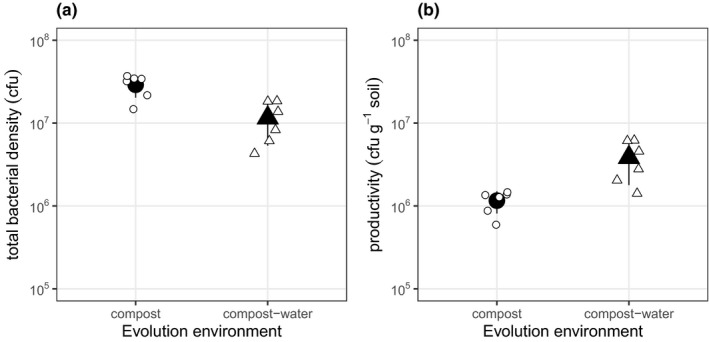
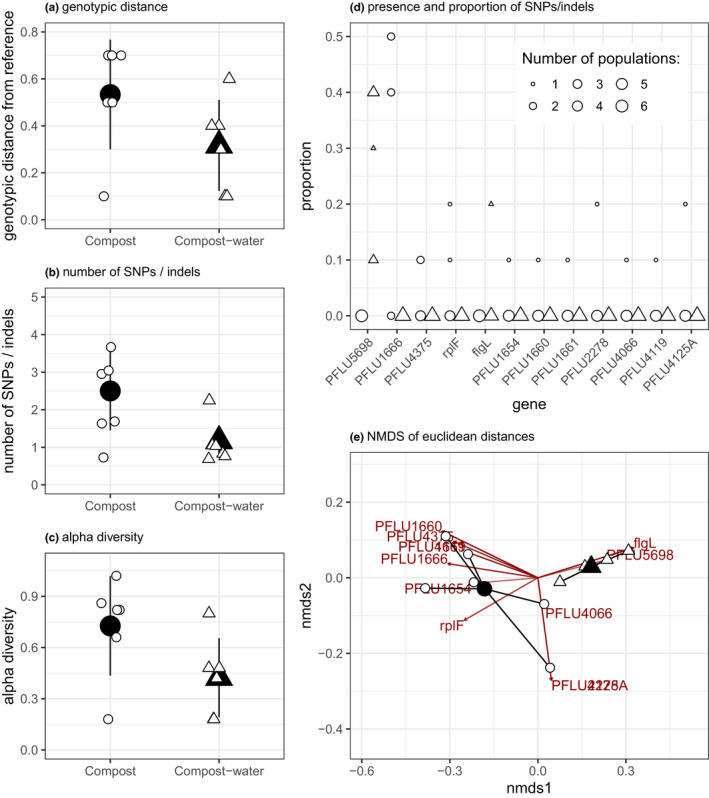
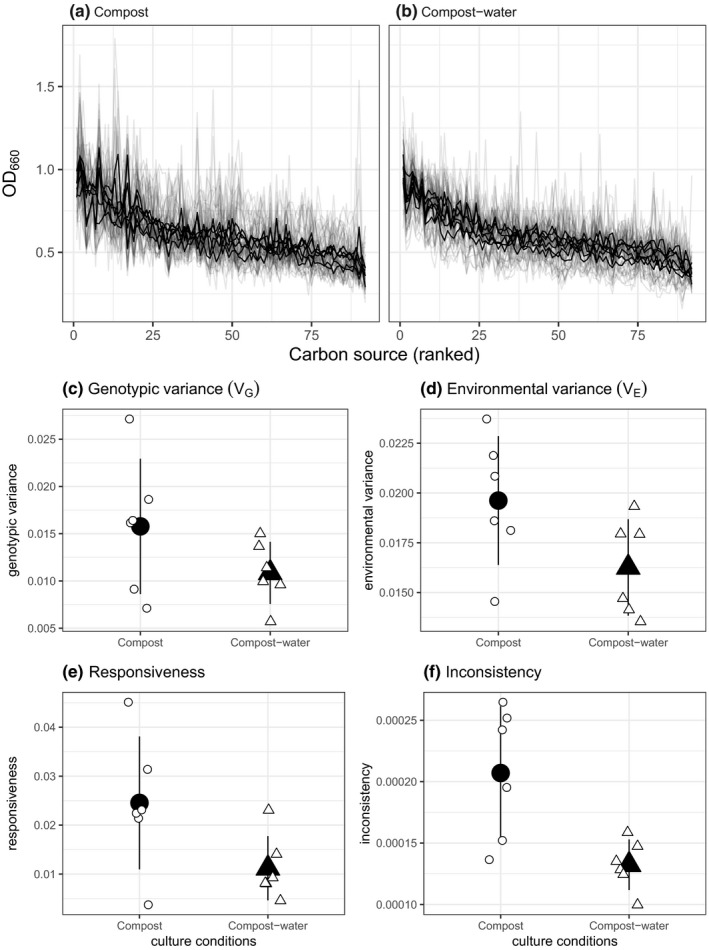
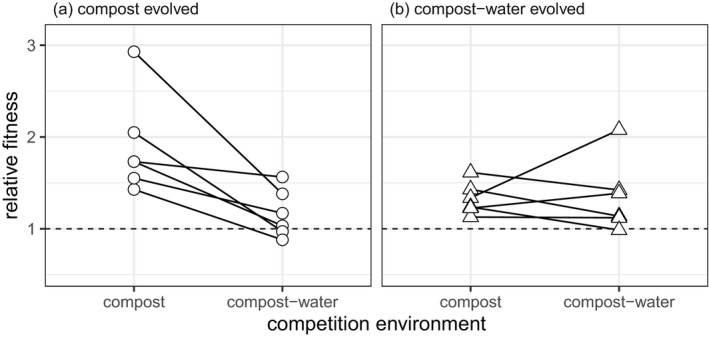
Spatial resource heterogeneity is expected to be a key driver for the evolution of diversity. However, direct empirical support for this prediction is limited to studies carried out in simplified laboratory environments. Here, we investigate how altering spatial heterogeneity of potting compost-by the addition of water and mixing-affects the evolutionary diversification of a bacterial species, Pseudomonas fluorescens, that is naturally found in the environment. There was a greater propensity of resource specialists to evolve in the unmanipulated compost, while more generalist phenotypes dominated the compost-water mix. Genomic data were consistent with these phenotypic findings. Competition experiments strongly suggest these results are due to diversifying selection as a result of resource heterogeneity, as opposed to other covariables. Overall, our findings corroborate theoretical and in vitro findings, but in semi-natural, more realistic conditions.
空间资源异质性预计将成为多样性进化的关键驱动因素。然而,直接的实证支持这一预测仅限于在简化的实验室环境中进行的研究。在这里,我们研究了改变盆栽堆肥的空间异质性(通过加水和混合)如何影响自然存在于环境中的细菌荧光假单胞菌的进化多样化。在未处理的堆肥中,资源专化者更有可能进化,而更具泛化表型的则占据主导地位在堆肥-水混合物中。基因组数据与这些表型发现一致。竞争实验强烈表明,这些结果是由于资源异质性导致的多样化选择,而不是其他协变量。总的来说,我们的发现与理论和体外研究结果相符,但在半自然、更现实的条件下。