Chang Doyoung, Mohan Prasoon, Amin Ayush, Garcia-Buitrago Monica, Rodriguez Jose, Peaden Robert
University of Miami, Miller School of Medicine, 1600 NW 10th Ave #1140, Miami, FL 33136, USA.
Asian Pac J Cancer Prev. 2020 Oct 1;21(10):3069-3075. doi: 10.31557/APJCP.2020.21.10.3069.
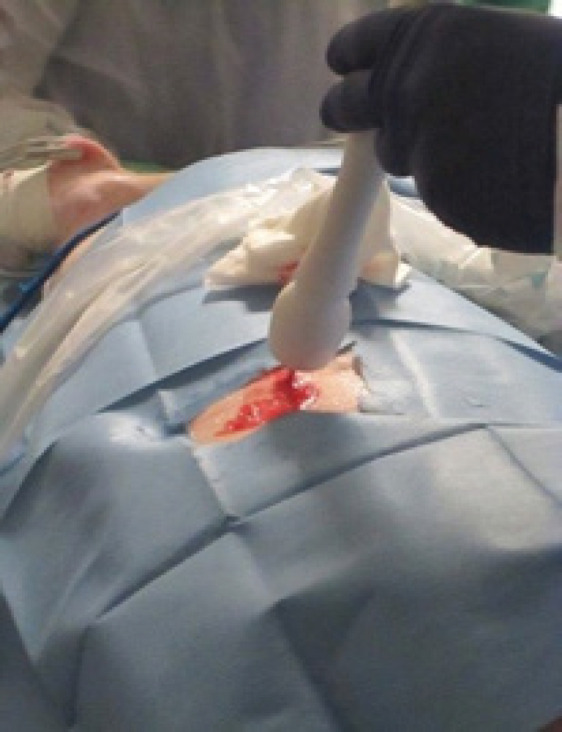
Liquid nitrogen-based cryoablation induces freezing evenly throughout the probe tip surface, resulting in larger ablation volumes and faster treatment times. The purpose of this preliminary investigation is to determine the efficacy of the liquid nitrogen-based Visica2 Cryoablation System (Sanarus Technologies, Pleasanton, CA) in in vivo porcine kidney, liver, and fibro-fatty tissue.
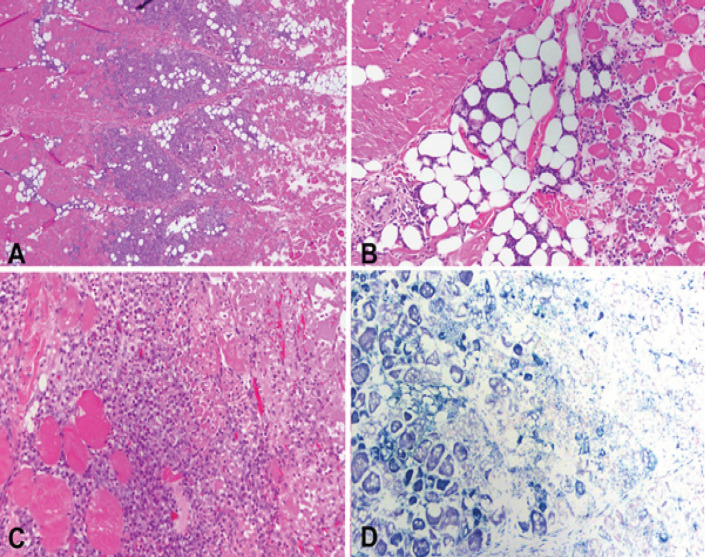
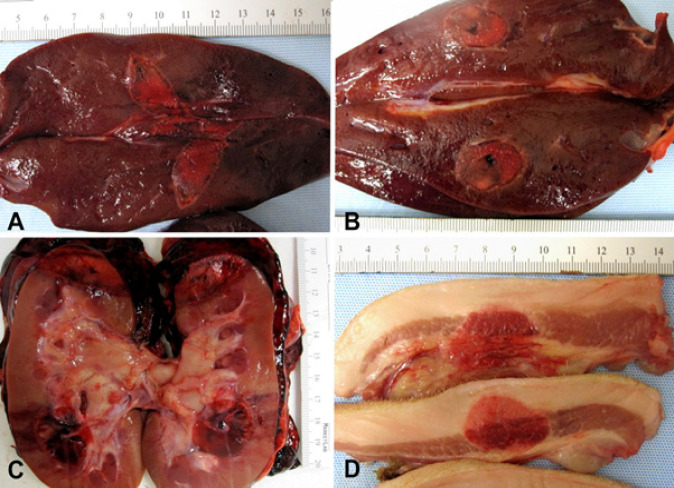
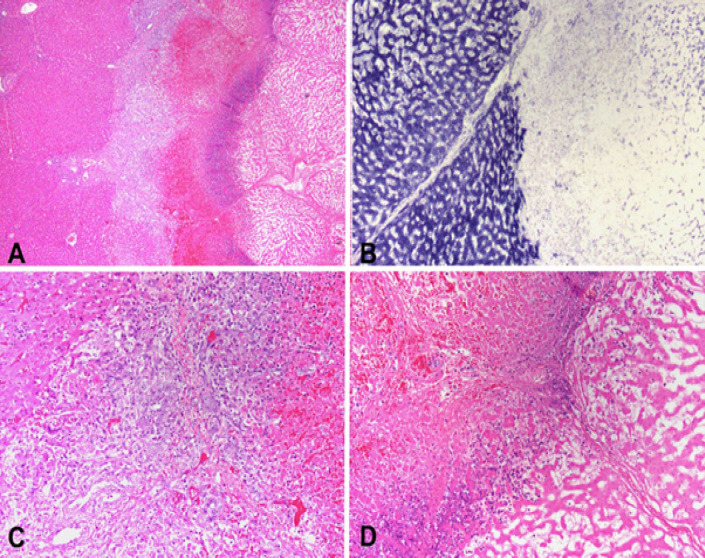
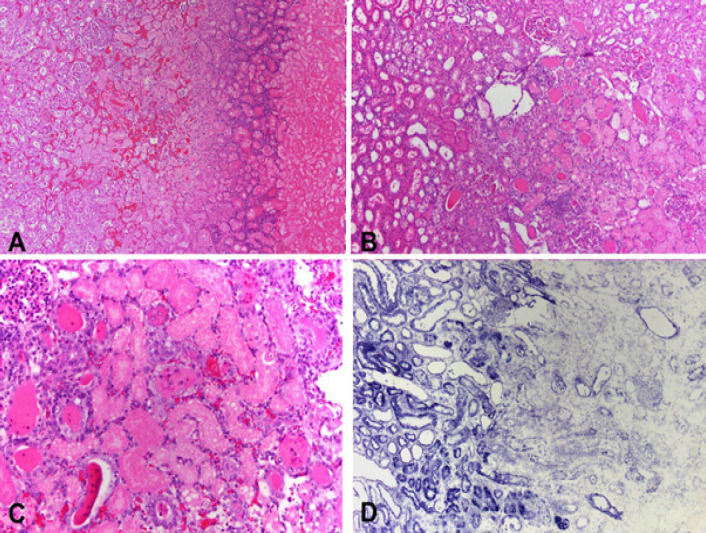
Ablations were performed under ultrasound guidance in 4 Yorkshire pigs. The target lesion cross-section width (W) and depth (D) were 1 cm for liver (n=8), kidney (n=4), and head-neck (n=5) and 2 cm for kidney (n=4). Expected axial length (L) of the resulting lesion is approximately 4 cm. After three-day survival, the ablated tissue was harvested and histologically analysed. The mean width and depth were compared with the target diameter using a one-sample t-test.
All animals survived the procedure. For the 1 cm target, mean dimensions (L x W x D) were 3.8±1.5 x 1.7±0.3 x 1.7±0.7 for liver, 3.0±0.5 x 2.0±0.4 x 1.7±0.6 for kidney, and 3.3±0.8 x 1.8±0.4 x 1.8±0.4 for head-neck. Mean width and depth were significantly greater than desired dimension. For the 2 cm target, mean dimensions were 3.2±0.5 x 3.1±0.8 x 1.9±0.7. Mean width and depth were not significantly different to desired target.
Our preliminary results show that the Visica2 liquid nitrogen-based cryoablation system can efficiently and reproducibly create ablation volumes in liver, kidney, and fibro-fatty tissue within 4 minutes and 12 minutes for 1cm and 2cm targeted diameters, respectively. Further investigation is necessary to determine the optimal freeze-thaw-freeze protocol for larger ablation volumes.
.
基于液氮的冷冻消融能在整个探头尖端表面均匀诱导冷冻,从而产生更大的消融体积并缩短治疗时间。本初步研究的目的是确定基于液氮的Visica2冷冻消融系统(Sanarus Technologies,普莱森顿,加利福尼亚州)在猪体内肾脏、肝脏和纤维脂肪组织中的疗效。
在超声引导下对4头约克夏猪进行消融。肝脏(n = 8)、肾脏(n = 4)和头颈(n = 5)的目标病变横截面宽度(W)和深度(D)为1厘米,肾脏(n = 4)的为2厘米。所产生病变的预期轴向长度(L)约为4厘米。在存活三天后,收获消融组织并进行组织学分析。使用单样本t检验将平均宽度和深度与目标直径进行比较。
所有动物均在手术过程中存活。对于1厘米的目标,肝脏的平均尺寸(L×W×D)为3.8±1.5×1.7±0.3×1.7±0.7,肾脏为3.0±0.5×2.0±0.4×1.7±0.6,头颈为3.3±0.8×1.8±0.4×1.8±0.4。平均宽度和深度显著大于预期尺寸。对于2厘米的目标,平均尺寸为3.2±0.5×3.1±0.8×1.9±0.7。平均宽度和深度与预期目标无显著差异。
我们的初步结果表明,基于Visica2液氮的冷冻消融系统能够分别在4分钟和12分钟内,在肝脏、肾脏和纤维脂肪组织中高效且可重复地创建针对1厘米和2厘米目标直径的消融体积。有必要进行进一步研究以确定用于更大消融体积的最佳冻融冻方案。