Department of Nuclear Medicine, Soonchunhyang University Hospital Cheonan, Cheonan 31151, Chungcheongnam-do, Korea.
Department of Integrated Biomedical Science, Soonchunhyang Institute of Medi-bio Science (SIMS), Soonchunhyang University, Cheonan 31151, Chungcheongnam-do, Korea.
Int J Mol Sci. 2020 Oct 23;21(21):7862. doi: 10.3390/ijms21217862.
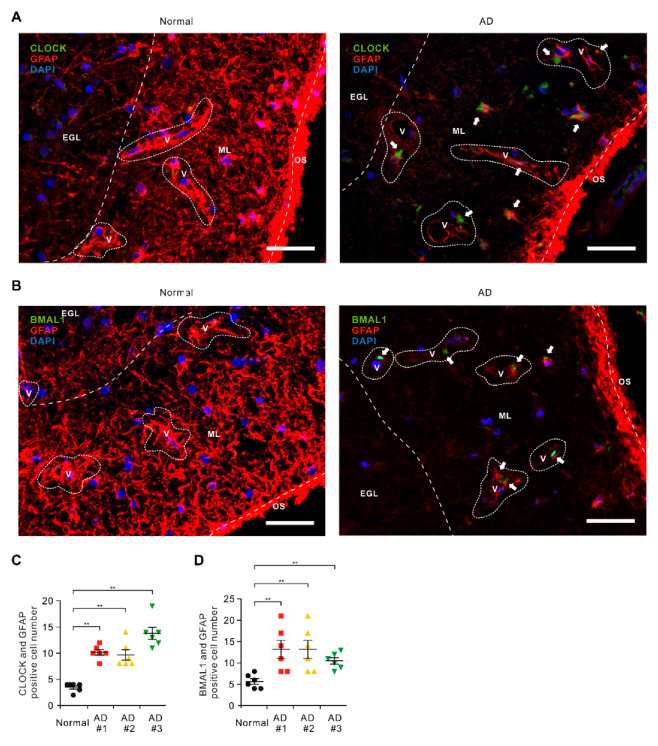
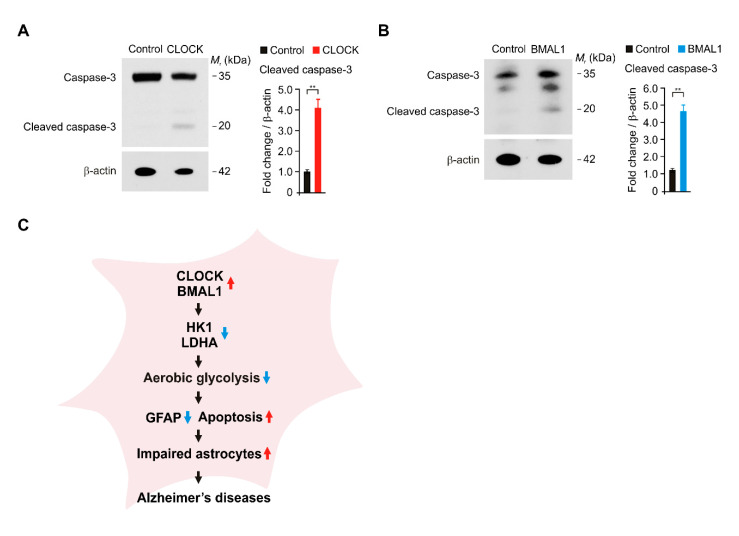
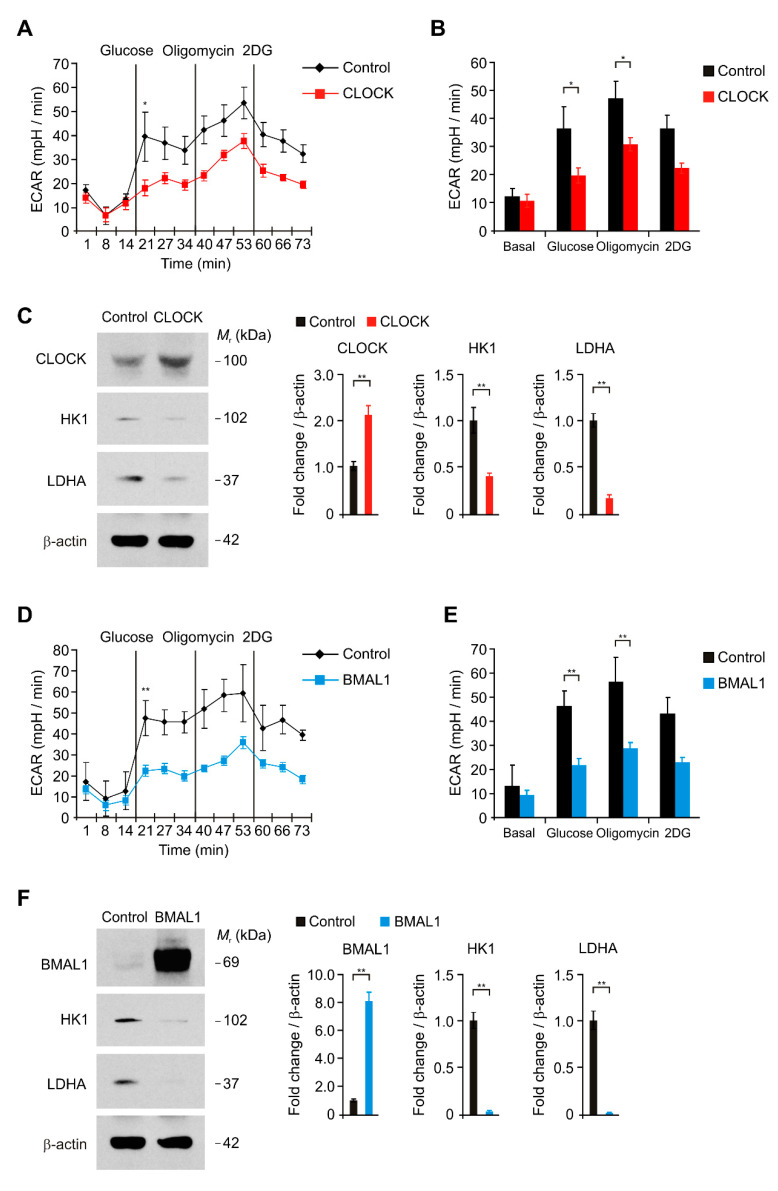
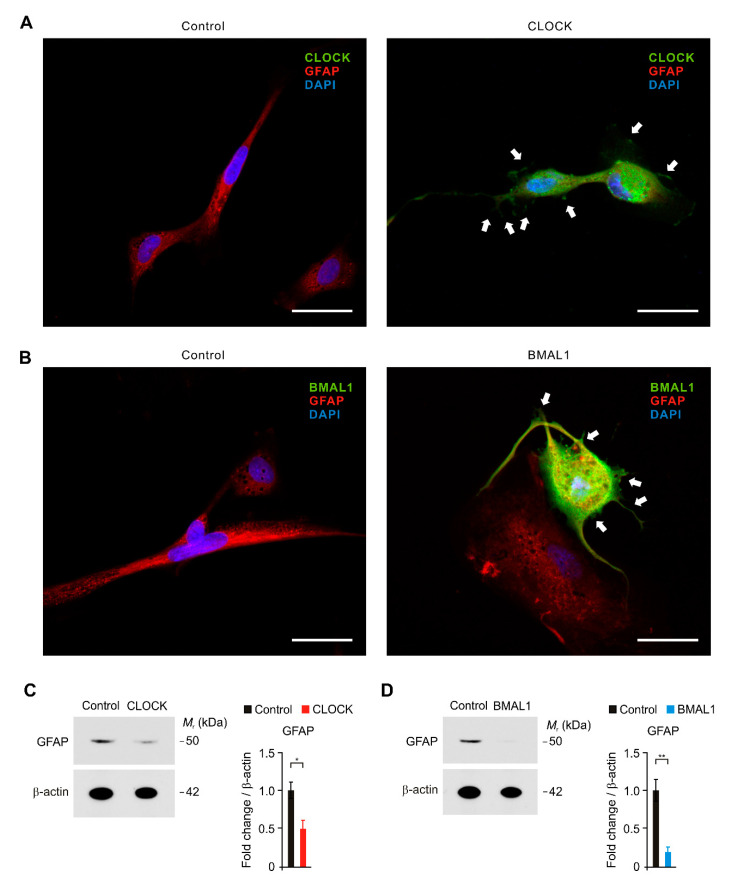
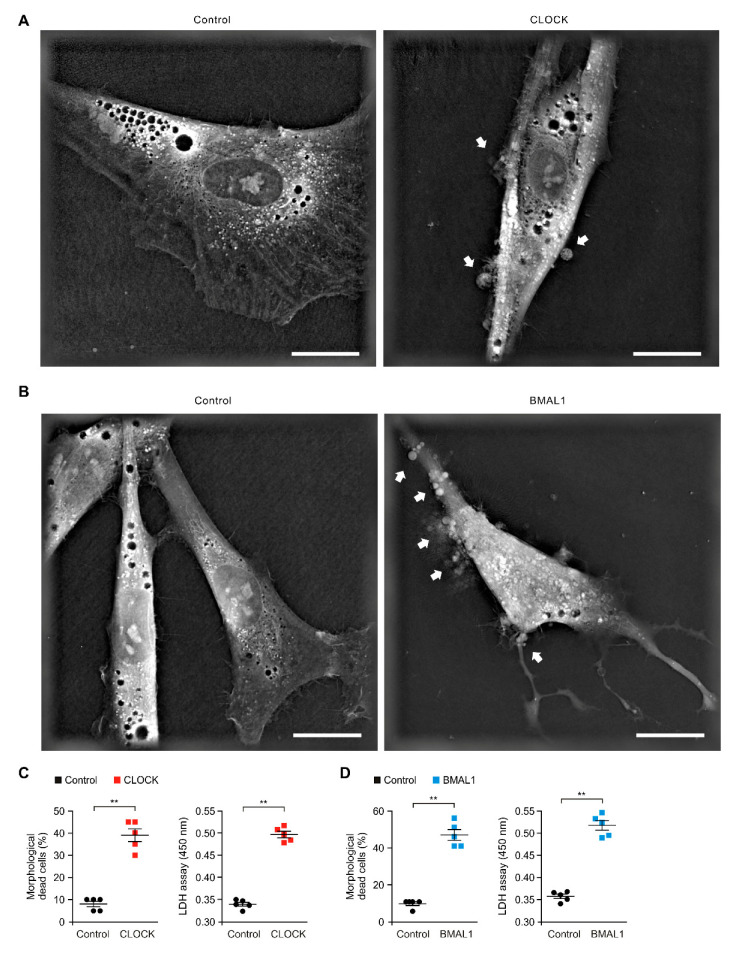
Altered glucose metabolism has been implicated in the pathogenesis of Alzheimer's disease (AD). Aerobic glycolysis from astrocytes is a critical metabolic pathway for brain energy metabolism. Disturbances of circadian rhythm have been associated with AD. While the role of circadian locomotor output cycles kaput (CLOCK) and brain muscle ARNT-like1 (BMAL1), the major components in the regulation of circadian rhythm, has been identified in the brain, the mechanism by which CLOCK and BMAL1 regulates the dysfunction of astrocytes in AD remains unclear. Here, we show that the protein levels of CLOCK and BMAL1 are significantly elevated in impaired astrocytes of cerebral cortex from patients with AD. We demonstrate that the over-expression of CLOCK and BMAL1 significantly suppresses aerobic glycolysis and lactate production by the reduction in hexokinase 1 (HK1) and lactate dehydrogenase A (LDHA) protein levels in human astrocytes. Moreover, the elevation of CLOCK and BMAL1 induces functional impairment by the suppression of glial fibrillary acidic protein (GFAP)-positive filaments in human astrocytes. Furthermore, the elevation of CLOCK and BMAL1 promotes cytotoxicity by the activation of caspase-3-dependent apoptosis in human astrocytes. These results suggest that the elevation of CLOCK and BMAL1 contributes to the impairment of astrocytes by inhibition of aerobic glycolysis in AD.
葡萄糖代谢的改变与阿尔茨海默病(AD)的发病机制有关。星形胶质细胞的有氧糖酵解是大脑能量代谢的关键代谢途径。昼夜节律紊乱与 AD 有关。虽然昼夜节律运动输出周期 kaput(CLOCK)和脑肌肉 ARNT 样 1(BMAL1)作为调节昼夜节律的主要成分在大脑中已经得到确认,但 CLOCK 和 BMAL1 调节 AD 中星形胶质细胞功能障碍的机制尚不清楚。在这里,我们表明,AD 患者大脑皮层受损星形胶质细胞中 CLOCK 和 BMAL1 的蛋白水平显著升高。我们证明,通过降低人星形胶质细胞中己糖激酶 1(HK1)和乳酸脱氢酶 A(LDHA)蛋白水平,CLOCK 和 BMAL1 的过表达可显著抑制有氧糖酵解和乳酸生成。此外,CLOCK 和 BMAL1 的升高通过抑制人星形胶质细胞中神经胶质纤维酸性蛋白(GFAP)阳性丝来诱导功能障碍。此外,CLOCK 和 BMAL1 的升高通过激活人星形胶质细胞中 caspase-3 依赖性细胞凋亡来促进细胞毒性。这些结果表明,CLOCK 和 BMAL1 的升高通过抑制 AD 中的有氧糖酵解导致星形胶质细胞损伤。