• 文献检索
  • 文档翻译
  • 深度研究
  • 学术资讯
  • Suppr Zotero 插件Zotero 插件
  • 邀请有礼
  • 套餐&价格
  • 历史记录
应用&插件
Suppr Zotero 插件Zotero 插件浏览器插件Mac 客户端Windows 客户端微信小程序
定价
高级版会员购买积分包购买API积分包
服务
文献检索文档翻译深度研究API 文档MCP 服务
关于我们
关于 Suppr公司介绍联系我们用户协议隐私条款
关注我们

Suppr 超能文献

核心技术专利:CN118964589B侵权必究
粤ICP备2023148730 号-1Suppr @ 2026

文献检索

告别复杂PubMed语法,用中文像聊天一样搜索,搜遍4000万医学文献。AI智能推荐,让科研检索更轻松。

立即免费搜索

文件翻译

保留排版,准确专业,支持PDF/Word/PPT等文件格式,支持 12+语言互译。

免费翻译文档

深度研究

AI帮你快速写综述,25分钟生成高质量综述,智能提取关键信息,辅助科研写作。

立即免费体验

内在增殖率变化和人类红内期疟原虫的可塑性。

Intrinsic multiplication rate variation and plasticity of human blood stage malaria parasites.

机构信息

Department of Infection Biology, London School of Hygiene and Tropical Medicine, Keppel St, London, WC1E 7HT, UK.

LPHI, MIVEGEC, INSERM, CNRS, IRD, University of Montpellier, 34095, Montpellier, Cedex 5, France.

出版信息

Commun Biol. 2020 Oct 28;3(1):624. doi: 10.1038/s42003-020-01349-7.

DOI:10.1038/s42003-020-01349-7
PMID:33116247
原文链接:https://pmc.ncbi.nlm.nih.gov/articles/PMC7595149/
Abstract

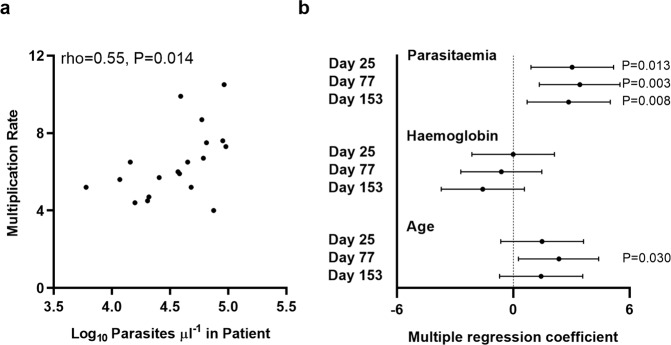
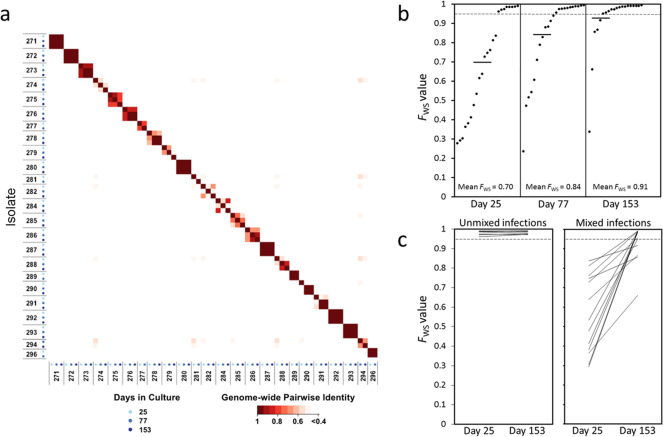
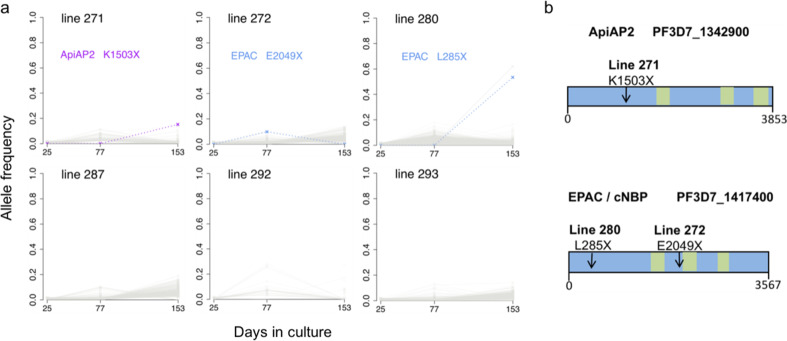
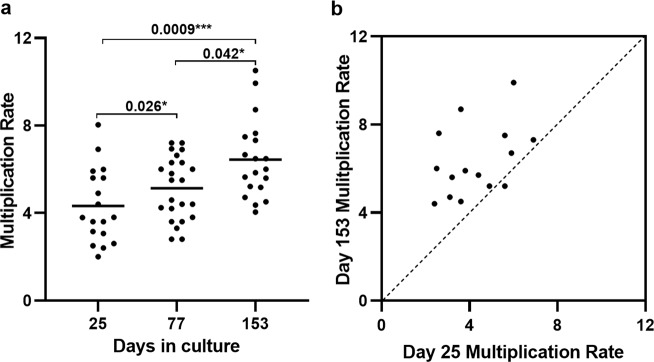
Pathogen multiplication rate is theoretically an important determinant of virulence, although often poorly understood and difficult to measure accurately. We show intrinsic asexual blood stage multiplication rate variation of the major human malaria parasite Plasmodium falciparum to be associated with blood-stage infection intensity in patients. A panel of clinical isolates from a highly endemic West African population was analysed repeatedly during five months of continuous laboratory culture, showing a range of exponential multiplication rates at all timepoints tested, mean rates increasing over time. All isolates had different genome sequences, many containing within-isolate diversity that decreased over time in culture, but increases in multiplication rates were not primarily attributable to genomic selection. New mutants, including premature stop codons emerging in a few isolates, did not attain sufficiently high frequencies to substantially affect overall multiplication rates. Significantly, multiplication rate variation among the isolates at each of the assayed culture timepoints robustly correlated with parasite levels seen in patients at clinical presentation, indicating innate parasite control of multiplication rate that contributes to virulence.

摘要

病原体繁殖率理论上是一个重要的毒力决定因素,尽管通常理解不足且难以准确测量。我们发现主要人体疟疾寄生虫疟原虫的内在无性血期繁殖率变化与患者的血液期感染强度有关。从高度流行的西非人群中分析了一组临床分离株,在五个月的连续实验室培养中反复进行分析,在所有测试的时间点均显示出不同的指数繁殖率,平均繁殖率随时间增加。所有分离株都有不同的基因组序列,其中许多包含随时间在培养过程中减少的株内多样性,但繁殖率的增加并非主要归因于基因组选择。新的突变体,包括少数分离株中出现的过早终止密码子,没有达到足够高的频率,无法显著影响总体繁殖率。重要的是,在每个检测的培养时间点,分离株之间的繁殖率变化与患者就诊时的寄生虫水平显著相关,表明寄生虫对繁殖率的固有控制有助于毒力。
https://cdn.ncbi.nlm.nih.gov/pmc/blobs/c6f0/7595149/f8537264e683/42003_2020_1349_Fig4_HTML.jpg
https://cdn.ncbi.nlm.nih.gov/pmc/blobs/c6f0/7595149/367bcf888e0d/42003_2020_1349_Fig1_HTML.jpg
https://cdn.ncbi.nlm.nih.gov/pmc/blobs/c6f0/7595149/f9e5349bf834/42003_2020_1349_Fig2_HTML.jpg
https://cdn.ncbi.nlm.nih.gov/pmc/blobs/c6f0/7595149/d20bef0790dc/42003_2020_1349_Fig3_HTML.jpg
https://cdn.ncbi.nlm.nih.gov/pmc/blobs/c6f0/7595149/f8537264e683/42003_2020_1349_Fig4_HTML.jpg
https://cdn.ncbi.nlm.nih.gov/pmc/blobs/c6f0/7595149/367bcf888e0d/42003_2020_1349_Fig1_HTML.jpg
https://cdn.ncbi.nlm.nih.gov/pmc/blobs/c6f0/7595149/f9e5349bf834/42003_2020_1349_Fig2_HTML.jpg
https://cdn.ncbi.nlm.nih.gov/pmc/blobs/c6f0/7595149/d20bef0790dc/42003_2020_1349_Fig3_HTML.jpg
https://cdn.ncbi.nlm.nih.gov/pmc/blobs/c6f0/7595149/f8537264e683/42003_2020_1349_Fig4_HTML.jpg

相似文献

1
Intrinsic multiplication rate variation and plasticity of human blood stage malaria parasites.内在增殖率变化和人类红内期疟原虫的可塑性。
Commun Biol. 2020 Oct 28;3(1):624. doi: 10.1038/s42003-020-01349-7.
2
Multiplication rate variation in the human malaria parasite Plasmodium falciparum.人类疟疾寄生虫疟原虫 falciparum 的繁殖率变化。
Sci Rep. 2017 Jul 25;7(1):6436. doi: 10.1038/s41598-017-06295-9.
3
Multiplication rate variation of malaria parasites from hospital cases and community infections.来自医院病例和社区感染的疟原虫增殖率变化
Sci Rep. 2025 Jan 3;15(1):666. doi: 10.1038/s41598-024-82916-4.
4
Variation in Plasmodium falciparum erythrocyte invasion phenotypes and merozoite ligand gene expression across different populations in areas of malaria endemicity.疟疾流行地区不同人群间恶性疟原虫红细胞入侵表型及裂殖子配体基因表达的差异。
Infect Immun. 2015 Jun;83(6):2575-82. doi: 10.1128/IAI.03009-14. Epub 2015 Apr 13.
5
Low multiplication rates of African Plasmodium falciparum isolates and lack of association of multiplication rate and red blood cell selectivity with malaria virulence.非洲恶性疟原虫分离株的增殖率较低,且增殖率和红细胞选择性与疟疾毒力之间缺乏关联。
Am J Trop Med Hyg. 2006 Apr;74(4):554-63.
6
Parasite multiplication potential and the severity of Falciparum malaria.疟原虫增殖潜力与恶性疟的严重程度
J Infect Dis. 2000 Mar;181(3):1206-9. doi: 10.1086/315353.
7
Expression of the MSPDBL2 antigen in a discrete subset of schizonts is regulated by GDV1 but may not be linked to sexual commitment.MSPDBL2 抗原在裂殖子的一个离散亚群中的表达受 GDV1 调控,但可能与有性发育无关。
mBio. 2024 May 8;15(5):e0314023. doi: 10.1128/mbio.03140-23. Epub 2024 Mar 26.
8
Investigation of Heterochromatin Protein 1 Function in the Malaria Parasite Plasmodium falciparum Using a Conditional Domain Deletion and Swapping Approach.利用条件性结构域缺失和交换方法研究疟原虫恶性疟原虫中的异染色质蛋白 1 功能。
mSphere. 2021 Feb 3;6(1):e01220-20. doi: 10.1128/mSphere.01220-20.
9
Natural antibody responses to Plasmodium falciparum MSP3 and GLURP(R0) antigens are associated with low parasite densities in malaria patients living in the Central Region of Ghana.对恶性疟原虫MSP3和GLURP(R0)抗原的天然抗体反应与生活在加纳中部地区疟疾患者的低寄生虫密度相关。
Parasit Vectors. 2017 Aug 23;10(1):395. doi: 10.1186/s13071-017-2338-7.
10
Intrinsic multiplication rate variation of Plasmodium falciparum in clinical isolates prior to elimination in Malaysia.马来西亚消除疟疾之前临床分离株中恶性疟原虫的内在增殖率变化
Int J Parasitol. 2025 Jun;55(7):387-393. doi: 10.1016/j.ijpara.2025.02.003. Epub 2025 Mar 4.

引用本文的文献

1
A divergent cyclic nucleotide binding protein promotes Plasmodium ookinete infection of the mosquito.一种不同的环核苷酸结合蛋白促进疟原虫动合子对蚊子的感染。
PLoS Pathog. 2025 Sep 2;21(9):e1013467. doi: 10.1371/journal.ppat.1013467. eCollection 2025 Sep.
2
Multiplication rate variation of malaria parasites from hospital cases and community infections.来自医院病例和社区感染的疟原虫增殖率变化
Sci Rep. 2025 Jan 3;15(1):666. doi: 10.1038/s41598-024-82916-4.
3
Iron transport pathways in the human malaria parasite revealed by RNA-sequencing.

本文引用的文献

1
An intrinsic oscillator drives the blood stage cycle of the malaria parasite .内在振荡器驱动疟原虫的血期循环。
Science. 2020 May 15;368(6492):754-759. doi: 10.1126/science.aba4357.
2
Growth Rate of Plasmodium falciparum: Analysis of Parasite Growth Data From Malaria Volunteer Infection Studies.疟原虫生长率:疟疾志愿者感染研究中寄生虫生长数据的分析。
J Infect Dis. 2020 Mar 2;221(6):963-972. doi: 10.1093/infdis/jiz557.
3
Resurrection of the ancestral RH5 invasion ligand provides a molecular explanation for the origin of P. falciparum malaria in humans.
RNA 测序揭示人类疟原虫中的铁运输途径。
Front Cell Infect Microbiol. 2024 Nov 7;14:1480076. doi: 10.3389/fcimb.2024.1480076. eCollection 2024.
4
Expression of the MSPDBL2 antigen in a discrete subset of schizonts is regulated by GDV1 but may not be linked to sexual commitment.MSPDBL2 抗原在裂殖子的一个离散亚群中的表达受 GDV1 调控,但可能与有性发育无关。
mBio. 2024 May 8;15(5):e0314023. doi: 10.1128/mbio.03140-23. Epub 2024 Mar 26.
5
RNAscope in situ hybridization reveals microvascular sequestration of Plasmodium relictum pSGS1 blood stages but absence of exo-erythrocytic dormant stages during latent infection of Serinus canaria.RNAscope 原位杂交显示,在 Serinus canaria 的潜伏感染期间,疟原虫 relicta pSGS1 血期被微血管隔离,但不存在外红细胞休眠期。
Malar J. 2024 Mar 8;23(1):70. doi: 10.1186/s12936-024-04899-x.
6
The global transcriptome of mid-stage gametocytes (stages II-IV) appears largely conserved and gametocyte-specific gene expression patterns vary in clinical isolates.中期配子体(II-IV期)的全球转录组在很大程度上似乎是保守的,并且临床分离株中配子体特异性基因表达模式存在差异。
Microbiol Spectr. 2023 Sep 12;11(5):e0382022. doi: 10.1128/spectrum.03820-22.
7
Intra-host strain dynamics shape disease progression: the missing link in Chagas disease pathogenesis.宿主体内的菌株动态塑造疾病进展:恰加斯病发病机制中缺失的环节。
Microbiol Spectr. 2023 Sep 5;11(5):e0423622. doi: 10.1128/spectrum.04236-22.
8
Genomic variation during culture adaptation of genetically complex clinical isolates.遗传复杂的临床分离株在培养适应过程中的基因组变异。
Microb Genom. 2023 May;9(5). doi: 10.1099/mgen.0.001009.
9
Dynamics of parasite growth in genetically diverse Plasmodium falciparum isolates.寄生虫在遗传多样化的恶性疟原虫分离株中的生长动力学。
Mol Biochem Parasitol. 2023 Jun;254:111552. doi: 10.1016/j.molbiopara.2023.111552. Epub 2023 Jan 31.
10
Plasmodium falciparum Sexual Commitment Rate Variation among Clinical Isolates and Diverse Laboratory-Adapted Lines.恶性疟原虫临床分离株与多种实验室适应株间有性状态转换率的差异。
Microbiol Spectr. 2022 Dec 21;10(6):e0223422. doi: 10.1128/spectrum.02234-22. Epub 2022 Nov 21.
祖先 RH5 入侵配体的复活为人类疟原虫的起源提供了分子解释。
PLoS Biol. 2019 Oct 15;17(10):e3000490. doi: 10.1371/journal.pbio.3000490. eCollection 2019 Oct.
4
Adaptation of Plasmodium falciparum to humans involved the loss of an ape-specific erythrocyte invasion ligand.疟原虫适应人体过程中失去了一种特定于猿类的红细胞入侵配体。
Nat Commun. 2019 Oct 4;10(1):4512. doi: 10.1038/s41467-019-12294-3.
5
Malaria eradication within a generation: ambitious, achievable, and necessary.一代人时间内根除疟疾:雄心勃勃、切实可行且势在必行。
Lancet. 2019 Sep 21;394(10203):1056-1112. doi: 10.1016/S0140-6736(19)31139-0. Epub 2019 Sep 8.
6
Pairwise growth competitions identify relative fitness relationships among artemisinin resistant Plasmodium falciparum field isolates.成对生长竞争鉴定青蒿素耐药恶性疟原虫野外分离株之间的相对适应性关系。
Malar J. 2019 Aug 28;18(1):295. doi: 10.1186/s12936-019-2934-4.
7
The Malaria Cell Atlas: Single parasite transcriptomes across the complete life cycle.疟疾细胞图谱:整个生命周期中单个寄生虫转录组。
Science. 2019 Aug 23;365(6455). doi: 10.1126/science.aaw2619.
8
Dose-Dependent Infectivity of Aseptic, Purified, Cryopreserved Plasmodium falciparum 7G8 Sporozoites in Malaria-Naive Adults.剂量依赖性感染的无菌,纯化,冷冻保存恶性疟原虫 7G8 孢子在疟原虫感染的成年人。
J Infect Dis. 2019 Nov 6;220(12):1962-1966. doi: 10.1093/infdis/jiz410.
9
The origins and relatedness structure of mixed infections vary with local prevalence of malaria.混合感染的起源和亲缘结构随疟疾的当地流行情况而变化。
Elife. 2019 Jul 12;8:e40845. doi: 10.7554/eLife.40845.
10
Modelling pathogen load dynamics to elucidate mechanistic determinants of host-Plasmodium falciparum interactions.建立病原体载量动力学模型,以阐明宿主-疟原虫相互作用的机制决定因素。
Nat Microbiol. 2019 Sep;4(9):1592-1602. doi: 10.1038/s41564-019-0474-x. Epub 2019 Jun 17.