NanoBioMedical Centre, Adam Mickiewicz University in Poznan, Poznan PL-61614, Poland.
Institute of Chemical Technology and Engineering, Faculty of Chemical Technology, Poznan University of Technology, Poznan PL-60965, Poland.
Int J Nanomedicine. 2020 Oct 14;15:7923-7936. doi: 10.2147/IJN.S257142. eCollection 2020.
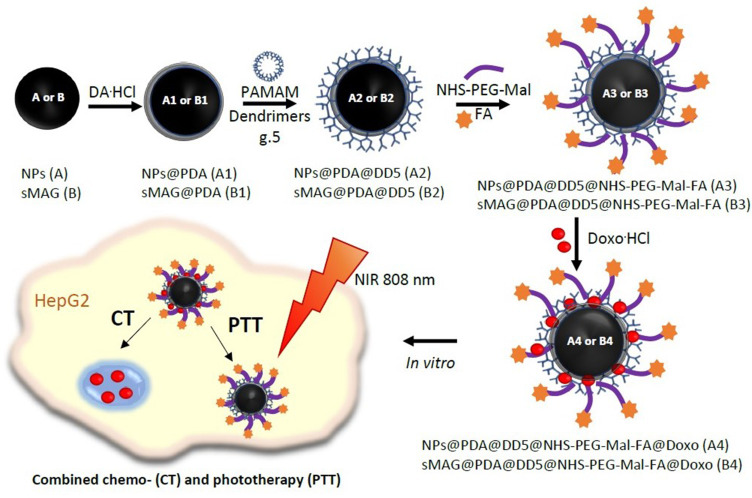
We present a multimodal nanoplatforms for the treatment of hepatocellular carcinoma (HCC) in vitro. The nanoplatforms are based on polydopamine (PDA)-coated magnetite nanoparticles (NPs) and spheres (sMAG) with PAMAM dendrimers and functionalized with NHS-PEG-Mal (-hydroxysuccinimide-polyethylene glycol-maleimide) linker, which allows their functionalization with a folic acid derivative. The nanomaterials bearing a folic acid-targeting moiety show high efficiency in killing cancer cells in the dual chemo- and photothermal therapy (CT-PTT) of the liver cancer cells in comparison to modalities performed separately.
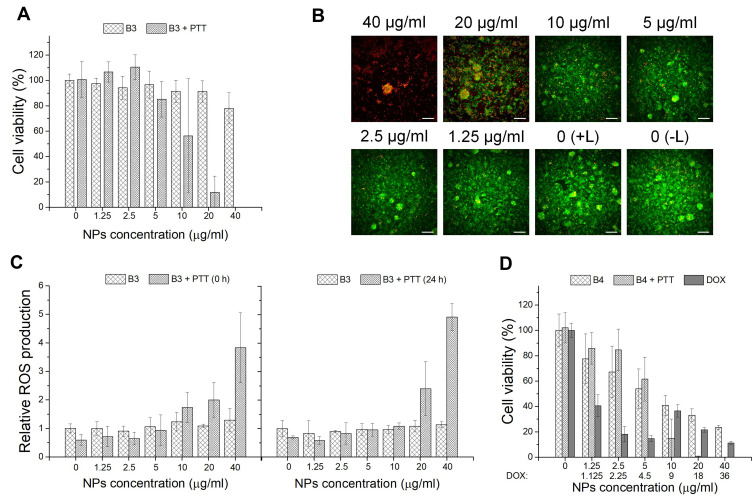
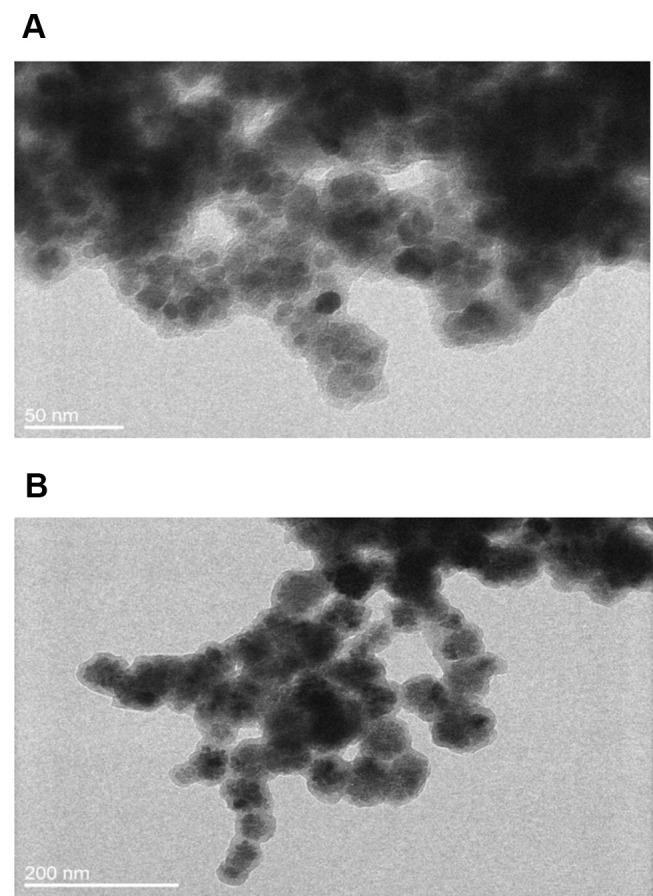
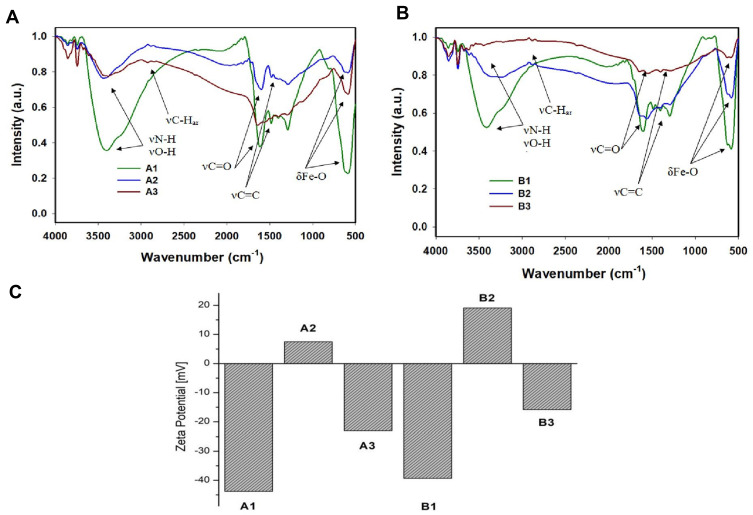
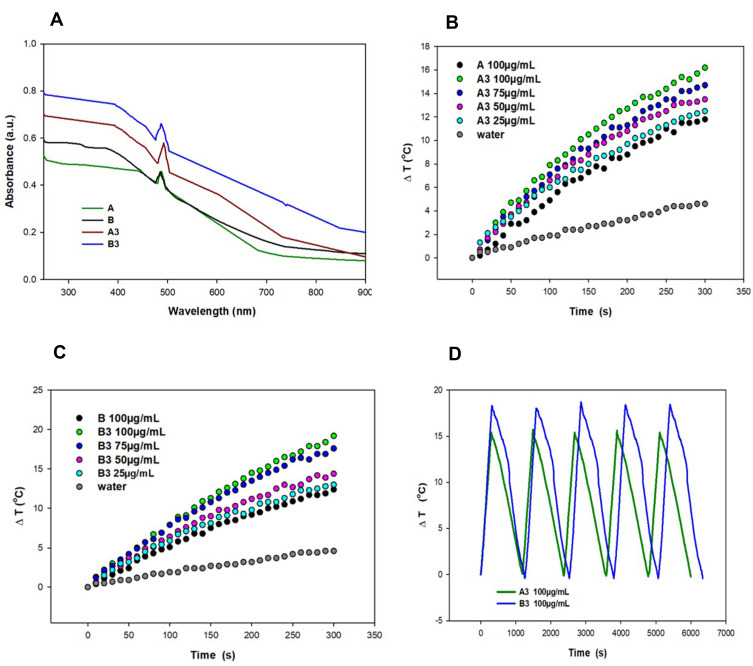
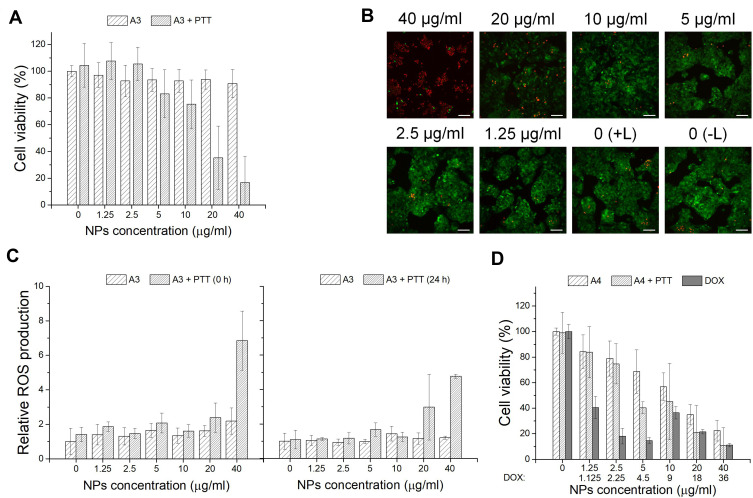
All materials are characterized in detail with transmission electron microscopy, Fourier transform infrared spectroscopy, thermogravimetric analysis, zeta potential and magnetic measurements. Also, photothermal properties were determined under irradiation of nanoparticles with laser beam of 2 W/cm. The nontoxicity of nanoparticles with doxorubicin and without was checked by WST and LIVE/DEAD assay. Those tests were also used to evaluate materials bearing folic acid and anticancer drug in combined chemo- and photothermal therapy of HCC. Further, the generation of reactive oxygen species profile was also evaluated using flow cytometry test.
Both NPs and sMAG showed high photothermal properties. Nevertheless, the higher photothermal response was found for magnetic spheres. Materials of concentration above 10 µg/mL reveal that their activity was comparable to free doxorubicin. It is worth highlighting that a functionalized magnetic sphere with DOXO more strongly affected the HepG2 cells than smaller functionalized nanoparticles with DOXO in the performed chemotherapy. This can be attributed to the larger size of particles and a different method of drug distribution. In the further stage, both materials were assessed in combined chemo- and photothermal therapy (CT-PTT) which revealed that magnetic spheres were also more effective in this modality than smaller nanoparticles.
Here, we present two types of nanomaterials (nanoparticles and spheres) based on polydopamine and PAMAM dendrimers g.5.0 functionalized with NHS-PEG-Mal linker terminated with folic acid for in vitro hepatocellular carcinoma treatment. The obtained materials can serve as efficient agents for dual chemo- and photothermal therapy of HCC. We also proved that PDA-coated magnetic spheres were more efficient in therapies based on near-infrared irradiation because determined cell viabilities for those materials are lower than for the same concentrations of nanomaterials based on small magnetic nanoparticles.
我们提出了一种用于体外治疗肝细胞癌(HCC)的多模式纳米平台。该纳米平台基于聚多巴胺(PDA)包覆的磁铁矿纳米粒子(NPs)和球体(sMAG),并带有 PAMAM 树枝状大分子,且用 NHS-PEG-Mal(-N-羟基琥珀酰亚胺-聚乙二醇-马来酰亚胺)接头进行功能化,使其能够与叶酸衍生物功能化。与单独使用两种模式相比,具有叶酸靶向部分的纳米材料在肝癌细胞的化学和光热双重治疗(CT-PTT)中对癌细胞的杀伤效率更高。
详细用透射电子显微镜、傅里叶变换红外光谱、热重分析、Zeta 电位和磁性测量对所有材料进行了表征。此外,还在 2 W/cm 的激光束照射下测定了纳米粒子的光热性能。通过 WST 和 LIVE/DEAD 测定法检查了载有阿霉素和无载药的纳米粒子的非毒性。这些测试还用于评估在 HCC 的化学和光热联合治疗中携带叶酸和抗癌药物的材料。此外,还使用流式细胞术测试评估了活性氧物质谱的产生。
NPs 和 sMAG 均显示出较高的光热性能。然而,磁性球体的光热响应更高。浓度高于 10 µg/mL 的材料表明其活性与游离阿霉素相当。值得强调的是,与较小的载有 DOXO 的功能化纳米粒子相比,功能化的具有 DOXO 的磁性球体对 HepG2 细胞的影响更强,这可能归因于较大的颗粒尺寸和不同的药物分布方式。在进一步的阶段,对两种材料进行了化学和光热联合治疗(CT-PTT)的评估,结果表明,在这种模式下,磁性球体比较小的纳米粒子更有效。
在这里,我们提出了两种基于聚多巴胺和 PAMAM 树枝状大分子 g.5.0 的纳米材料(纳米粒子和球体),用 NHS-PEG-Mal 接头进行功能化,末端带有叶酸,用于体外肝细胞癌治疗。所得到的材料可以作为 HCC 双重化学和光热治疗的有效试剂。我们还证明了 PDA 包覆的磁性球体在近红外辐射为基础的治疗中更有效,因为对于这些材料的确定细胞活力低于基于小的磁性纳米粒子的相同浓度的纳米材料。