Wei Lai, Li Pengcheng, Luo Yuan, Zhang Meiyu, Yan Ting, Yang Yue, Han Yuchen, Liu Shuli, Wang Enhua
Department of Pathology, College of Basic Medical Science, and First Affiliated Hospital of China Medical University, Shenyang, People's Republic of China.
Department of Pathology, Shanghai Chest Hospital, Shanghai Jiao Tong University, Shanghai, People's Republic of China.
Onco Targets Ther. 2020 Oct 8;13:10025-10037. doi: 10.2147/OTT.S263815. eCollection 2020.
The significance of periodic tryptophan protein 1 (PWP1) expression in human cancer and its molecular mechanism of action have not been reported so far.
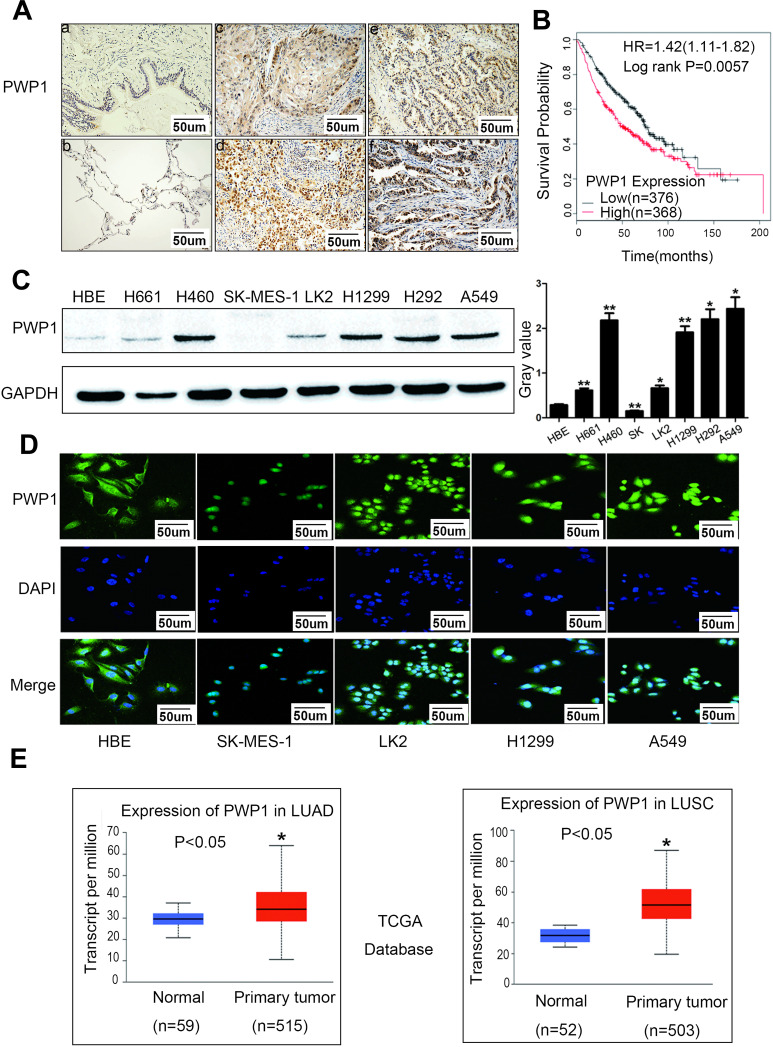
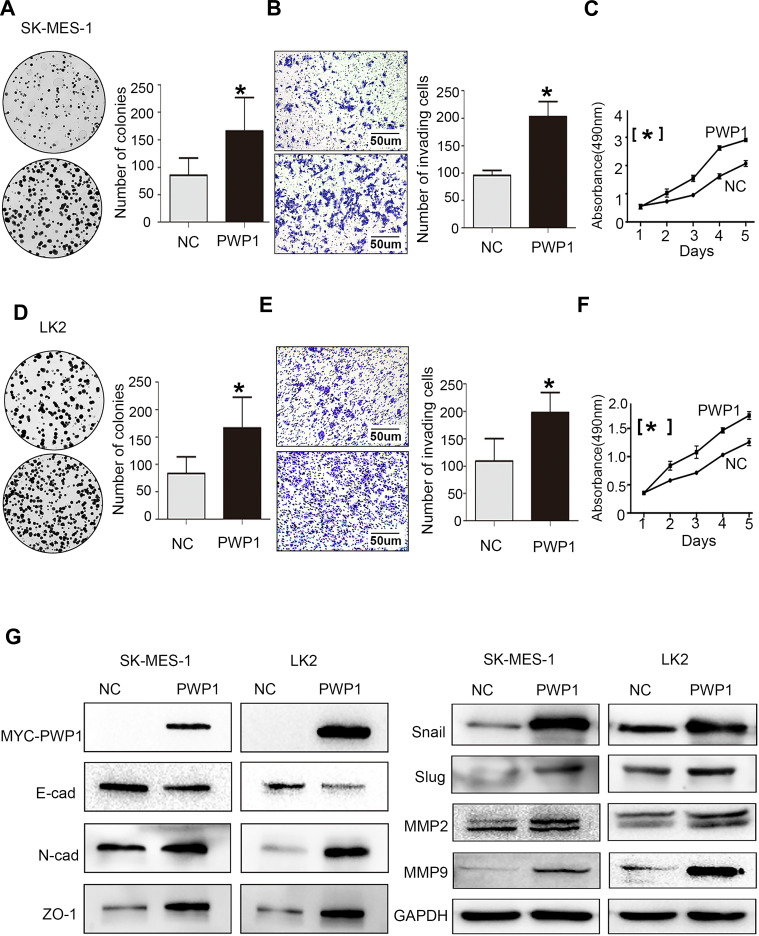
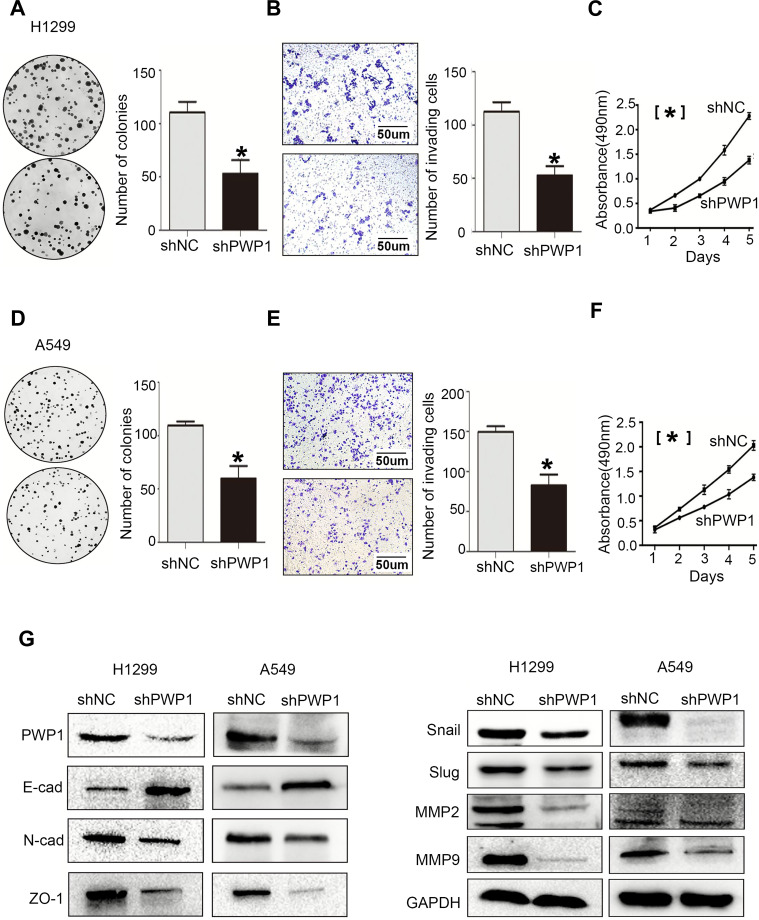
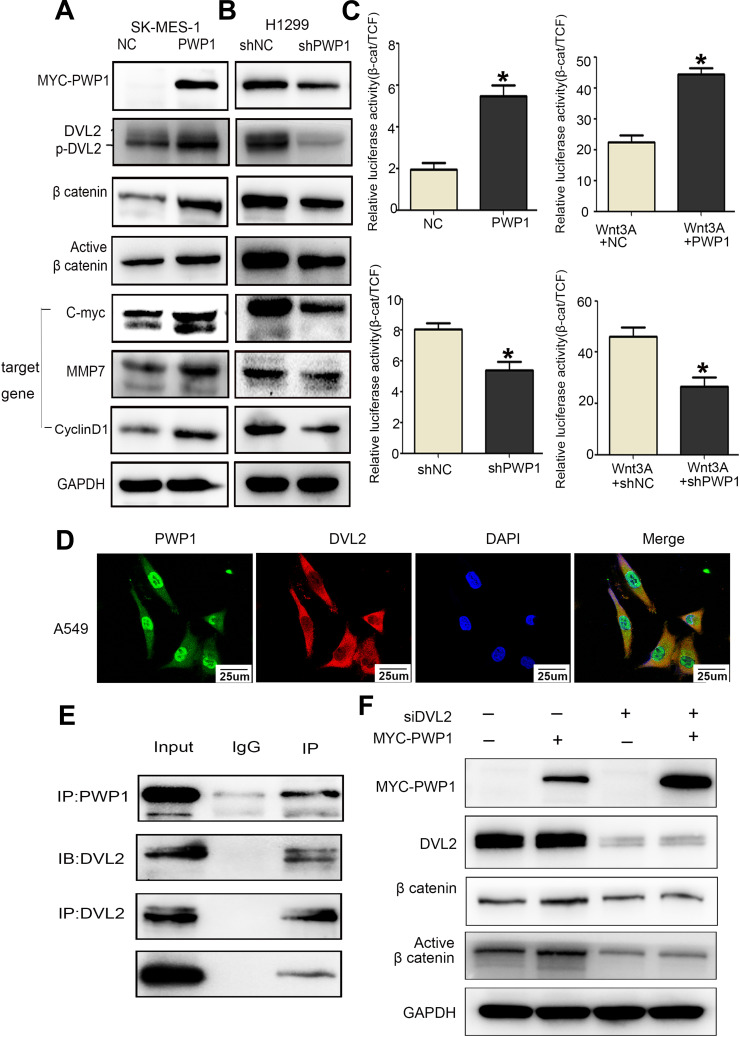
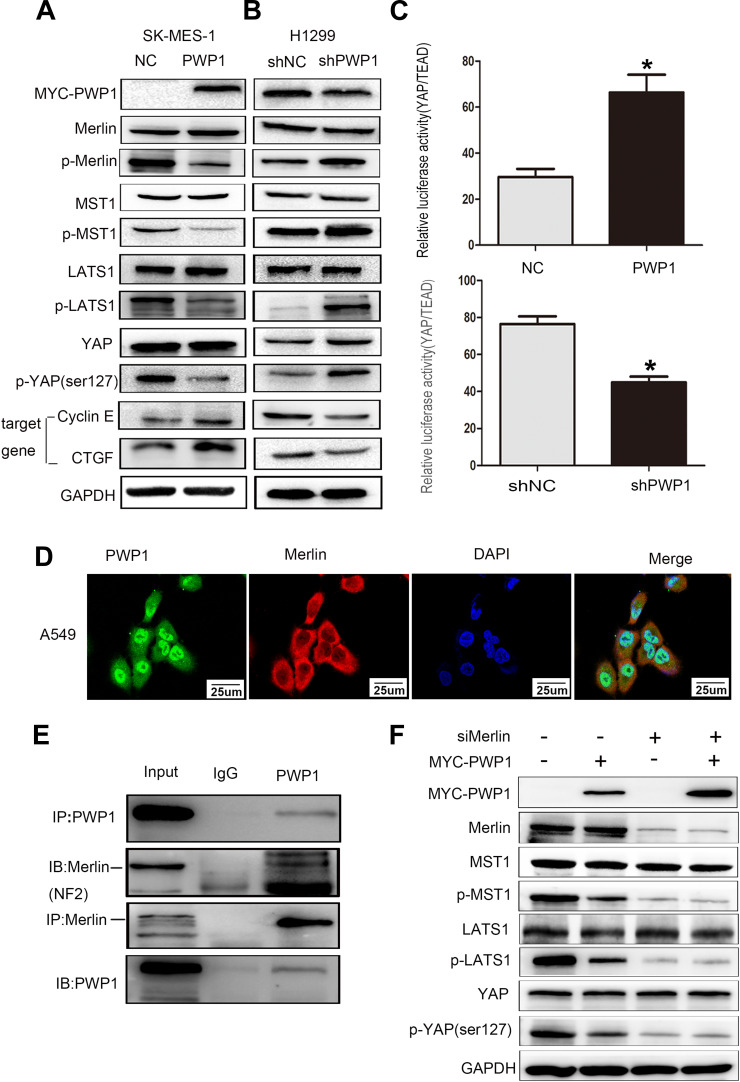
Immunohistochemistry was performed to analyze the expression of PWP1 in non-small cell lung cancer (NSCLC) tissues and statistical analysis was applied to analyze the relationship between PWP1 expression and the clinicopathological factors. The effects of PWP1 on NSCLC proliferation and invasion were determined by colony formation, transwell and MTT assays. Western blot analysis (WB), dual-luciferase reporter gene assays and immunofluorescence staining were performed to demonstrate whether PWP1 stimulates Wnt pathway and inhibits Hippo pathway. Co-immunoprecipitation (Co-ip) assays were used to confirm the potential role of PWP1 in Wnt and Hippo signaling pathways.
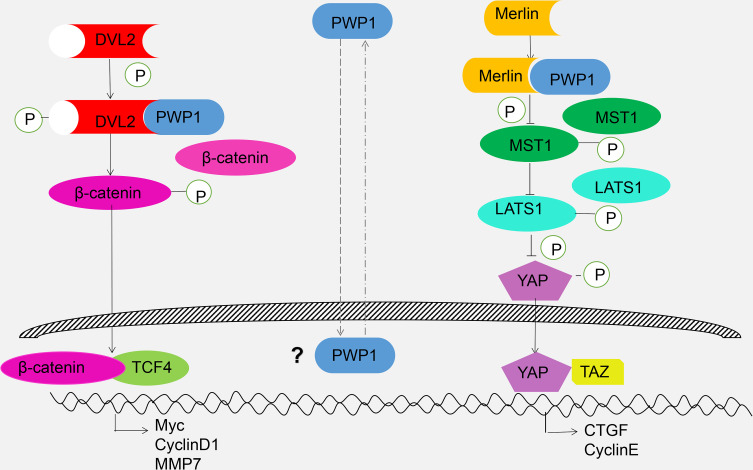
PWP1 expression in NSCLC was higher than that in normal bronchial epithelium and normal submucosal glands. In addition, PWP1 expression had a positive correlation with poor differentiation, high pathological tumor-node-metastasis (TNM) stage, and lymph node metastasis. Kaplan-Meier database demonstrated that the overall survival time of patients with high PWP1 expression was significantly shorter than that of patients with low PWP1 expression. Mechanistically, we found that PWP1 could interact with DVL2 to upregulate β-catenin (thereby activating the Wnt pathway), whereas PWP1 could interact with Merlin (NF2) to downregulate p-MST1 (thereby inhibiting the Hippo signaling pathway). The effects of PWP1 on promoting the Wnt pathway or inhibiting the Hippo pathway were offset in DVL2- or Merlin-knockdown cells transiently overexpressing PWP1.
PWP1 expression in NSCLC was correlated with poor prognosis. PWP1 enhanced the activity of the Wnt pathway by interacting with DVL2, whereas PWP1 inhibited the activity of the Hippo pathway by interacting with Merlin. Together, these two effects promoted the detrimental biological behaviors of NSCLC cells.
目前尚未报道过周期色氨酸蛋白1(PWP1)在人类癌症中的表达意义及其分子作用机制。
采用免疫组织化学法分析PWP1在非小细胞肺癌(NSCLC)组织中的表达情况,并应用统计学分析PWP1表达与临床病理因素之间的关系。通过集落形成、Transwell和MTT实验确定PWP1对NSCLC增殖和侵袭的影响。进行蛋白质免疫印迹分析(WB)、双荧光素酶报告基因实验和免疫荧光染色,以证明PWP1是否刺激Wnt通路并抑制Hippo通路。采用免疫共沉淀(Co-ip)实验来证实PWP1在Wnt和Hippo信号通路中的潜在作用。
NSCLC中PWP1的表达高于正常支气管上皮和正常黏膜下腺。此外,PWP1表达与低分化、高病理肿瘤-淋巴结-转移(TNM)分期及淋巴结转移呈正相关。Kaplan-Meier数据库显示,PWP1高表达患者的总生存时间显著短于PWP1低表达患者。机制上,我们发现PWP1可与DVL2相互作用上调β-连环蛋白(从而激活Wnt通路),而PWP1可与Merlin(NF2)相互作用下调p-MST1(从而抑制Hippo信号通路)。在瞬时过表达PWP1的DVL2或Merlin敲低细胞中,PWP1促进Wnt通路或抑制Hippo通路的作用被抵消。
NSCLC中PWP1的表达与不良预后相关。PWP1通过与DVL2相互作用增强Wnt通路的活性,而PWP1通过与Merlin相互作用抑制Hippo通路的活性。这两种作用共同促进了NSCLC细胞的有害生物学行为。