Zhu Xia, Lu Kangyang, Cao Liyu, Hu Yong, Yin Yu, Cai Yongping
Department of Pathology, School of Basic Medical Science, Anhui Medical University, Hefei 230032, People's Republic of China.
Department of Pathology, Huadong Hospital, Fudan University, Shanghai 200040, People's Republic of China.
Cancer Manag Res. 2020 Oct 9;12:9857-9867. doi: 10.2147/CMAR.S270825. eCollection 2020.
Osteosarcoma (OS) is a highly aggressive bone malignancy that is mostly diagnosed in children and young adults. Increasing evidence indicates that the transcription factor Forkhead Box M1 (FoxM1) plays a key role in the pathogenesis of various tumors. However, the function of FoxM1 in OS has not been clearly elucidated.
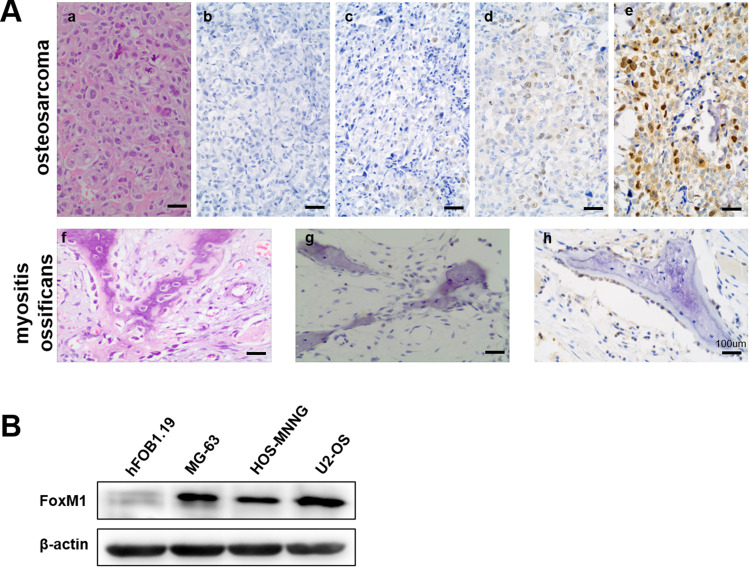
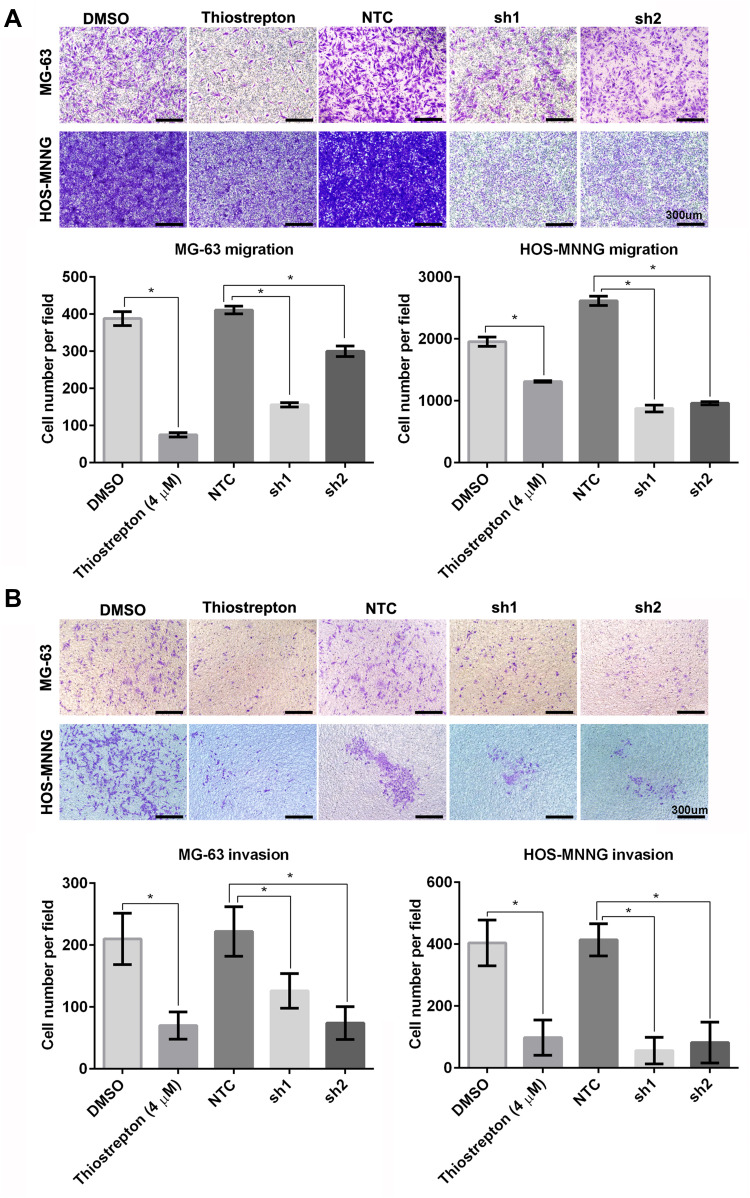
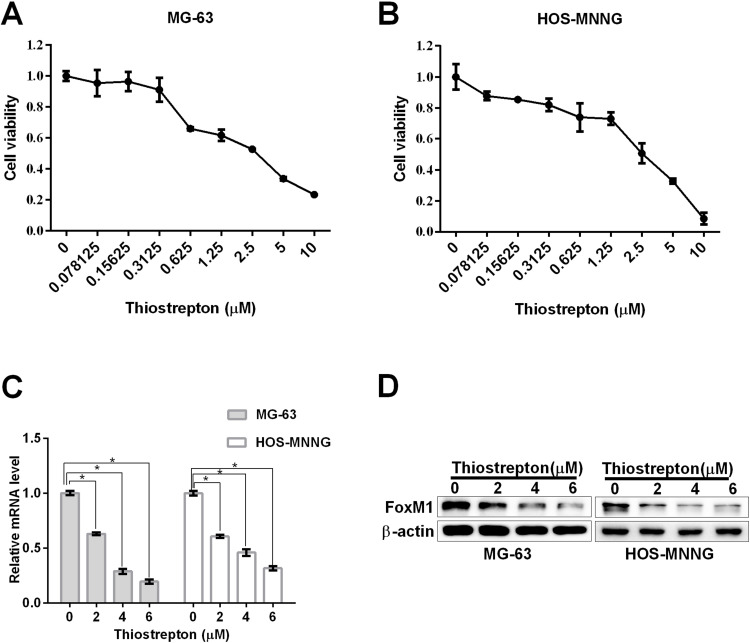
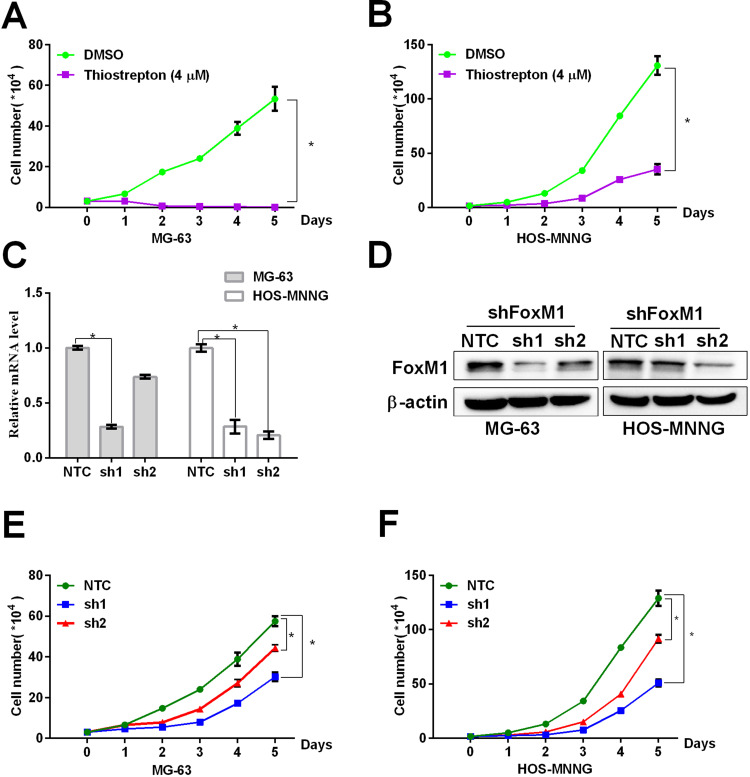
In the present study, we first analyzed the expressions of FoxM1 in human OS and myositis ossificans (MO, included as a control) tissues by immunohistochemistry. To investigate the functional significance of FoxM1 in OS tumorigenesis, we examined the effects of FoxM1 downregulation in MG-63 and HOS-MNNG cells by either short hairpin RNA (shRNA)-mediated gene silencing or treatment with thiostrepton, a specific FoxM1 inhibitor.
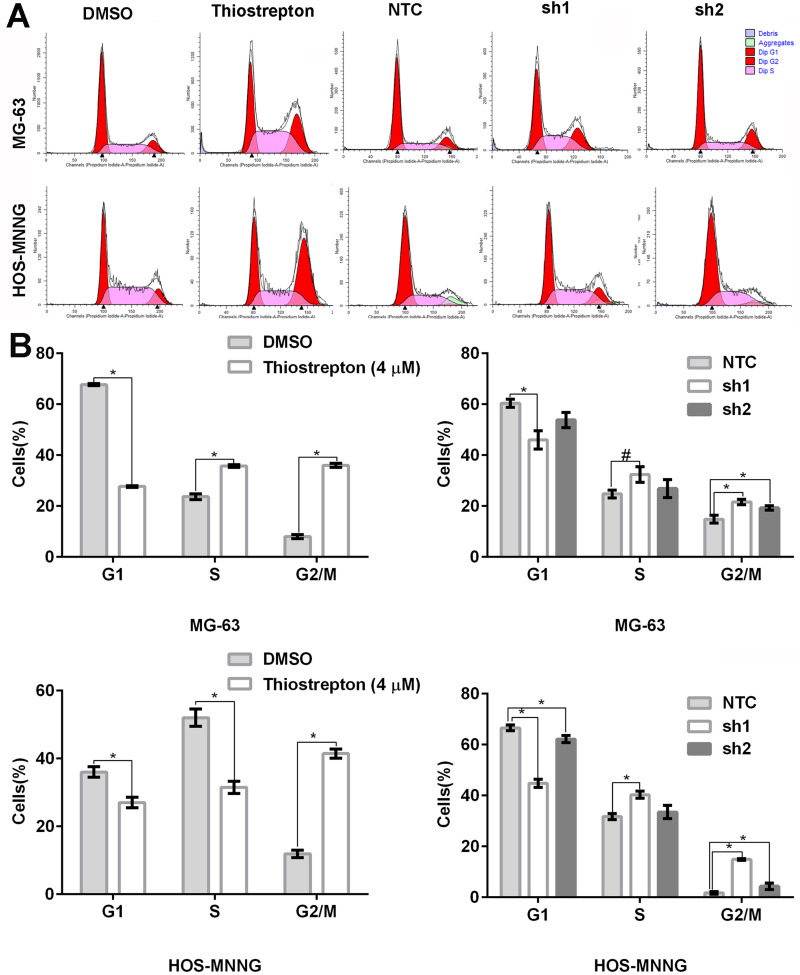
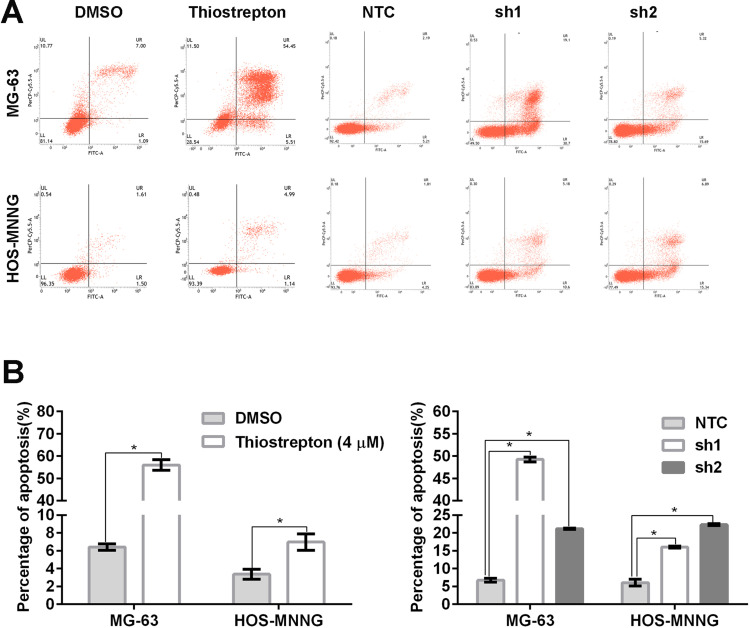
FoxM1 was detected in 82.1% (55/67) of OS vs only 10% (2/20) of MO samples. High expressions of FoxM1 were also detected in three human OS cell lines (HOS-MNNG, MG-63, and U-2OS). FoxM1 downregulation significantly reduced MG-63 and HOS-MNNG cell proliferation, migration, and invasion as well as cell cycle arrest in the G2/M phase and increased apoptotic cell death.
The present study demonstrated the critical role of FoxM1 in the pathogenesis of OS. Therefore, FoxM1 may serve as a potential therapeutic target for the treatment of OS.
骨肉瘤(OS)是一种侵袭性很强的骨恶性肿瘤,大多在儿童和青年中被诊断出来。越来越多的证据表明,转录因子叉头框M1(FoxM1)在各种肿瘤的发病机制中起关键作用。然而,FoxM1在骨肉瘤中的功能尚未得到明确阐释。
在本研究中,我们首先通过免疫组织化学分析了FoxM1在人骨肉瘤和骨化性肌炎(MO,作为对照)组织中的表达。为了研究FoxM1在骨肉瘤肿瘤发生中的功能意义,我们通过短发夹RNA(shRNA)介导的基因沉默或用特异性FoxM1抑制剂硫链丝菌素处理,检测了FoxM1下调对MG-63和HOS-MNNG细胞的影响。
在82.1%(55/67)的骨肉瘤样本中检测到FoxM1,而在骨化性肌炎样本中仅10%(2/20)检测到。在三个人骨肉瘤细胞系(HOS-MNNG、MG-63和U-2OS)中也检测到FoxM1的高表达。FoxM1下调显著降低了MG-63和HOS-MNNG细胞的增殖、迁移和侵袭,以及细胞周期阻滞在G2/M期,并增加了凋亡细胞死亡。
本研究证明了FoxM1在骨肉瘤发病机制中的关键作用。因此,FoxM1可能作为治疗骨肉瘤的潜在治疗靶点。