Laskar Amzad H, Mohabey Dhananjay, Bhattacharya Sourendra K, Liang Mao-Chang
Physical Research Laboratory Ahmedabad, Navrangpura, Ahmedabad 380009, Gujarat, India.
Geological Survey of India (retired), Department of Geology, RTM Nagpur University, Law College Campus, Amravati Road, Nagpur 440001, India.
Heliyon. 2020 Oct 20;6(10):e05265. doi: 10.1016/j.heliyon.2020.e05265. eCollection 2020 Oct.
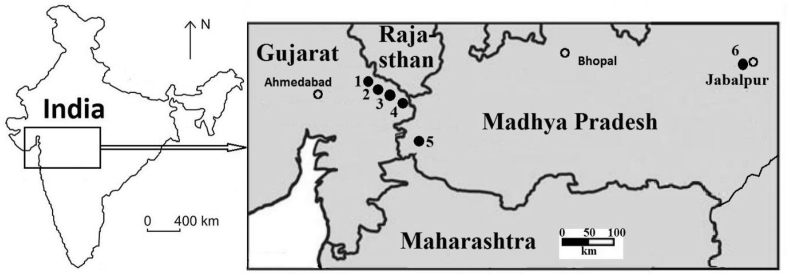
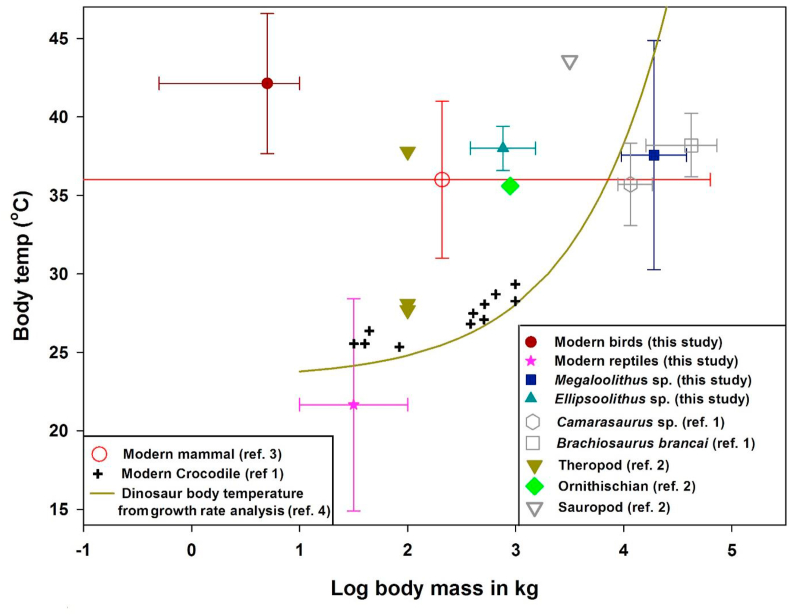
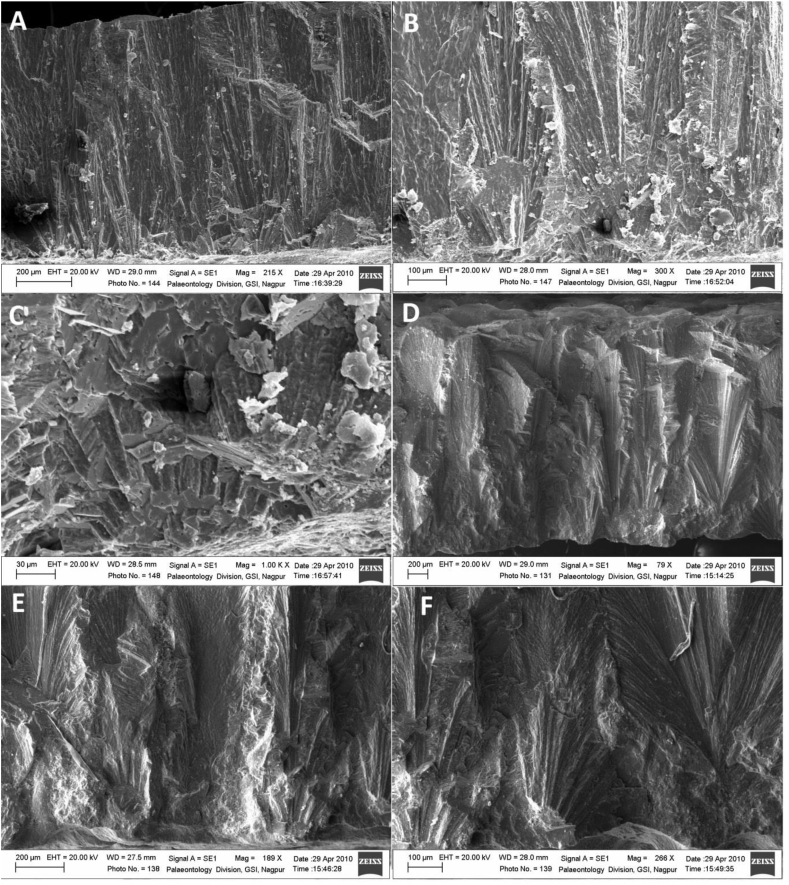
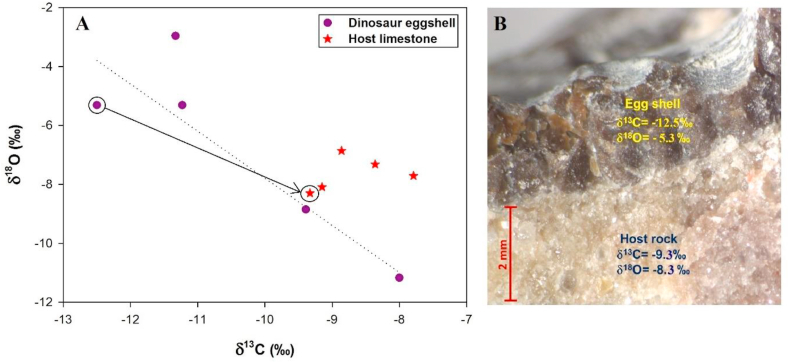
The thermal physiology of non-avian dinosaurs, especially the endothermic/ectothermic nature of their metabolism, inferred indirectly using body mass, biophysical modelling, bone histology and growth rate, has long been a matter of debate. Clumped isotope thermometry, based on the thermodynamically driven preference of C-O bond in carbonate minerals of fossilized eggshells, yields temperature of egg formation in the oviduct and can delineate the nature of thermoregulation of some extinct dinosaur taxa. In the present study, the clumped isotope thermometry was applied to the eggshells of a few species of modern birds and reptiles to show that it is possible to obtain the body temperatures of these species in most of the cases. We then used this method to the fossil eggshells of Late Cretaceous sauropods and theropods recovered from western and central India. The estimated body temperatures varied between 29 °C and 46 °C, with an overall average of 37 °C, significantly higher than the environmental temperature (about 25 °C) of this region during the Late Cretaceous. The results also show that the theropod species with low body masses (800 kg) had high body temperature (38 °C), while some gigantic (~20000 kg) sauropods had low body temperatures that were comparable to or slightly higher than the environmental temperature. Our analyses suggest that these Late Cretaceous giant species were endowed with a capacity of variable thermoregulation to control their body temperature.
非鸟类恐龙的热生理学,尤其是其新陈代谢的吸热/放热性质,长期以来一直是一个有争议的问题,这是通过体重、生物物理建模、骨组织学和生长速率间接推断出来的。基于化石蛋壳碳酸盐矿物中碳 - 氧键的热力学驱动偏好的团簇同位素测温法,可以得出输卵管中蛋形成时的温度,并能描绘出一些已灭绝恐龙类群的体温调节性质。在本研究中,团簇同位素测温法被应用于几种现代鸟类和爬行动物的蛋壳,结果表明在大多数情况下可以获得这些物种的体温。然后我们将这种方法应用于从印度西部和中部发现的晚白垩世蜥脚类恐龙和兽脚类恐龙的化石蛋壳。估计的体温在29℃至46℃之间变化,总体平均为37℃,显著高于该地区晚白垩世的环境温度(约25℃)。结果还表明,体重较轻(约800千克)的兽脚类物种体温较高(约38℃),而一些巨大的(约20000千克)蜥脚类恐龙体温较低,与环境温度相当或略高于环境温度。我们的分析表明,这些晚白垩世的巨型物种具有可变体温调节能力来控制它们的体温。