• 文献检索
  • 文档翻译
  • 深度研究
  • 学术资讯
  • Suppr Zotero 插件Zotero 插件
  • 邀请有礼
  • 套餐&价格
  • 历史记录
应用&插件
Suppr Zotero 插件Zotero 插件浏览器插件Mac 客户端Windows 客户端微信小程序
定价
高级版会员购买积分包购买API积分包
服务
文献检索文档翻译深度研究API 文档MCP 服务
关于我们
关于 Suppr公司介绍联系我们用户协议隐私条款
关注我们

Suppr 超能文献

核心技术专利:CN118964589B侵权必究
粤ICP备2023148730 号-1Suppr @ 2026

文献检索

告别复杂PubMed语法,用中文像聊天一样搜索,搜遍4000万医学文献。AI智能推荐,让科研检索更轻松。

立即免费搜索

文件翻译

保留排版,准确专业,支持PDF/Word/PPT等文件格式,支持 12+语言互译。

免费翻译文档

深度研究

AI帮你快速写综述,25分钟生成高质量综述,智能提取关键信息,辅助科研写作。

立即免费体验

通过深度学习进行肿瘤系统发育拓扑推断

Tumor Phylogeny Topology Inference via Deep Learning.

作者信息

Sadeqi Azer Erfan, Haghir Ebrahimabadi Mohammad, Malikić Salem, Khardon Roni, Sahinalp S Cenk

机构信息

Department of Computer Science, Indiana University, Bloomington, IN 47408, USA.

Cancer Data Science Laboratory, Center for Cancer Research, National Cancer Institute, National Institutes of Health, Bethesda, MD 20892, USA.

出版信息

iScience. 2020 Oct 7;23(11):101655. doi: 10.1016/j.isci.2020.101655. eCollection 2020 Nov 20.

DOI:10.1016/j.isci.2020.101655
PMID:33117968
原文链接:https://pmc.ncbi.nlm.nih.gov/articles/PMC7582044/
Abstract

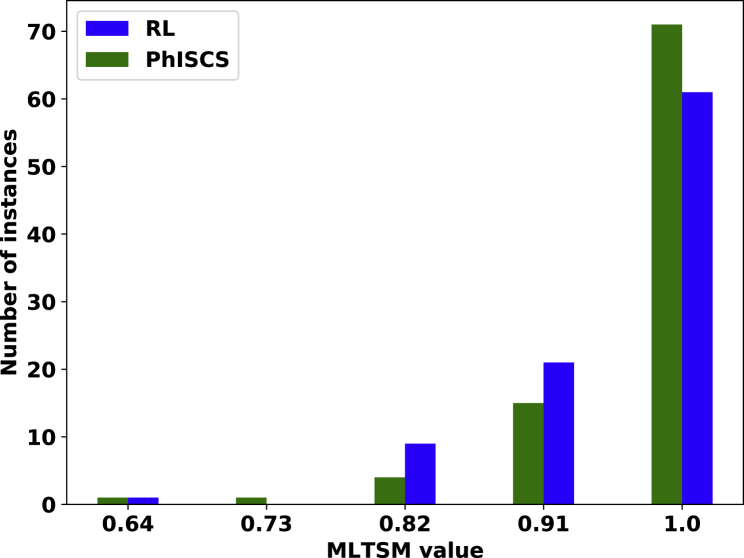
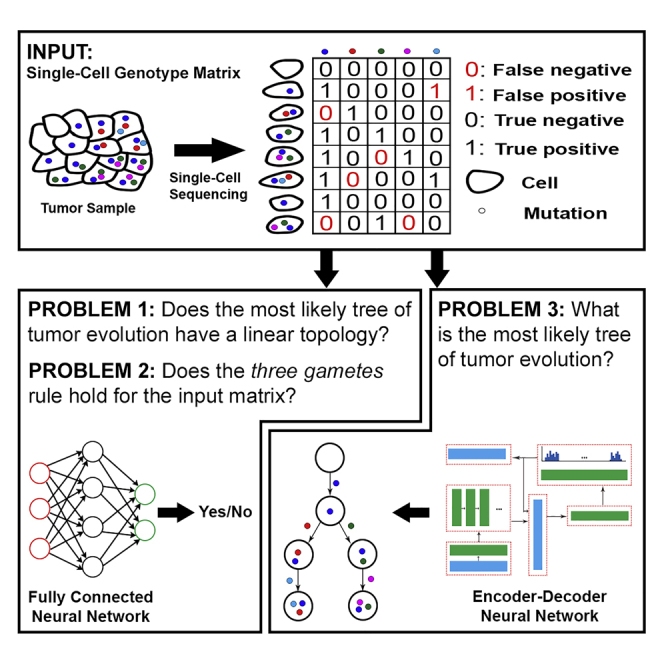
Principled computational approaches for tumor phylogeny reconstruction via single-cell sequencing typically aim to build the most likely perfect phylogeny tree from the noisy genotype matrix - which represents genotype calls of single cells. This problem is NP-hard, and as a result, existing approaches aim to solve relatively small instances of it through combinatorial optimization techniques or Bayesian inference. As expected, even when the goal is to infer basic topological features of the tumor phylogeny, rather than reconstructing the topology entirely, these approaches could be prohibitively slow. In this paper, we introduce fast deep learning solutions to the problems of inferring whether the most likely tree has a linear (chain) or branching topology and whether a perfect phylogeny is feasible from a given genotype matrix. We also present a reinforcement learning approach for reconstructing the most likely tumor phylogeny. This preliminary work demonstrates that data-driven approaches can reconstruct key features of tumor evolution.

摘要

通过单细胞测序进行肿瘤系统发育重建的原则性计算方法通常旨在从噪声基因型矩阵构建最可能的完美系统发育树,该矩阵表示单细胞的基因型调用。这个问题是NP难问题,因此,现有方法旨在通过组合优化技术或贝叶斯推理来解决相对较小的实例。不出所料,即使目标是推断肿瘤系统发育的基本拓扑特征,而不是完全重建拓扑结构,这些方法也可能极其缓慢。在本文中,我们针对从给定基因型矩阵推断最可能的树是否具有线性(链状)或分支拓扑以及完美系统发育是否可行的问题,引入了快速深度学习解决方案。我们还提出了一种用于重建最可能的肿瘤系统发育的强化学习方法。这项初步工作表明,数据驱动的方法可以重建肿瘤进化的关键特征。
https://cdn.ncbi.nlm.nih.gov/pmc/blobs/801c/7582044/217584e6df47/gr9.jpg
https://cdn.ncbi.nlm.nih.gov/pmc/blobs/801c/7582044/db47b657d996/fx1.jpg
https://cdn.ncbi.nlm.nih.gov/pmc/blobs/801c/7582044/500b420a5640/gr1.jpg
https://cdn.ncbi.nlm.nih.gov/pmc/blobs/801c/7582044/8a3d2f1d0c99/gr2.jpg
https://cdn.ncbi.nlm.nih.gov/pmc/blobs/801c/7582044/49b534f9df96/gr3.jpg
https://cdn.ncbi.nlm.nih.gov/pmc/blobs/801c/7582044/8bd864848fe7/gr4.jpg
https://cdn.ncbi.nlm.nih.gov/pmc/blobs/801c/7582044/d722c6d4c906/gr5.jpg
https://cdn.ncbi.nlm.nih.gov/pmc/blobs/801c/7582044/bef93a39a56e/gr6.jpg
https://cdn.ncbi.nlm.nih.gov/pmc/blobs/801c/7582044/c18acc002e9f/gr7.jpg
https://cdn.ncbi.nlm.nih.gov/pmc/blobs/801c/7582044/37263971ad75/gr8.jpg
https://cdn.ncbi.nlm.nih.gov/pmc/blobs/801c/7582044/217584e6df47/gr9.jpg
https://cdn.ncbi.nlm.nih.gov/pmc/blobs/801c/7582044/db47b657d996/fx1.jpg
https://cdn.ncbi.nlm.nih.gov/pmc/blobs/801c/7582044/500b420a5640/gr1.jpg
https://cdn.ncbi.nlm.nih.gov/pmc/blobs/801c/7582044/8a3d2f1d0c99/gr2.jpg
https://cdn.ncbi.nlm.nih.gov/pmc/blobs/801c/7582044/49b534f9df96/gr3.jpg
https://cdn.ncbi.nlm.nih.gov/pmc/blobs/801c/7582044/8bd864848fe7/gr4.jpg
https://cdn.ncbi.nlm.nih.gov/pmc/blobs/801c/7582044/d722c6d4c906/gr5.jpg
https://cdn.ncbi.nlm.nih.gov/pmc/blobs/801c/7582044/bef93a39a56e/gr6.jpg
https://cdn.ncbi.nlm.nih.gov/pmc/blobs/801c/7582044/c18acc002e9f/gr7.jpg
https://cdn.ncbi.nlm.nih.gov/pmc/blobs/801c/7582044/37263971ad75/gr8.jpg
https://cdn.ncbi.nlm.nih.gov/pmc/blobs/801c/7582044/217584e6df47/gr9.jpg

相似文献

1
Tumor Phylogeny Topology Inference via Deep Learning.通过深度学习进行肿瘤系统发育拓扑推断
iScience. 2020 Oct 7;23(11):101655. doi: 10.1016/j.isci.2020.101655. eCollection 2020 Nov 20.
2
Accurate and efficient cell lineage tree inference from noisy single cell data: the maximum likelihood perfect phylogeny approach.从嘈杂的单细胞数据中准确高效推断细胞谱系树:最大似然完美系统发生方法。
Bioinformatics. 2020 Feb 1;36(3):742-750. doi: 10.1093/bioinformatics/btz676.
3
PhISCS: a combinatorial approach for subperfect tumor phylogeny reconstruction via integrative use of single-cell and bulk sequencing data.PhISCS:一种通过单细胞和批量测序数据的综合使用来重建亚完美肿瘤系统发育的组合方法。
Genome Res. 2019 Nov;29(11):1860-1877. doi: 10.1101/gr.234435.118. Epub 2019 Oct 18.
4
PhISCS-BnB: a fast branch and bound algorithm for the perfect tumor phylogeny reconstruction problem.PhISCS-BnB:用于完美肿瘤系统发育重建问题的快速分支定界算法。
Bioinformatics. 2020 Jul 1;36(Suppl_1):i169-i176. doi: 10.1093/bioinformatics/btaa464.
5
Implications of non-uniqueness in phylogenetic deconvolution of bulk DNA samples of tumors.肿瘤大块DNA样本系统发育反卷积中不唯一性的影响
Algorithms Mol Biol. 2019 Sep 3;14:19. doi: 10.1186/s13015-019-0155-6. eCollection 2019.
6
Parameter, noise, and tree topology effects in tumor phylogeny inference.肿瘤系统发育推断中的参数、噪声和树拓扑效应。
BMC Med Genomics. 2019 Dec 23;12(Suppl 10):184. doi: 10.1186/s12920-019-0626-0.
7
Inferring the Mutational History of a Tumor Using Multi-state Perfect Phylogeny Mixtures.利用多态完美系统发育混合推断肿瘤的突变历史。
Cell Syst. 2016 Jul;3(1):43-53. doi: 10.1016/j.cels.2016.07.004.
8
Exact solutions for species tree inference from discordant gene trees.从不一致的基因树推断物种树的精确解。
J Bioinform Comput Biol. 2013 Oct;11(5):1342005. doi: 10.1142/S0219720013420055. Epub 2013 Oct 2.
9
Haplotyping as perfect phylogeny: a direct approach.作为完美系统发育的单倍型分型:一种直接方法。
J Comput Biol. 2003;10(3-4):323-40. doi: 10.1089/10665270360688048.
10
Distinguishing linear and branched evolution given single-cell DNA sequencing data of tumors.利用肿瘤单细胞DNA测序数据区分线性进化和分支进化。
Algorithms Mol Biol. 2021 Jul 6;16(1):14. doi: 10.1186/s13015-021-00194-5.

引用本文的文献

1
Resolving tumor evolution: a phylogenetic approach.解析肿瘤进化:一种系统发育学方法。
J Natl Cancer Cent. 2024 Mar 21;4(2):97-106. doi: 10.1016/j.jncc.2024.03.001. eCollection 2024 Jun.
2
Current progress and open challenges for applying deep learning across the biosciences.深度学习在整个生命科学中的应用现状及面临的开放性挑战。
Nat Commun. 2022 Apr 1;13(1):1728. doi: 10.1038/s41467-022-29268-7.
3
CellPhy: accurate and fast probabilistic inference of single-cell phylogenies from scDNA-seq data.CellPhy:从 scDNA-seq 数据中准确快速地推断单细胞系统发育的概率方法。

本文引用的文献

1
Studying the History of Tumor Evolution from Single-Cell Sequencing Data by Exploring the Space of Binary Matrices.通过探索二进制矩阵空间研究单细胞测序数据中的肿瘤进化历史。
J Comput Biol. 2021 Sep;28(9):857-879. doi: 10.1089/cmb.2020.0595. Epub 2021 Jul 22.
2
PhISCS-BnB: a fast branch and bound algorithm for the perfect tumor phylogeny reconstruction problem.PhISCS-BnB:用于完美肿瘤系统发育重建问题的快速分支定界算法。
Bioinformatics. 2020 Jul 1;36(Suppl_1):i169-i176. doi: 10.1093/bioinformatics/btaa464.
3
Multimodel preclinical platform predicts clinical response of melanoma to immunotherapy.
Genome Biol. 2022 Jan 26;23(1):37. doi: 10.1186/s13059-021-02583-w.
4
Studying the History of Tumor Evolution from Single-Cell Sequencing Data by Exploring the Space of Binary Matrices.通过探索二进制矩阵空间研究单细胞测序数据中的肿瘤进化历史。
J Comput Biol. 2021 Sep;28(9):857-879. doi: 10.1089/cmb.2020.0595. Epub 2021 Jul 22.
5
Distinguishing linear and branched evolution given single-cell DNA sequencing data of tumors.利用肿瘤单细胞DNA测序数据区分线性进化和分支进化。
Algorithms Mol Biol. 2021 Jul 6;16(1):14. doi: 10.1186/s13015-021-00194-5.
6
Machine Intelligence in Single-Cell Data Analysis: Advances and New Challenges.单细胞数据分析中的机器智能:进展与新挑战
Front Genet. 2021 May 31;12:655536. doi: 10.3389/fgene.2021.655536. eCollection 2021.
7
Incorporating Machine Learning into Established Bioinformatics Frameworks.将机器学习纳入既定的生物信息学框架中。
Int J Mol Sci. 2021 Mar 12;22(6):2903. doi: 10.3390/ijms22062903.
多模型临床前平台预测黑色素瘤对免疫治疗的临床反应。
Nat Med. 2020 May;26(5):781-791. doi: 10.1038/s41591-020-0818-3. Epub 2020 Apr 13.
4
The evolutionary history of 2,658 cancers.2658 种癌症的进化史。
Nature. 2020 Feb;578(7793):122-128. doi: 10.1038/s41586-019-1907-7. Epub 2020 Feb 6.
5
Improved protein structure prediction using potentials from deep learning.利用深度学习势进行蛋白质结构预测的改进。
Nature. 2020 Jan;577(7792):706-710. doi: 10.1038/s41586-019-1923-7. Epub 2020 Jan 15.
6
SiCloneFit: Bayesian inference of population structure, genotype, and phylogeny of tumor clones from single-cell genome sequencing data.SiCloneFit:基于单细胞基因组测序数据的肿瘤克隆群体结构、基因型和系统发育的贝叶斯推断。
Genome Res. 2019 Nov;29(11):1847-1859. doi: 10.1101/gr.243121.118. Epub 2019 Oct 18.
7
PhISCS: a combinatorial approach for subperfect tumor phylogeny reconstruction via integrative use of single-cell and bulk sequencing data.PhISCS:一种通过单细胞和批量测序数据的综合使用来重建亚完美肿瘤系统发育的组合方法。
Genome Res. 2019 Nov;29(11):1860-1877. doi: 10.1101/gr.234435.118. Epub 2019 Oct 18.
8
Does Relaxing the Infinite Sites Assumption Give Better Tumor Phylogenies? An ILP-Based Comparative Approach.放松无限位点假设是否能给出更好的肿瘤进化树?基于整数线性规划的比较方法。
IEEE/ACM Trans Comput Biol Bioinform. 2019 Sep-Oct;16(5):1410-1423. doi: 10.1109/TCBB.2018.2865729.
9
Meltos: multi-sample tumor phylogeny reconstruction for structural variants.Meltos:用于结构变异的多样本肿瘤系统发育重建。
Bioinformatics. 2020 Feb 15;36(4):1082-1090. doi: 10.1093/bioinformatics/btz737.
10
Accurate and efficient cell lineage tree inference from noisy single cell data: the maximum likelihood perfect phylogeny approach.从嘈杂的单细胞数据中准确高效推断细胞谱系树:最大似然完美系统发生方法。
Bioinformatics. 2020 Feb 1;36(3):742-750. doi: 10.1093/bioinformatics/btz676.