Li Lin, Xie Wenqin, Zhan Li, Wen Shaodi, Luo Xiao, Xu Shuangbin, Cai Yantong, Tang Wenli, Wang Qianwen, Li Ming, Xie Zijing, Deng Lin, Zhu Hongyuan, Yu Guangchuang
Department of Bioinformatics, School of Basic Medical Sciences, Southern Medical University, Guangzhou, China.
Department of Oncology, The Affiliated Cancer Hospital of Nanjing Medical University & Jiangsu Cancer Hospital, Nanjing, China.
J Natl Cancer Cent. 2024 Mar 21;4(2):97-106. doi: 10.1016/j.jncc.2024.03.001. eCollection 2024 Jun.
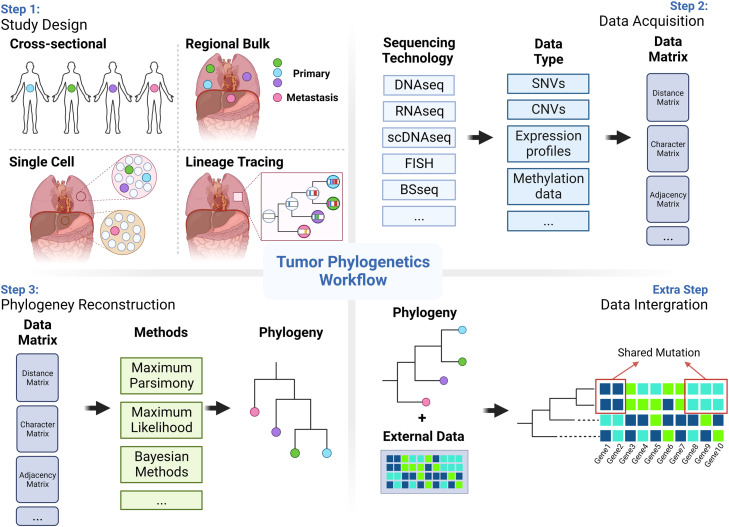
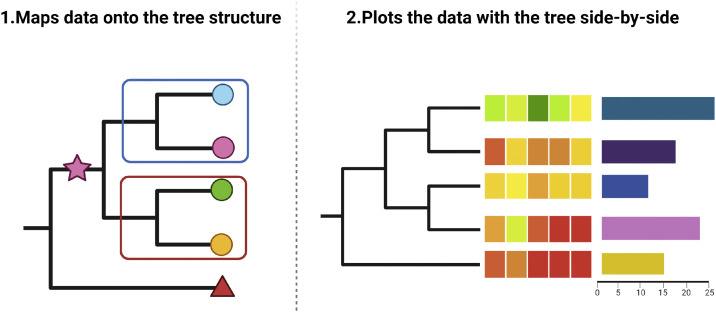
The evolutionary dynamics of cancer, characterized by its profound heterogeneity, demand sophisticated tools for a holistic understanding. This review delves into tumor phylogenetics, an essential approach bridging evolutionary biology with oncology, offering unparalleled insights into cancer's evolutionary trajectory. We provide an overview of the workflow, encompassing study design, data acquisition, and phylogeny reconstruction. Notably, the integration of diverse data sets emerges as a transformative step, enhancing the depth and breadth of evolutionary insights. With this integrated perspective, tumor phylogenetics stands poised to redefine our understanding of cancer evolution and influence therapeutic strategies.
癌症的进化动力学具有高度异质性,需要精密工具来进行全面理解。本综述深入探讨肿瘤系统发育学,这是一种将进化生物学与肿瘤学联系起来的重要方法,能为癌症的进化轨迹提供无与伦比的见解。我们概述了工作流程,包括研究设计、数据获取和系统发育重建。值得注意的是,整合不同数据集成为一个变革性步骤,增强了进化见解的深度和广度。从这种综合视角来看,肿瘤系统发育学有望重新定义我们对癌症进化的理解,并影响治疗策略。