Department of Physics, National Institute of Technology Nagaland, Dimapur, Nagaland, 797103, India.
Central Instrumentation Facility (CIF), Indian Institute of Technology Guwahati, Guwahati, 781039, India.
Sci Rep. 2020 Oct 29;10(1):18666. doi: 10.1038/s41598-020-75669-3.
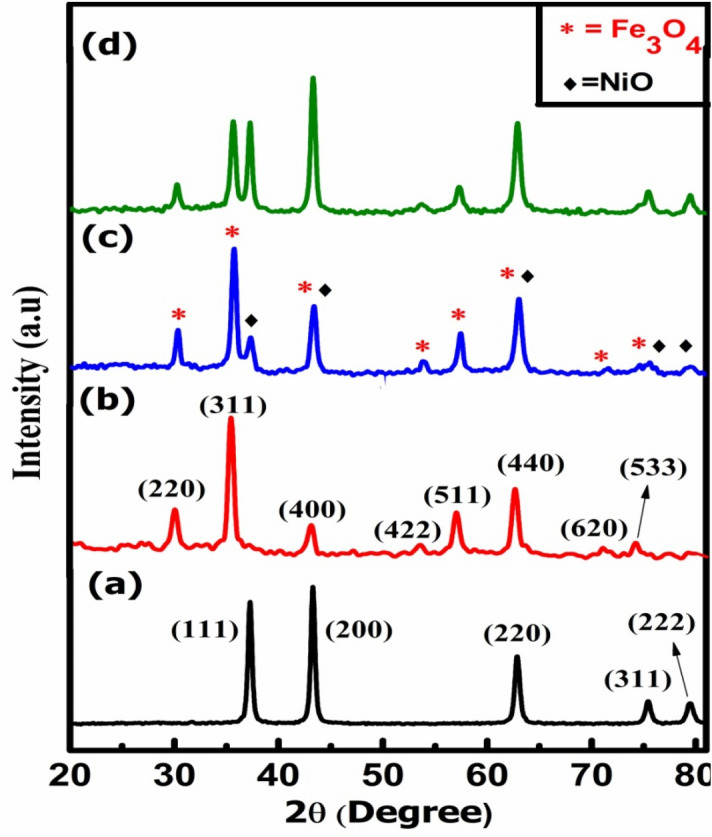
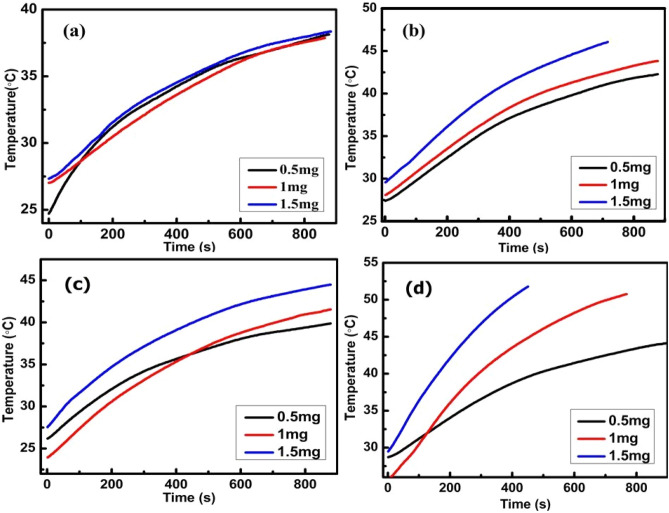
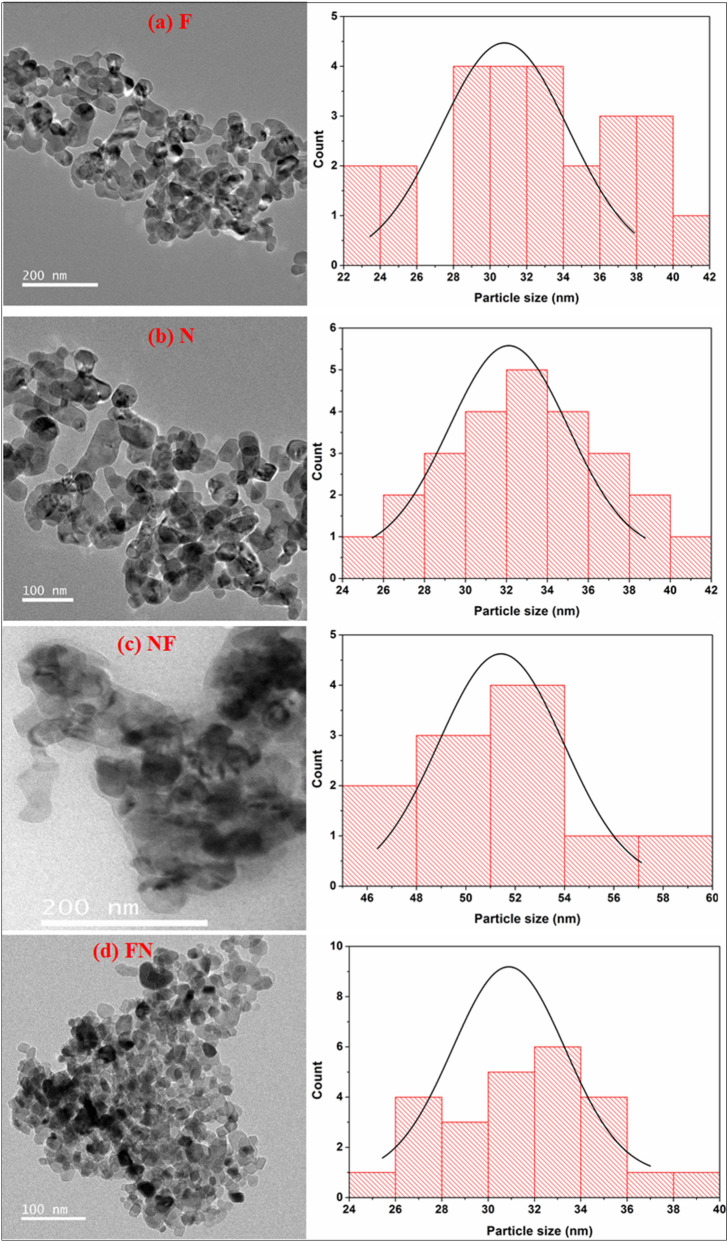
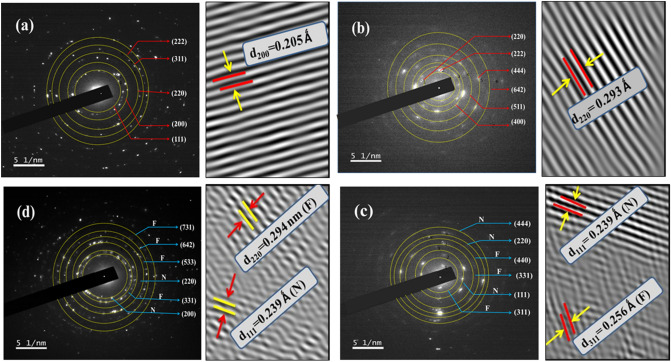
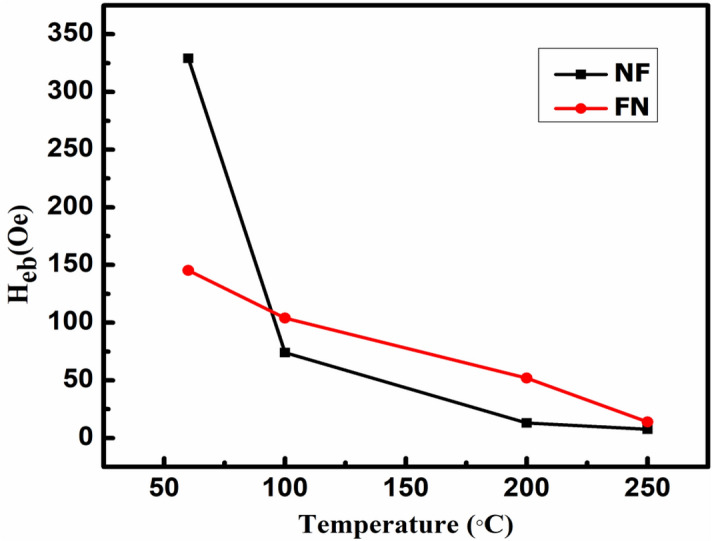
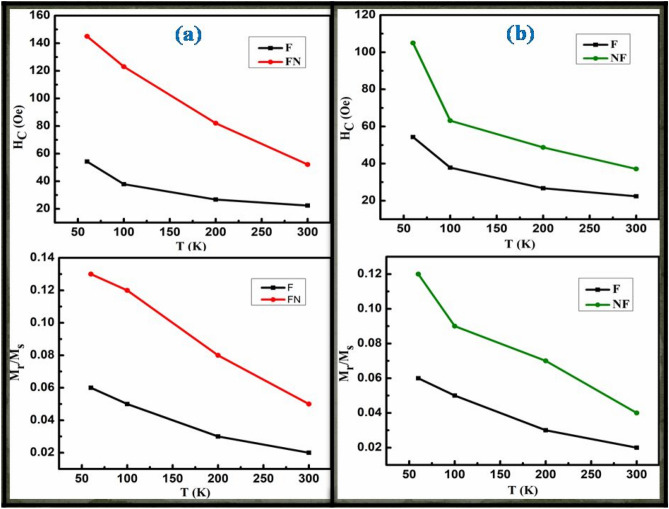
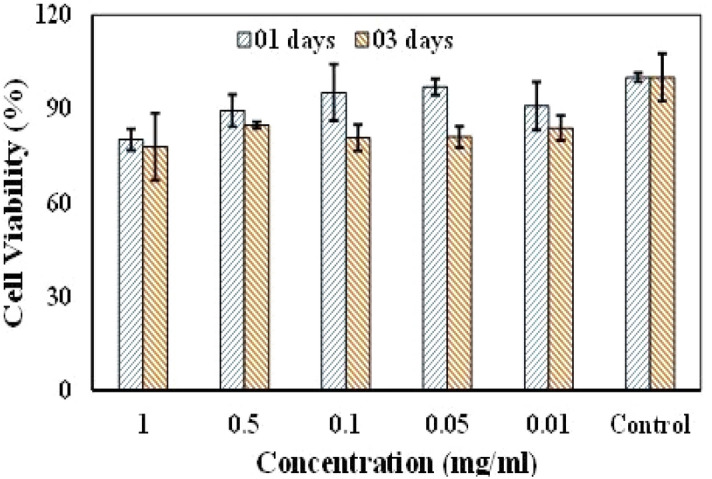
Exchange bias (EB) of magnetic nanoparticles (MNPs) in the nanoscale regime has been extensively studied by researchers, which have opened up a novel approach in tuning the magnetic anisotropy properties of magnetic nanoparticles (MNPs) in prospective application of biomedical research such as magnetic hyperthermia. In this work, we report a comparative study on the effect of magnetic EB of normal and inverted core@shell (CS) nanostructures and its influence on the heating efficiency by synthesizing Antiferromagnetic (AFM) NiO (N) and Ferrimagnetic (FiM) FeO (F). The formation of CS structures for both systems is clearly authenticated by XRD and HRTEM analyses. The magnetic properties were extensively studied by Vibrating Sample Magnetometer (VSM). We reported that the inverted CS NiO@FeO (NF) MNPs have shown a greater EB owing to higher uncompensated spins at the interface of the AFM, in comparison to the normal CS FeO@NiO (FN) MNPs. Both the CS systems have shown higher SAR values in comparison to the single-phased F owing to the EB coupling at the interface. However, the higher surface anisotropy of F shell with more EB field for NF enhanced the SAR value as compared to FN system. The EB coupling is hindered at higher concentrations of NF MNPs because of the enhanced dipolar interactions (agglomeration of nanoparticles). Both the CS systems reach to the hyperthermia temperature within 10 min. The cyto-compatibility analysis resulted in the excellent cell viability (> 75%) for 3 days in the presence of the synthesized NPs upto 1 mg/ml. These observations endorsed the suitability of CS nanoassemblies for magnetic fluid hyperthermia applications.
纳米尺度下磁性纳米粒子(MNPs)的交换偏置(EB)已被研究人员广泛研究,这为调节磁性纳米粒子(MNPs)的磁各向异性特性开辟了一条新途径,有望应用于磁热疗等生物医学研究。在这项工作中,我们报告了正常和反铁磁核壳(CS)纳米结构的磁 EB 效应及其对加热效率的影响的比较研究,通过合成反铁磁(AFM)NiO(N)和亚铁磁(FiM)FeO(F)来实现。两种系统的 CS 结构的形成都通过 XRD 和 HRTEM 分析得到了明确的验证。通过振动样品磁强计(VSM)对磁性进行了广泛的研究。我们报告说,与正常 CS FeO@NiO(FN)MNPs 相比,反式 CS NiO@FeO(NF)MNPs 由于 AFM 界面处未补偿的自旋较高,表现出更大的 EB。与单相 F 相比,两种 CS 系统都表现出更高的 SAR 值,这是由于界面处的 EB 耦合。然而,由于 NF 中更高的表面各向异性和更多的 EB 场,与 FN 系统相比,增强了 SAR 值。由于 NF MNPs 浓度较高时增强的偶极相互作用(纳米颗粒团聚),EB 耦合受到阻碍。两种 CS 系统在 10 分钟内达到了热疗温度。细胞相容性分析表明,在存在合成纳米粒子的情况下,细胞活力> 75%,浓度高达 1 mg/ml,持续 3 天。这些观察结果证明了 CS 纳米组装体适用于磁流体热疗应用。