School of Pharmaceutical Sciences, Wenzhou Medical University, 325035, Wenzhou, Zhejiang, China.
The First Affiliated Hospital, Wenzhou Medical University, 325000, Wenzhou, Zhejiang, China.
Br J Cancer. 2021 Feb;124(3):645-657. doi: 10.1038/s41416-020-01135-6. Epub 2020 Oct 30.
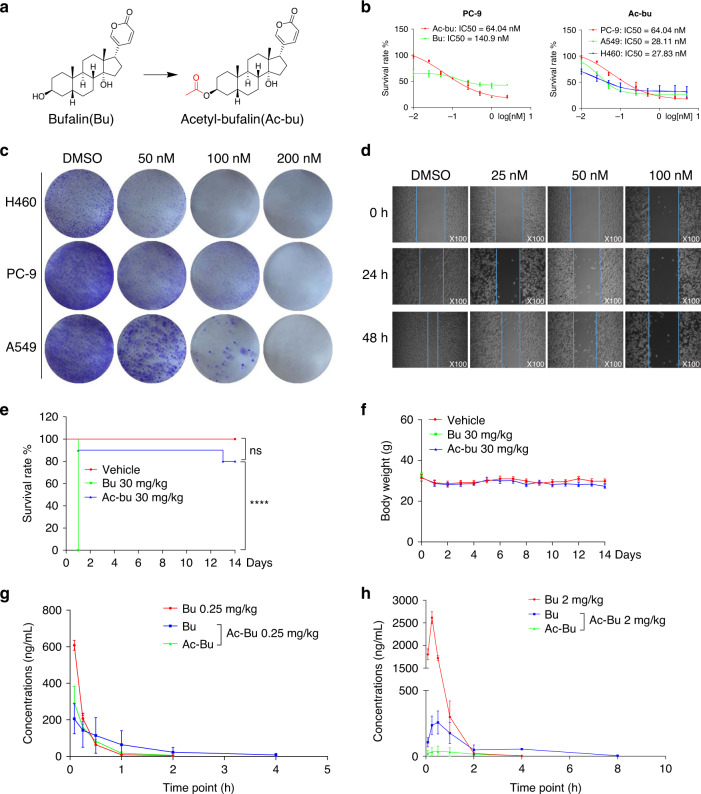
Cyclin-dependent kinase 9 (CDK9) is a promising prognostic marker and therapeutic target in cancers. Bufalin is an effective anti-tumour agent; however, the clinical application of bufalin is limited due to its high toxicity. Acetyl-bufalin, the bufalin prodrug, was designed and synthesised with higher efficiency and lower toxicity.
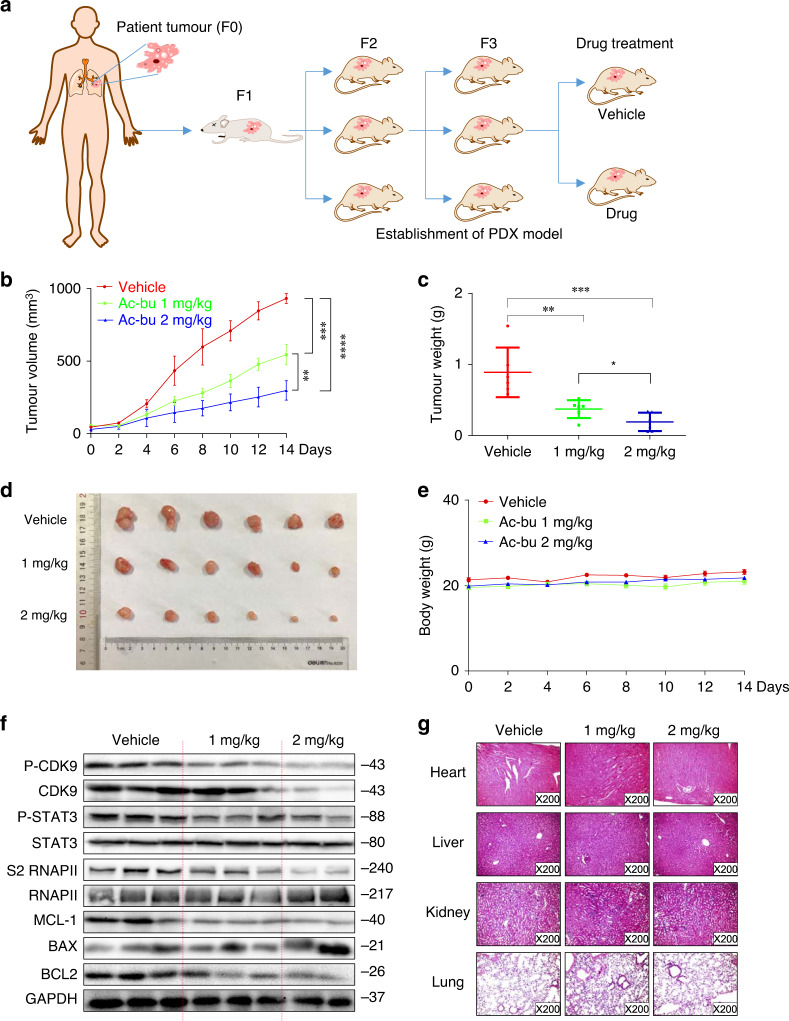
Three non-small-cell lung cancer (NSCLC) cell lines, a xenograft model and a patient-derived xenograft (PDX) model were used to examine the effects of acetyl-bufalin. CDK9/STAT3 involvement was investigated by knockdown with siRNA, proteome microarray assay, western blot analysis and co-immunoprecipitation experiments. Acute toxicity test and pharmacokinetics (PK) study were conducted to assess the safety and PK. The human NSCLC tissues were analysed to verify high CDK9 expression.
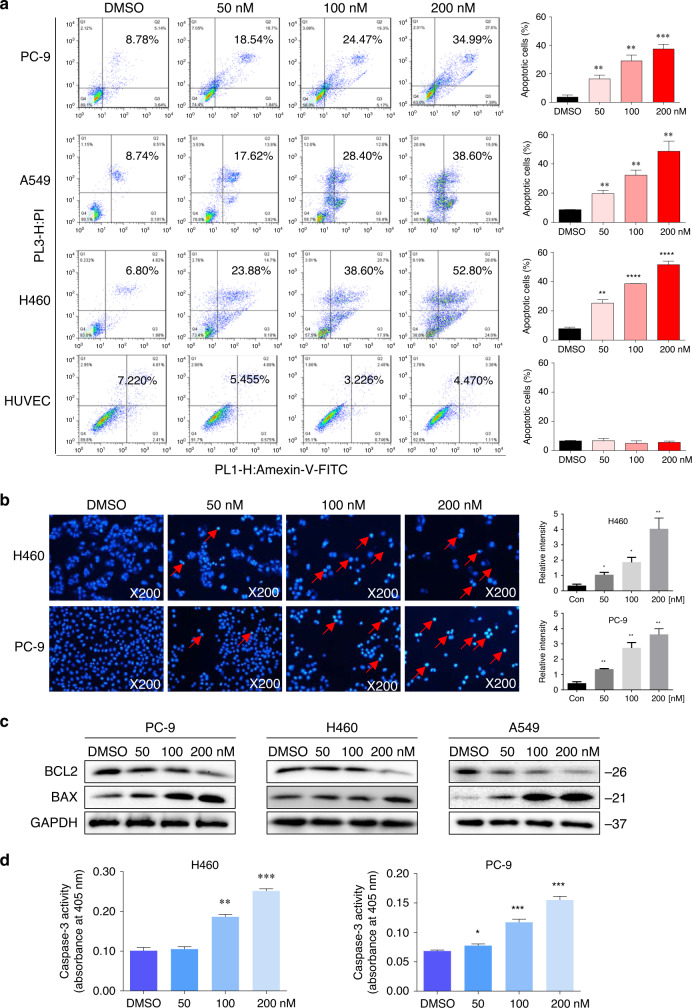
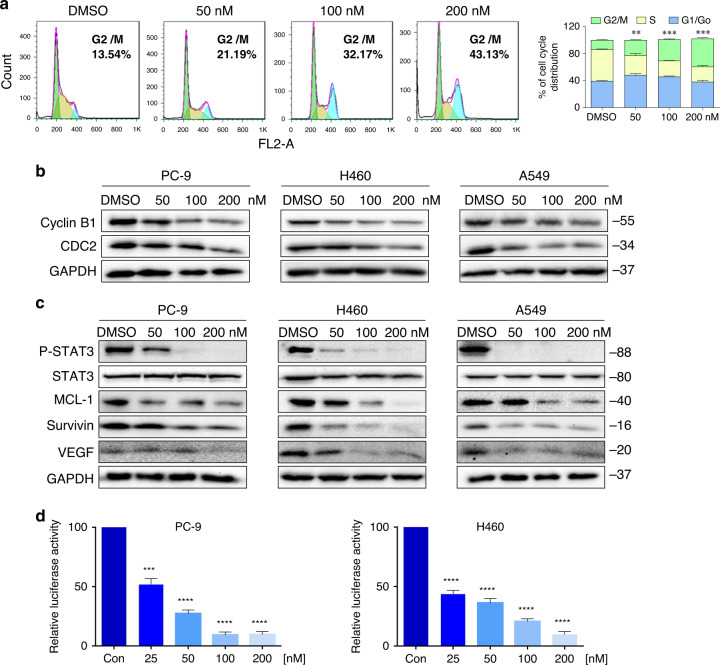
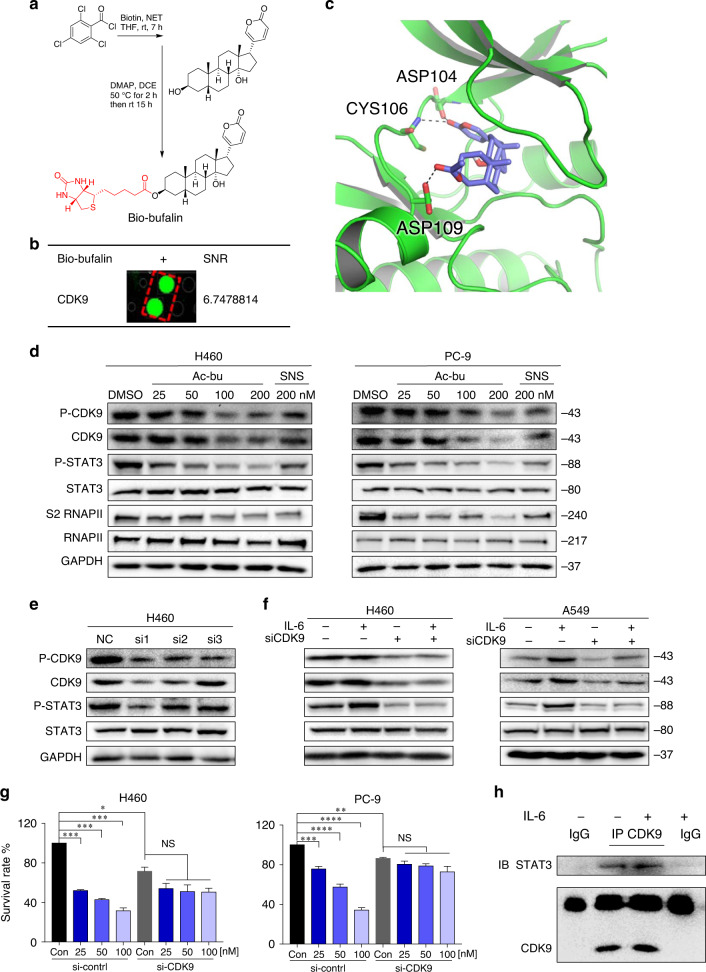
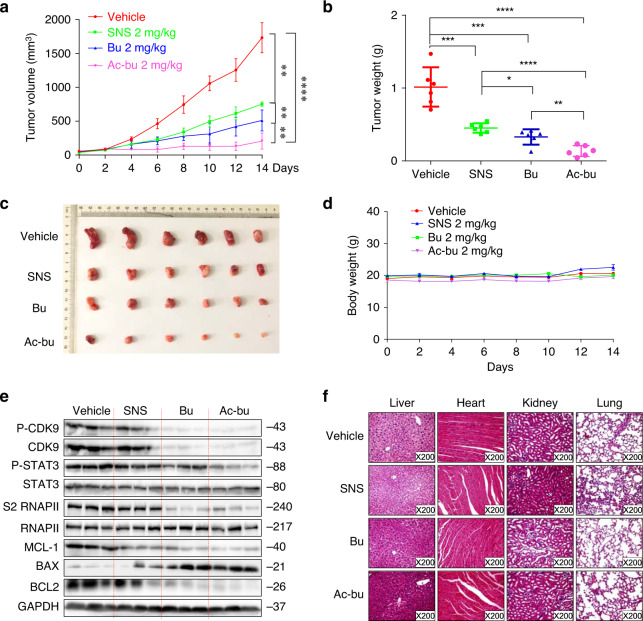
We showed that CDK9 induced NSCLC cell proliferation and that this effect was associated with STAT3 activation, specifically an increase in STAT3 phosphorylation and transcription factor activity. Acetyl-bufalin is an effective and safety inhibitor of the CDK9/STAT3 pathway, leading to the impediment of various oncogenic processes in NSCLC. Molecular docking and high-throughput proteomics platform analysis uncovered acetyl-bufalin directly binds to CDK9. Consequently, acetyl-bufalin impaired the complex formation of CDK9 and STAT3, decreased the expressions of P-STAT3, and transcribed target genes such as cyclin B1, CDC2, MCL-1, Survivin, VEGF, BCL2, and it upregulated the expression levels of BAX and caspase-3 activity. Acetyl-bufalin inhibited tumour growth in NSCLC xenograft and PDX models.
Acetyl-bufalin is a novel blocker of the CDK9/STAT3 pathway thus may have potential in therapy of NSCLC and other cancers.
细胞周期蛋白依赖性激酶 9(CDK9)是癌症中一种有前途的预后标志物和治疗靶点。蟾毒灵是一种有效的抗肿瘤药物;然而,由于其高毒性,蟾毒灵的临床应用受到限制。乙酰蟾毒灵,作为蟾毒灵的前体药物,具有更高的效率和更低的毒性被设计和合成。
使用三种非小细胞肺癌(NSCLC)细胞系、异种移植模型和患者来源的异种移植(PDX)模型来研究乙酰蟾毒灵的作用。通过 siRNA 敲低、蛋白质组微阵列分析、western blot 分析和共免疫沉淀实验研究 CDK9/STAT3 的参与情况。进行急性毒性试验和药代动力学(PK)研究以评估安全性和 PK。分析人 NSCLC 组织以验证 CDK9 高表达。
我们表明 CDK9 诱导 NSCLC 细胞增殖,这种作用与 STAT3 激活有关,特别是 STAT3 磷酸化和转录因子活性增加。乙酰蟾毒灵是 CDK9/STAT3 通路的有效和安全抑制剂,导致 NSCLC 中的各种致癌过程受阻。分子对接和高通量蛋白质组学平台分析表明,乙酰蟾毒灵直接与 CDK9 结合。因此,乙酰蟾毒灵破坏了 CDK9 和 STAT3 的复合物形成,降低了 P-STAT3 的表达,并转录了 cyclin B1、CDC2、MCL-1、Survivin、VEGF、BCL2 等靶基因,同时上调了 BAX 的表达水平和 caspase-3 活性。乙酰蟾毒灵抑制 NSCLC 异种移植和 PDX 模型中的肿瘤生长。
乙酰蟾毒灵是一种新型的 CDK9/STAT3 通路阻断剂,因此在 NSCLC 及其他癌症的治疗中可能具有潜力。