West China School of Public Health and West China Fourth Hospital, Sichuan University, Chengdu, China.
Institite for Healthy Cities, Sichuan University, Chengdu, China.
Inquiry. 2020 Jan-Dec;57:46958020968783. doi: 10.1177/0046958020968783.
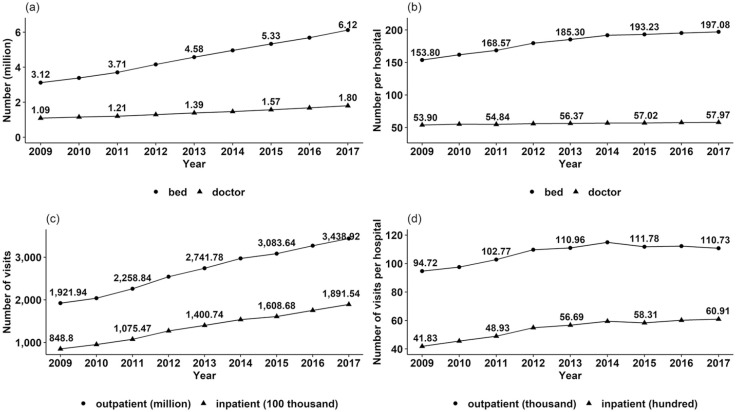
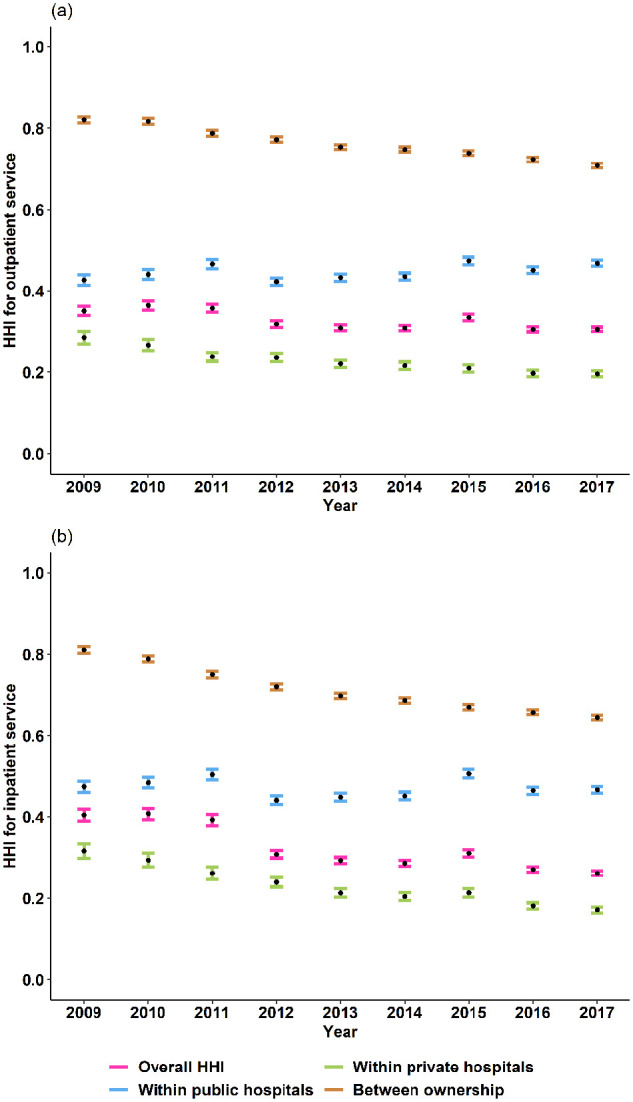
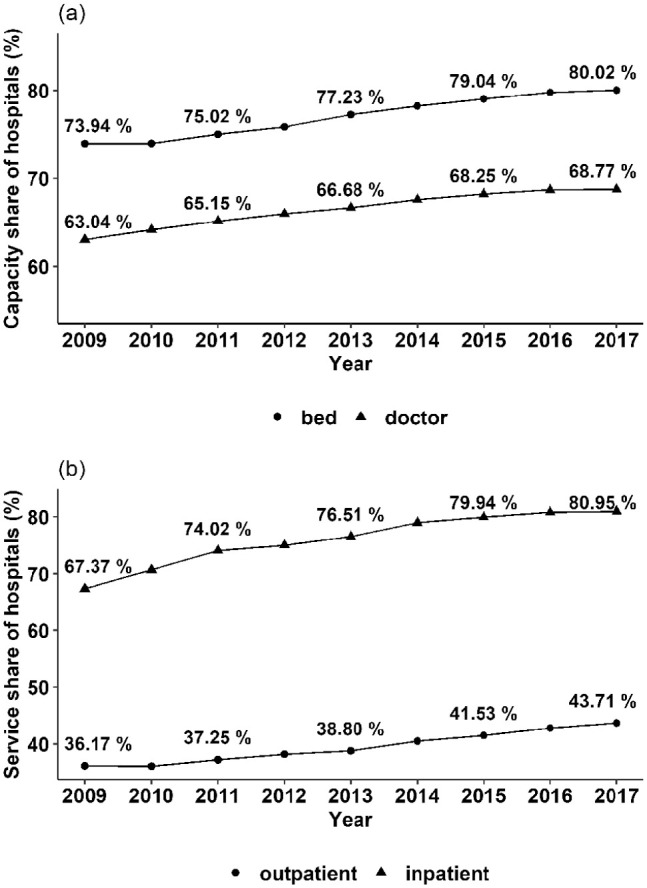
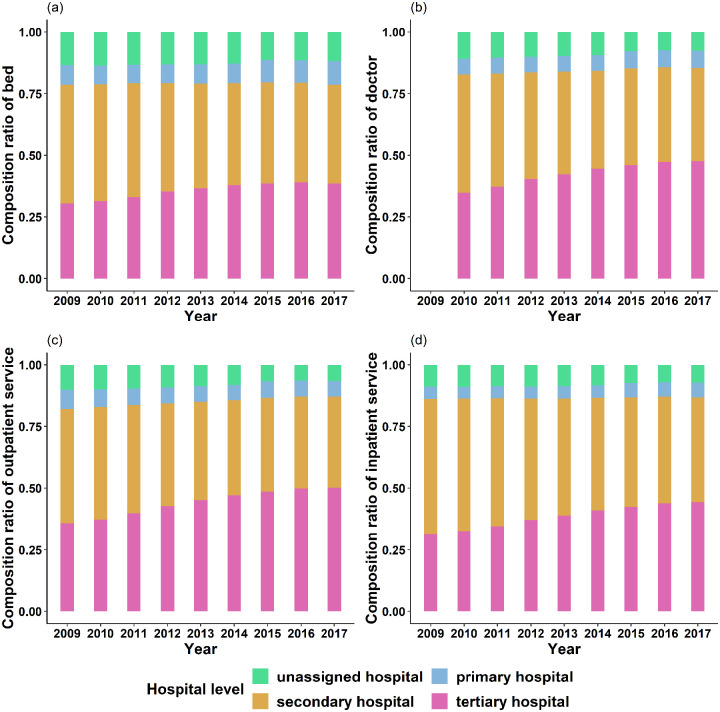
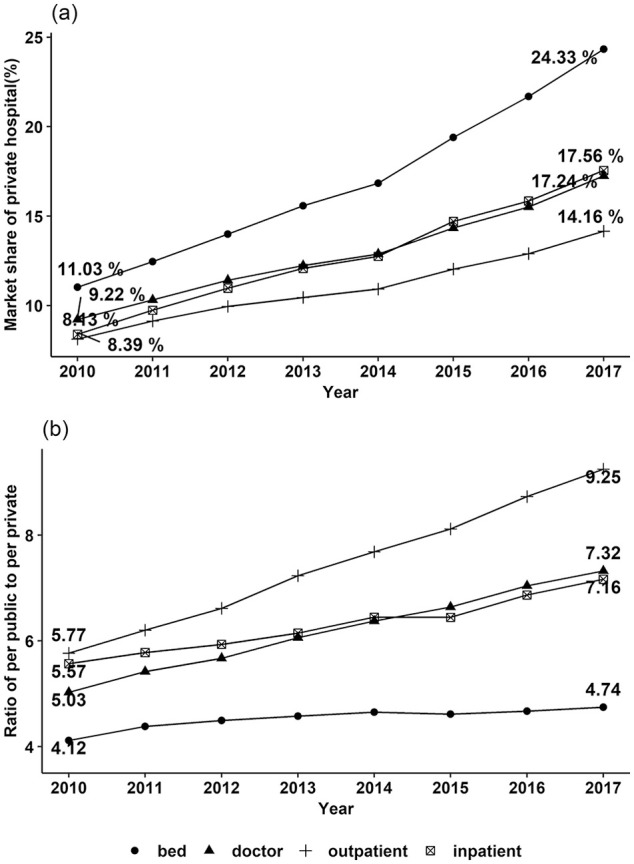
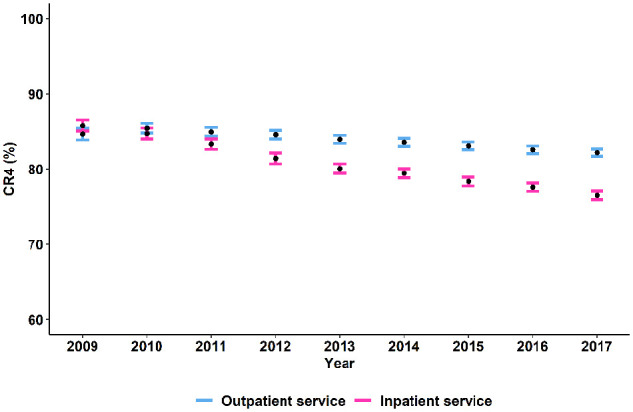
Since the initiation of national healthcare reform in 2009, China's hospital market has witnessed significant change. To provide a brief description about its evolving process, China Health Statistical Yearbook data and Sichuan administrative data from 2009 to 2017 were used in this article. An overall upward trend of hospital delivery capacity was found in this study, which increased from 3.12 million beds and 1.09 million doctors in 2009 to 6.12 million and 1.80 million in 2017, respectively, while the primary healthcare institutions presented fairly slow development pace. Growing proportion of medical resources and patients gathered in hospitals, especially tertiary hospitals. While private hospitals demonstrated an increasingly important role in hospital market with growing share of capacity and service, their average capacity, especially the human resource, was found to be much lower than that of public hospitals and the gaps are still widening. The competition among hospitals grouped by homogeneous ownership types has predominated the increasingly intensified hospital market competition in China. In order to adapt to the raising demand of health care in China, it is highly recommended that strategies forged at governmental levels be focused on primary care promotion, guiding the development of private hospitals as well as on promoting orderly competition in the hospital market.
自 2009 年启动国家医疗改革以来,中国的医院市场发生了重大变化。为简要描述其演变过程,本文使用了《中国卫生统计年鉴》数据和 2009 年至 2017 年四川省行政数据。本研究发现,医院的承载能力呈现出整体上升趋势,病床数从 2009 年的 312 万张增加到 2017 年的 612 万张,医生人数从 109 万增加到 180 万,而基层医疗机构的发展步伐相当缓慢。医疗资源和患者越来越多地集中在医院,特别是三级医院。私立医院在医院市场中的作用越来越重要,其床位和服务份额不断增加,但平均床位,特别是人力资源,明显低于公立医院,差距仍在扩大。同类所有制医院之间的竞争主导了中国日益激烈的医院市场竞争。为了适应中国不断增长的医疗保健需求,强烈建议政府层面的战略重点放在促进初级保健、引导私立医院发展以及促进医院市场的有序竞争上。