Furnier Sarah M, Durkin Maureen S, Baker Mei W
Department of Population Health Sciences, University of Wisconsin School of Medicine and Public Health, Madison, WI 53705, USA.
Waisman Center, University of Wisconsin-Madison, Madison, WI 53705, USA.
Int J Neonatal Screen. 2020 Oct 15;6(4):80. doi: 10.3390/ijns6040080.
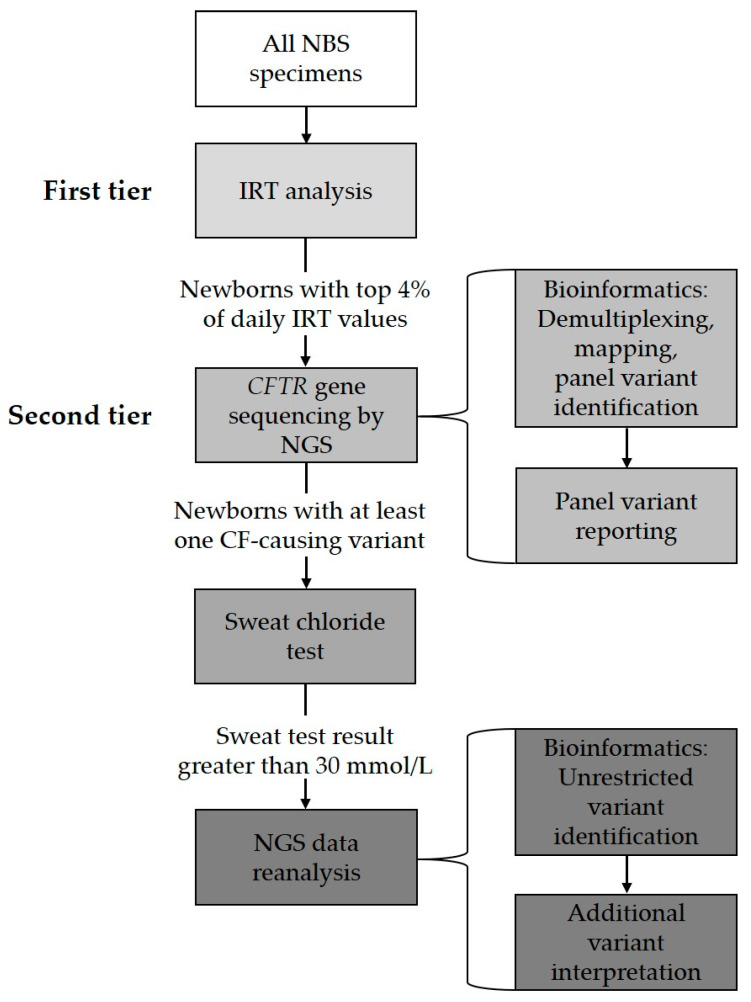
As biotechnologies advance and better treatment regimens emerge, there is a trend toward applying more advanced technologies and adding more conditions to the newborn screening (NBS) panel. In the current Recommended Uniform Screening Panel (RUSP), all conditions but one, congenital hypothyroidism, have well-defined genes and inheritance patterns, so it is beneficial to incorporate molecular testing in NBS when it is necessary and appropriate. Indeed, the applications of molecular technologies have taken NBS to previously uncharted territory. In this paper, based on our own program experience and what has been reported in the literature, we describe current practices regarding the applications of molecular technologies in routine NBS practice in the era of genomic and precision medicine.
随着生物技术的进步和更优治疗方案的出现,新生儿筛查(NBS)面板呈现出应用更先进技术并增加更多筛查疾病的趋势。在当前的推荐统一筛查面板(RUSP)中,除先天性甲状腺功能减退症外,所有疾病都有明确的基因和遗传模式,因此在必要且合适时将分子检测纳入新生儿筛查是有益的。事实上,分子技术的应用已将新生儿筛查带入了此前未知的领域。在本文中,基于我们自己的项目经验以及文献报道,我们描述了在基因组学和精准医学时代分子技术在常规新生儿筛查实践中的应用现状。