U.S. Environmental Protection Agency/Office of Research & Development/Center for Public Health and Environmental Assessment, Research Triangle Park, NC, USA.
U.S. Environmental Protection Agency/Office of Research & Development/Center for Environmental Measurement and Modeling, Research Triangle Park, NC, USA.
Environ Int. 2021 Jan;146:106204. doi: 10.1016/j.envint.2020.106204. Epub 2020 Oct 27.
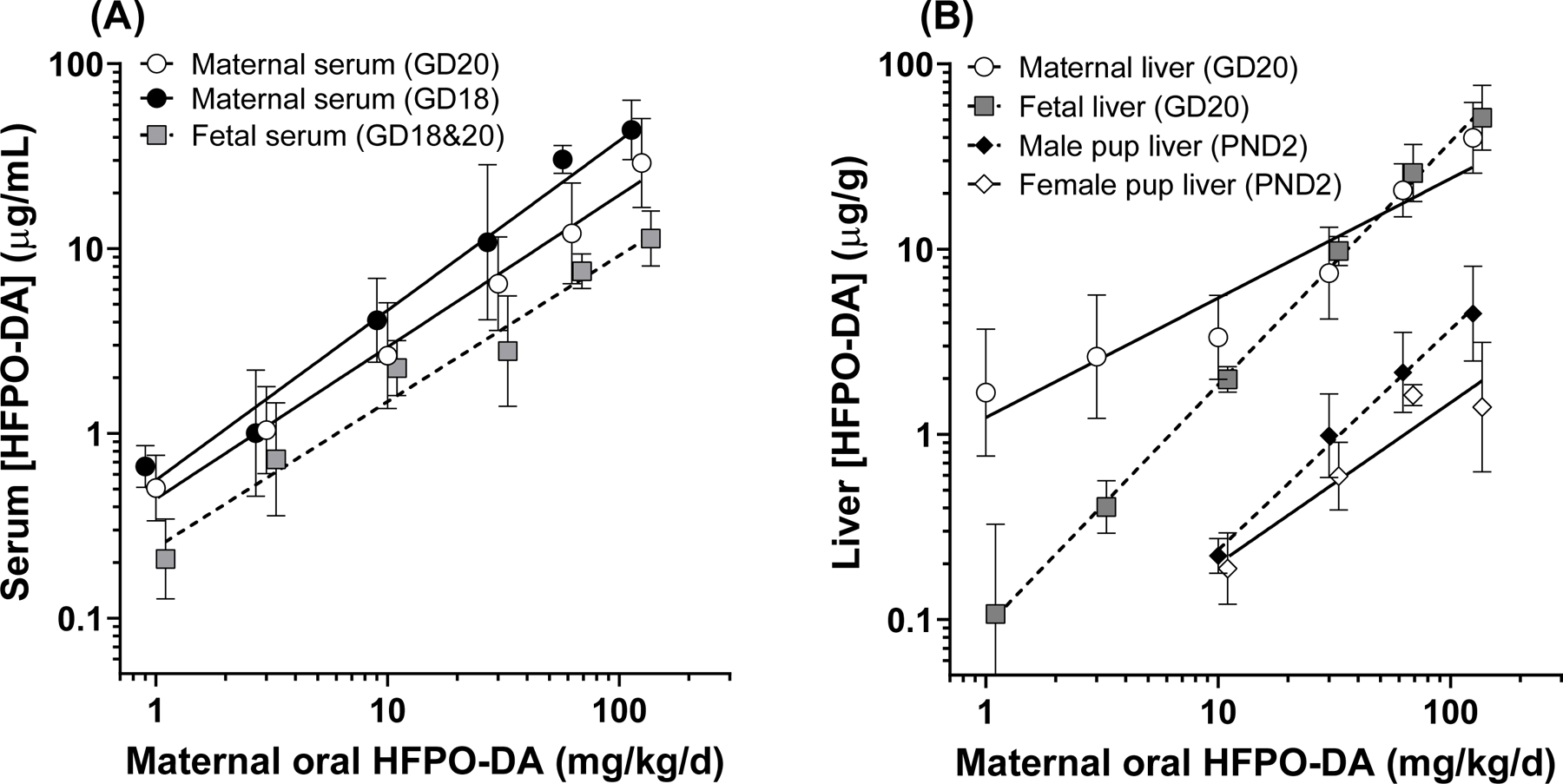
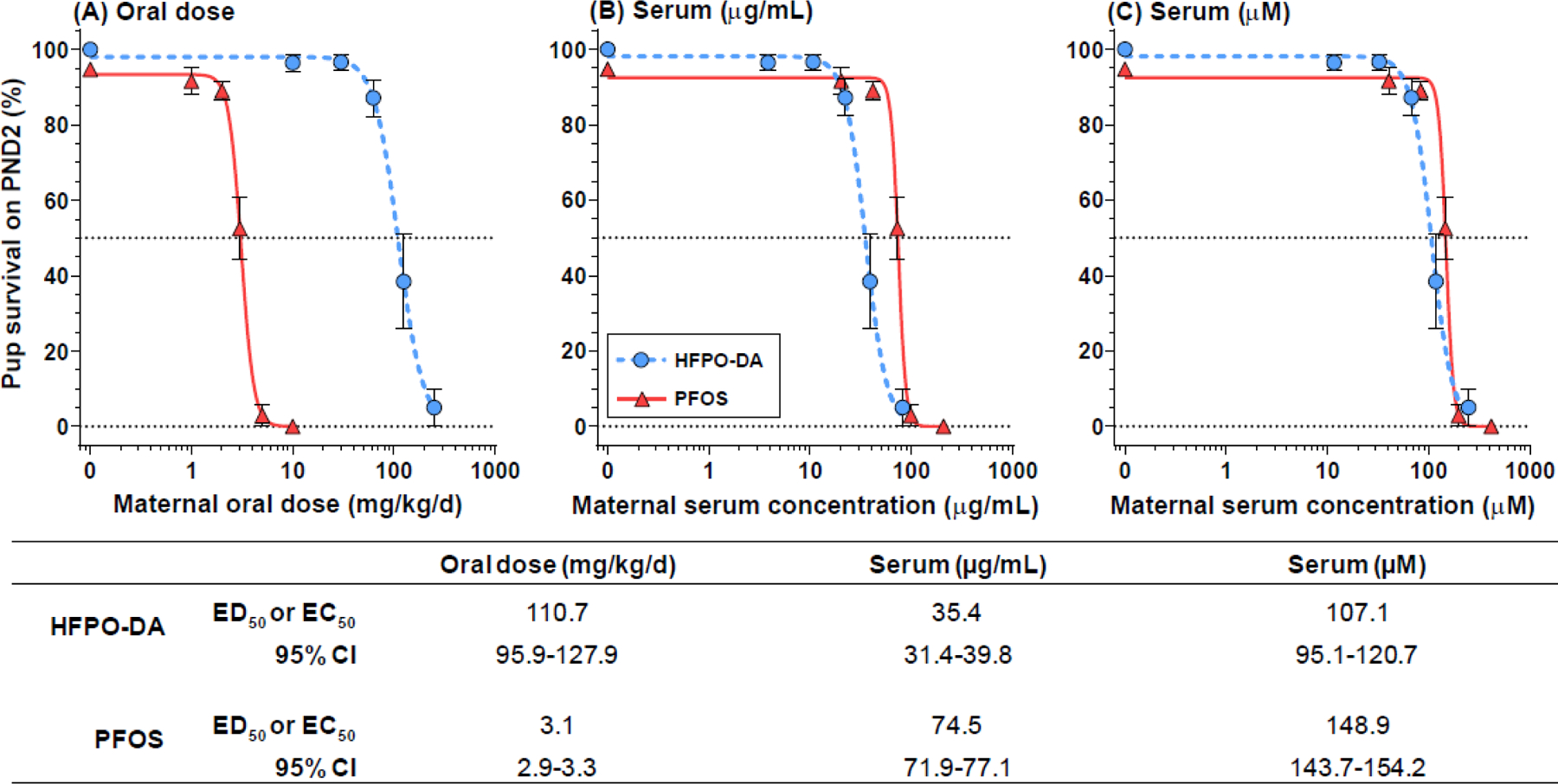
Hexafluoropropylene oxide dimer acid (HFPO-DA or GenX) is an industrial replacement for the straight-chain perfluoroalkyl substance (PFAS), perfluorooctanoic acid (PFOA). Previously we reported maternal, fetal, and postnatal effects from gestation day (GD) 14-18 oral dosing in Sprague-Dawley rats. Here, we further evaluated the perinatal toxicity of HFPO-DA by orally dosing rat dams with 1-125 mg/kg/d (n = 4 litters per dose) from GD16-20 and with 10-250 mg/kg/d (n = 5) from GD8 - postnatal day (PND) 2. Effects of GD16-20 dosing were similar to those previously reported for GD14-18 dosing and included increased maternal liver weight, altered maternal serum lipid and thyroid hormone concentrations, and altered expression of peroxisome proliferator-activated receptor (PPAR) pathway genes in maternal and fetal livers. Dosing from GD8-PND2 produced similar effects as well as dose-responsive decreased pup birth weight (≥30 mg/kg), increased neonatal mortality (≥62.5 mg/kg), and increased pup liver weight (≥10 mg/kg). Histopathological evaluation of newborn pup livers indicated a marked reduction in glycogen stores and pups were hypoglycemic at birth. Quantitative gene expression analyses of F1 livers revealed significant alterations in genes related to glucose metabolism at birth and on GD20. Maternal serum and liver HFPO-DA concentrations were similar between dosing intervals, indicating rapid clearance, however dams dosed GD8 - PND2 had greater liver weight and gestational weight gain effects at lower doses than GD16-20 dosing, indicating the importance of exposure duration. Comparison of neonatal mortality dose-response curves between HFPO-DA and previously published perfluorooctane sulfonate (PFOS) data indicated that, based on serum concentration, the potency of these two PFAS are similar in the rat. Overall, HFPO-DA is a developmental toxicant in the rat and the spectrum of adverse effects is consistent with prior PFAS toxicity evaluations, such as PFOS and PFOA.
六氟环氧丙烷二聚酸(HFPO-DA 或 GenX)是直链全氟烷基物质(PFAS)、全氟辛酸(PFOA)的工业替代品。此前,我们报道了妊娠第 14-18 天经口给予 Sprague-Dawley 大鼠 1-125mg/kg/d(每组 4 个窝仔)剂量后产生的母体、胎儿和围生期效应。在这里,我们进一步通过妊娠第 16-20 天经口给予大鼠母体 10-250mg/kg/d(每组 5 个窝仔)和妊娠第 8 天至新生期第 2 天(PND2)经口给予 10-250mg/kg/d(每组 5 个窝仔)评估了 HFPO-DA 的围产期毒性。妊娠第 16-20 天给药的影响与之前报道的妊娠第 14-18 天给药相似,包括母体肝脏重量增加、母体血清脂质和甲状腺激素浓度改变以及母体和胎儿肝脏中过氧化物酶体增殖物激活受体(PPAR)途径基因表达改变。妊娠第 8 天至 PND2 天给药也产生了类似的影响,还产生了剂量依赖性的新生仔鼠出生体重降低(≥30mg/kg)、新生仔鼠死亡率增加(≥62.5mg/kg)和仔鼠肝脏重量增加(≥10mg/kg)。新生仔鼠肝脏的组织病理学评估表明,肝糖原储存明显减少,新生仔鼠出生时出现低血糖。F1 肝脏的定量基因表达分析显示,出生时和妊娠第 20 天与葡萄糖代谢相关的基因发生显著改变。母体血清和肝脏中的 HFPO-DA 浓度在两个给药间隔之间相似,表明清除速度较快,但是妊娠第 8 天至 PND2 天给药的母体具有更大的肝脏重量和妊娠增重效应,与妊娠第 16-20 天给药相比,剂量较低,这表明暴露持续时间的重要性。HFPO-DA 和先前发表的全氟辛烷磺酸(PFOS)数据的新生仔鼠死亡率剂量-反应曲线比较表明,基于血清浓度,这两种 PFAS 在大鼠中的效力相似。总体而言,HFPO-DA 是一种在大鼠中具有发育毒性的物质,其不良影响谱与先前的 PFAS 毒性评估一致,如 PFOS 和 PFOA。