Faculté de Médecine, INSERM 1256/University of Lorraine, F-54500 Vandoeuvre-les-Nancy, France.
Int J Mol Sci. 2020 Oct 28;21(21):8008. doi: 10.3390/ijms21218008.
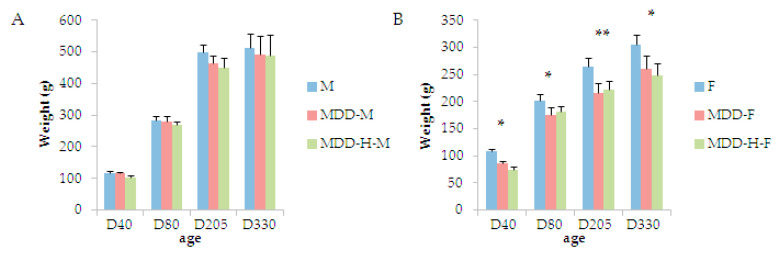
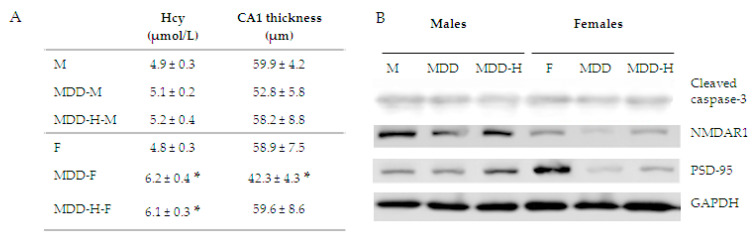
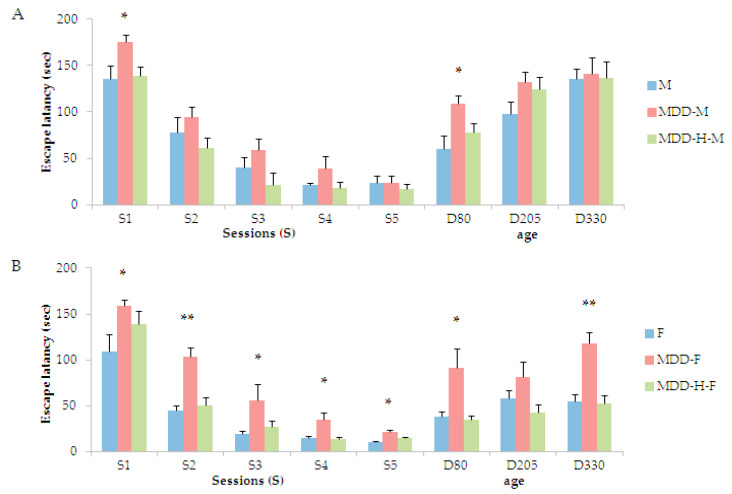
A deficiency in B-vitamins is known to lead to persistent developmental defects in various organs during early life. The nervous system is particularly affected with functional retardation in infants and young adults. In addition, even if in some cases no damage appears evident in the beginning of life, correlations have been shown between B-vitamin metabolism and neurodegenerative diseases. However, despite the usual treatment based on B-vitamin injections, the neurological outcomes remain poorly rescued in the majority of cases, compared with physiological functions. In this study, we explored whether a neonatal stimulation of neurogenesis could compensate atrophy of specific brain areas such as the hippocampus, in the case of B-vitamin deficiency. Using a physiological mild transient hypoxia within the first 24 h after birth, rat-pups, submitted or not to neonatal B-vitamin deficiency, were followed until 330-days-of-age for their cognitive capacities and their hippocampus status. Our results showed a gender effect since females were more affected than males by the deficiency, showing a persistent low body weight and poor cognitive performance to exit a maze. Nevertheless, the neonatal stimulation of neurogenesis with hypoxia rescued the maze performance during adulthood without modifying physiological markers, such as body weight and circulating homocysteine. Our findings were reinforced by an increase of several markers at 330-days-of-age in hypoxic animals, such as Ammon's Horn 1hippocampus (CA1) thickness and the expression of key actors of synaptic dynamic, such as the NMDA-receptor-1 (NMDAR1) and the post-synaptic-density-95 (PSD-95). We have not focused our conclusion on the neonatal hypoxia as a putative treatment, but we have discussed that, in the case of neurologic retardation associated with a reduced B-vitamin status, stimulation of the latent neurogenesis in infants could ameliorate their quality of life during their lifespan.
已知 B 族维生素缺乏会导致生命早期各种器官持续发育缺陷。神经系统尤其受到影响,婴儿和年轻成年人的功能发育迟缓。此外,即使在某些情况下生命初期没有明显的损伤,但已经表明 B 族维生素代谢与神经退行性疾病之间存在相关性。然而,尽管通常采用 B 族维生素注射治疗,但与生理功能相比,大多数情况下神经功能的恢复仍然较差。在这项研究中,我们探索了在 B 族维生素缺乏的情况下,新生大鼠神经发生刺激是否可以补偿特定脑区(如海马体)的萎缩。在出生后 24 小时内使用生理性轻度短暂缺氧,对接受或不接受新生 B 族维生素缺乏的大鼠幼仔进行随访,直到 330 天龄,以评估其认知能力和海马体状态。我们的研究结果显示出性别效应,因为女性比男性更容易受到缺乏的影响,表现为持续的低体重和在迷宫中表现不佳。然而,新生的神经发生刺激通过缺氧在成年期挽救了迷宫表现,而不会改变生理标志物,如体重和循环同型半胱氨酸。我们的发现通过在缺氧动物中 330 天龄时增加几个标志物得到了加强,例如氨甲酰磷酸 1 海马体(CA1)厚度和突触动态关键因子的表达,如 NMDA 受体-1(NMDAR1)和突触后密度蛋白-95(PSD-95)。我们的结论并不是将新生儿缺氧作为一种潜在的治疗方法,而是讨论了在与 B 族维生素状态降低相关的神经发育迟缓的情况下,刺激婴儿的潜在神经发生可能会改善他们在整个生命周期的生活质量。