Li Linda Xiaoyan, Zhou Julie Xia, Wang Xiaodong, Zhang Hongbing, Harris Peter C, Calvet James P, Li Xiaogang
Department of Medicine, Mayo Clinic, Rochester, MN 55905, USA.
Department of Biochemistry and Molecular Biology, Mayo Clinic, Rochester, MN 55905, USA.
Sci Adv. 2020 Oct 30;6(44). doi: 10.1126/sciadv.abb3154. Print 2020 Oct.
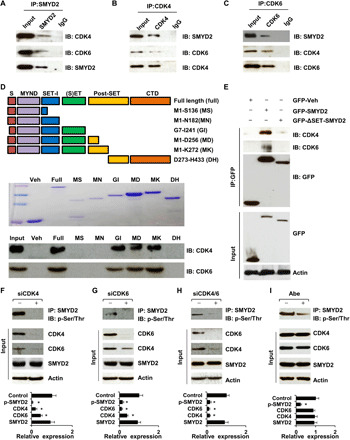
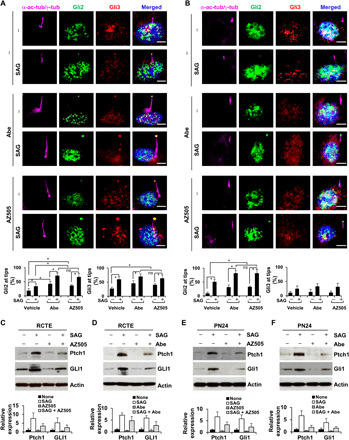
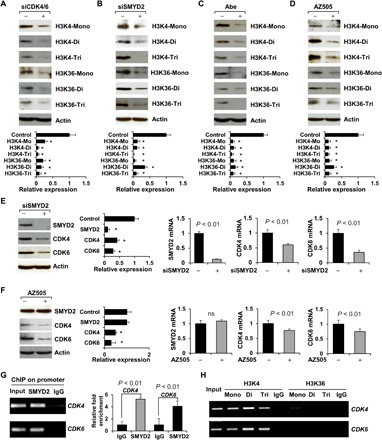
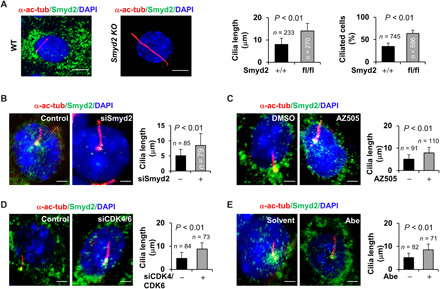
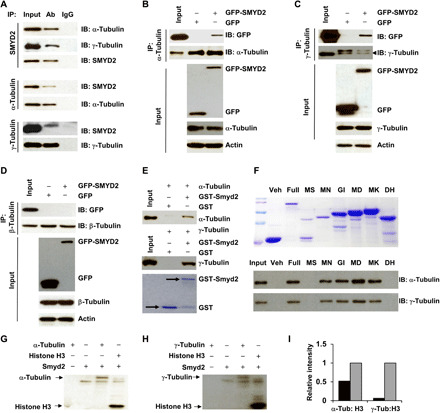
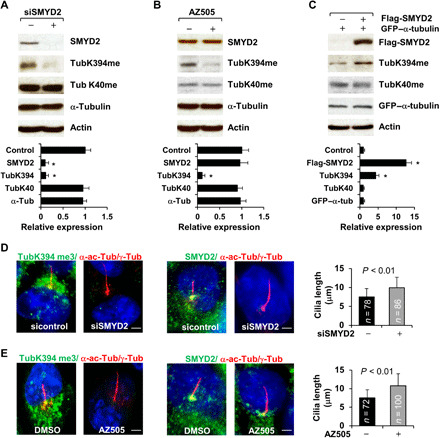
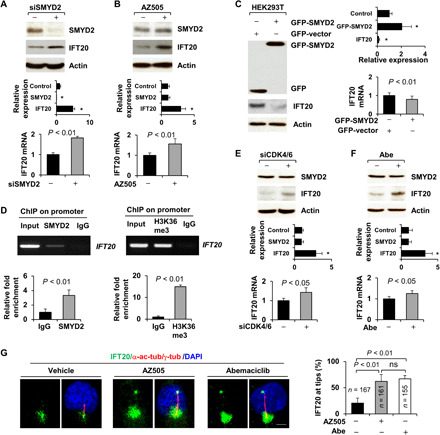
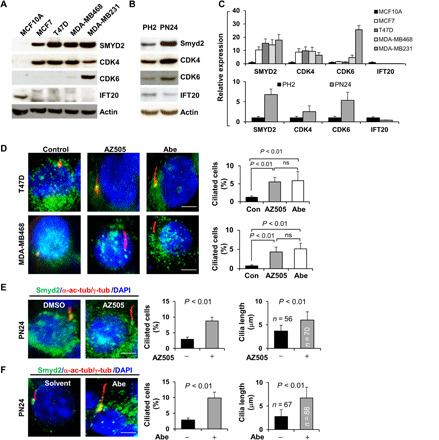
Dysregulation of cyclin-dependent kinases 4 and 6 (CDK4/6) by unknown mechanisms is highly prevalent in human disease. In this study, we identify direct cross-talk between CDK4/6 and the epigenome via its previously unidentified substrate, SMYD2, a histone/lysine methyltransferase. CDK4/6 positively regulates the phosphorylation and enzymatic activity of SMYD2, while SMYD2 also positively regulates the expression of CDK4/6. We also identify SMYD2 as an α-tubulin methyltransferase, thus connecting CDK4/6-SMYD2 signaling to microtubule dynamics. In addition, depletion or inhibition of CDK4/6 and SMYD2 resulted in increased cilia assembly by affecting (i) microtubule stability and (ii) the expression of IFT20, further connecting CDK4/6-SMYD2 to ciliogenesis. In clinical settings such as breast cancer and autosomal dominant polycystic kidney disease (ADPKD), targeting the up-regulated CDK4/6 and SMYD2 with inhibitors results in restoration of the primary cilium in tumor and cystic cells, which may normalize cilia-mediated extracellular signals that regulate growth, development, and cellular homeostasis.
细胞周期蛋白依赖性激酶4和6(CDK4/6)通过未知机制发生失调在人类疾病中极为普遍。在本研究中,我们通过其先前未被识别的底物SMYD2(一种组蛋白/赖氨酸甲基转移酶)确定了CDK4/6与表观基因组之间的直接相互作用。CDK4/6正向调节SMYD2的磷酸化和酶活性,而SMYD2也正向调节CDK4/6的表达。我们还确定SMYD2为α-微管蛋白甲基转移酶,从而将CDK4/6-SMYD2信号传导与微管动力学联系起来。此外,CDK4/6和SMYD2的缺失或抑制通过影响(i)微管稳定性和(ii)IFT20的表达导致纤毛组装增加,进一步将CDK4/6-SMYD2与纤毛发生联系起来。在乳腺癌和常染色体显性多囊肾病(ADPKD)等临床环境中,用抑制剂靶向上调的CDK4/6和SMYD2可导致肿瘤细胞和囊状细胞中原发性纤毛的恢复,这可能使调节生长、发育和细胞稳态的纤毛介导的细胞外信号正常化。