College of Food Science and Engineering, Ocean University of China, 5 Yushan Road, Qingdao, 266003, China.
Laboratory for Marine Drugs and Bioproducts, Qingdao National Laboratory for Marine Science and Technology, Qingdao, 266237, China.
Sci Rep. 2020 Oct 30;10(1):18744. doi: 10.1038/s41598-020-75580-x.
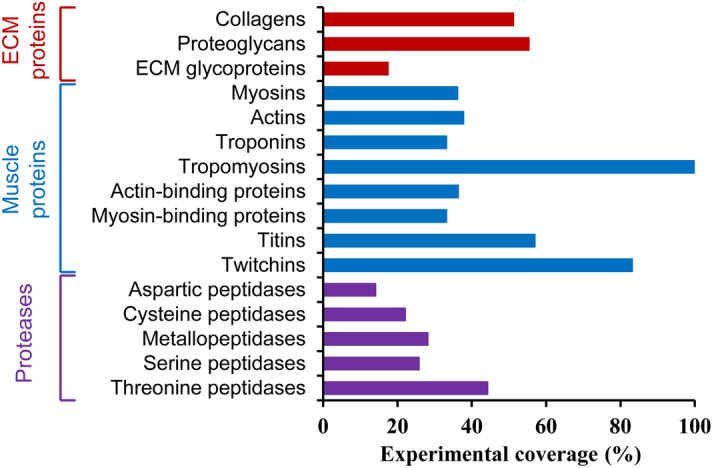
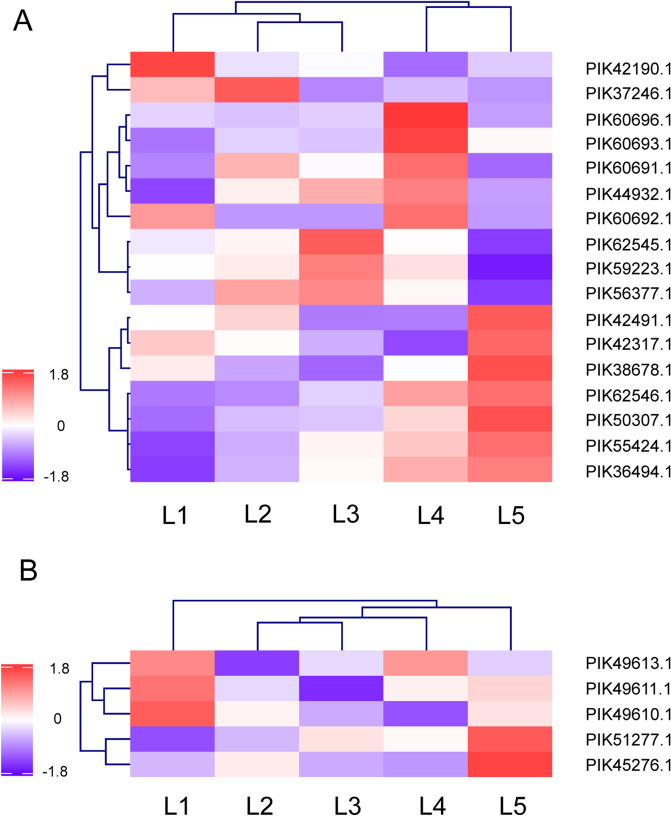
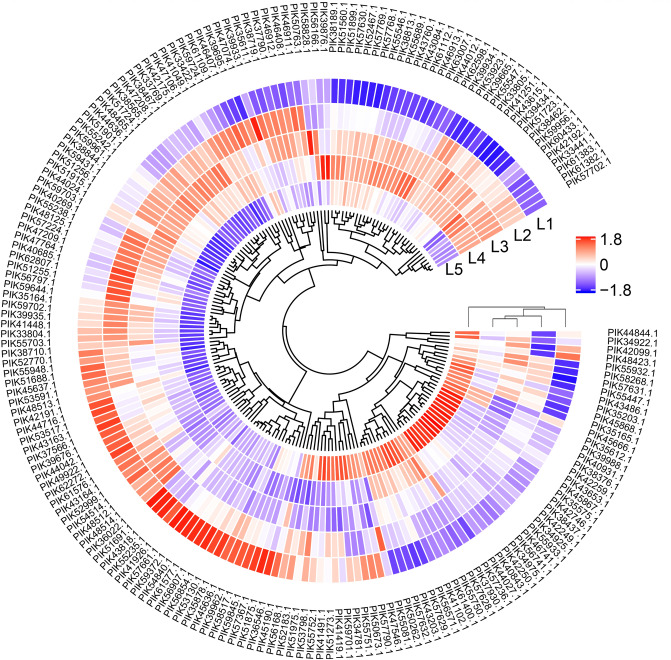
Structural proteins play critical roles in the food quality, especially texture properties, of sea cucumbers and their products. Most of the previous studies on sea cucumbers focused on few individual proteins, which limited our understanding of how structural proteins influenced the quality of sea cucumbers. Inspired by the clarification of sea cucumber (Apostichopus japonicus) genome, we established an integrated data of structural proteins in the sea cucumber body wall. A portfolio of 2018 structural proteins was screened out from the sea cucumber annotated proteome by bioinformatics analysis. The portfolio was divided into three divisions, including extracellular matrix proteins, muscle proteins, and proteases, and further classified into 18 categories. The presence of 472 proteins in the sea cucumber body wall was confirmed by using a proteomics approach. Moreover, comparative proteomics analysis revealed the spatial distribution heterogeneity of structural proteins in the sea cucumber body wall at a molecular scale. This study suggested that future researches on sea cucumbers could be performed from an integrated perspective, which would reshape the component map of sea cucumber and provide novel insights into the understanding of how the food quality of sea cucumber was determined on a molecular level.
结构蛋白在海参及其制品的食品质量,特别是质地特性方面发挥着关键作用。以前的大多数关于海参的研究都集中在少数几种个别蛋白质上,这限制了我们对结构蛋白如何影响海参质量的理解。受海参(Apostichopus japonicus)基因组阐明的启发,我们建立了海参体壁结构蛋白的综合数据集。通过生物信息学分析从海参注释的蛋白质组中筛选出 2018 种结构蛋白。该组合分为三个部分,包括细胞外基质蛋白、肌肉蛋白和蛋白酶,并进一步细分为 18 类。通过蛋白质组学方法证实了 472 种蛋白质存在于海参体壁中。此外,比较蛋白质组学分析揭示了结构蛋白在海参体壁中的分子尺度上的空间分布异质性。这项研究表明,未来对海参的研究可以从综合的角度进行,这将重塑海参的成分图谱,并为理解如何从分子水平上确定海参的食品质量提供新的见解。