Edinburgh Imaging, and UK Dementia Research Institute at the University of Edinburgh and Centre for Clinical Brain Sciences, University of Edinburgh, Chancellor's Building, 49 Little France Crescent, Edinburgh, EH16 4SB, UK.
Centre for Clinical Brain Sciences, University of Edinburgh, Edinburgh, UK.
Neuroradiology. 2021 Jun;63(6):869-878. doi: 10.1007/s00234-020-02591-w. Epub 2020 Oct 30.
CT attenuation of ischemic brain reduces with time after stroke onset. We aimed to quantify this relationship and test the feasibility and accuracy of estimating stroke onset time using only CT attenuation of visible ischemic lesions, the CT-Clock Tool.
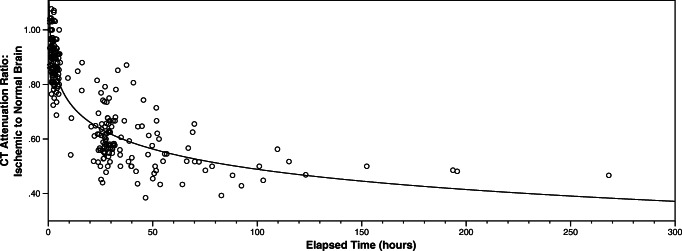
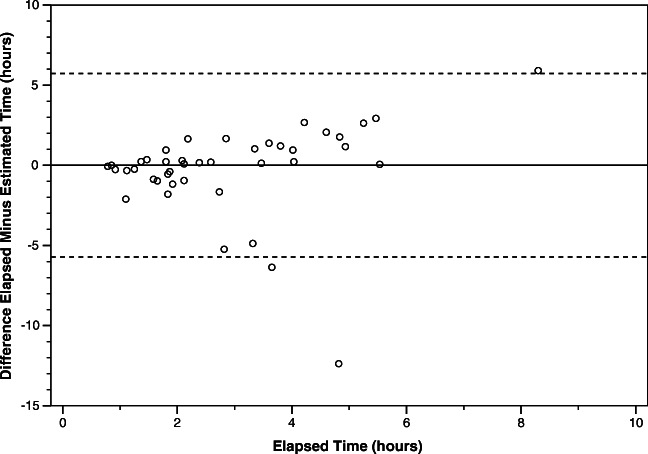
We selected CT scans with ischemic lesions representing a range of stroke-onset-to-scan times (elapsed time) from a well-defined stroke trial. We measured the attenuation of ischemic lesions and contralateral normal brain to derive attenuation ratio. We assigned scans to development (75%) or test (25%) datasets. We plotted the relationship between attenuation ratio and elapsed time in the development dataset and derived a best-fit curve. We calculated estimated time in the test dataset using only the attenuation ratio curve. We compared estimated time to elapsed time and derived absolute error for estimated time. We assessed area under the receiver operating characteristic (AUROC) curve for identifying scans ≤ 4.5 h elapsed time.
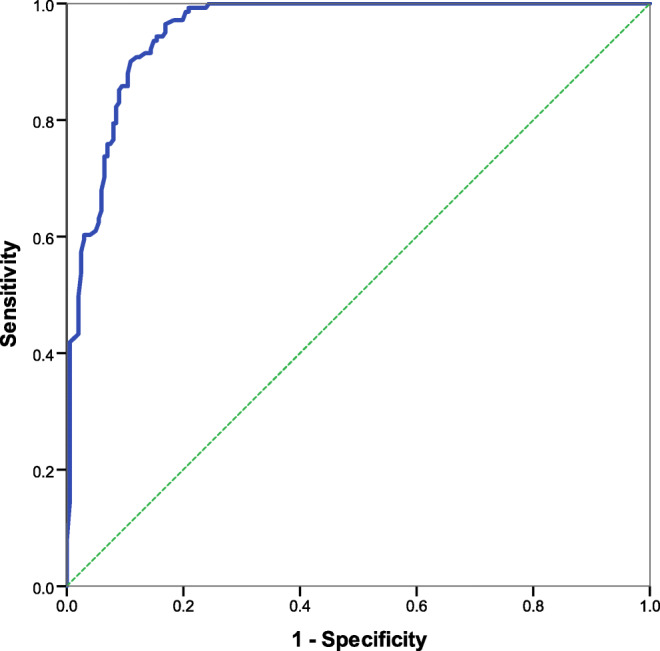
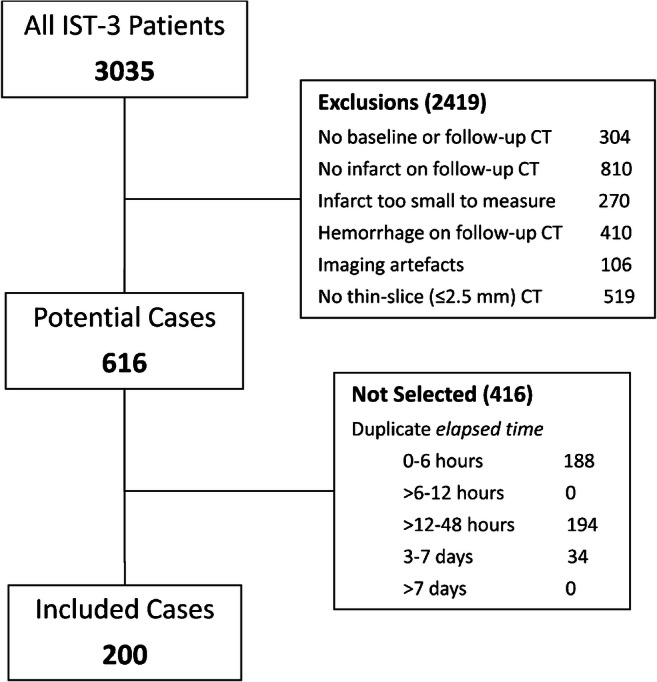
We included 342 scans from 200 patients (41% male, median age 83 years). Elapsed time range: 22 min to 36 days. Estimation errors were least at early elapsed times (r = 0.82, p < 0.0001): median absolute error was 23, 106, 1030 and 1933 min for scans acquired ≤ 3, > 3-9, > 9-30 and > 30 h from stroke onset, respectively. AUROC was high at 0.955.
It is feasible to accurately estimate stroke onset time using simple attenuation measures of ischemic brain. Our method was most accurate 0-9 h from onset and may be useful for treatment eligibility assessment, especially where imaging resources are limited.
脑缺血的 CT 衰减值随卒中发病后时间的推移而降低。我们旨在量化这种关系,并测试仅使用可见缺血性病变的 CT 衰减值(CT-Clock 工具)来估计卒中发病时间的可行性和准确性。
我们从一项明确的卒中试验中选择了具有一系列卒中发病至扫描时间(延迟时间)的 CT 扫描,这些扫描都有缺血性病变。我们测量了缺血性病变和对侧正常脑的衰减值,以得出衰减比值。我们将扫描分为开发(75%)和测试(25%)数据集。我们在开发数据集中绘制衰减比值与延迟时间之间的关系,并得出最佳拟合曲线。我们仅使用衰减比值曲线在测试数据集中计算估计时间。我们将估计时间与实际延迟时间进行比较,并计算估计时间的绝对误差。我们评估了用于识别 ≤ 4.5 小时延迟时间的扫描的接收者操作特征(ROC)曲线下面积(AUROC)。
我们纳入了 200 名患者的 342 次扫描(41%为男性,中位年龄为 83 岁)。延迟时间范围:22 分钟至 36 天。在早期延迟时间,估计误差最小(r=0.82,p<0.0001):扫描获得 ≤ 3、>3-9、>9-30 和 >30 小时后,中位数绝对误差分别为 23、106、1030 和 1933 分钟。AUROC 非常高,为 0.955。
使用缺血性脑的简单衰减测量值准确估计卒中发病时间是可行的。我们的方法在发病后 0-9 小时内最准确,可能对治疗资格评估有用,尤其是在影像资源有限的情况下。