Research Team of Animal Physiology and Ecotoxicology, Faculty of Natural Sciences, Institute of Biology, Biotechnology and Environmental Protection, University of Silesia, Bankowa 9, 40-007, Katowice, PL, Poland.
Environ Sci Pollut Res Int. 2021 Feb;28(8):9084-9096. doi: 10.1007/s11356-020-11338-2. Epub 2020 Oct 30.
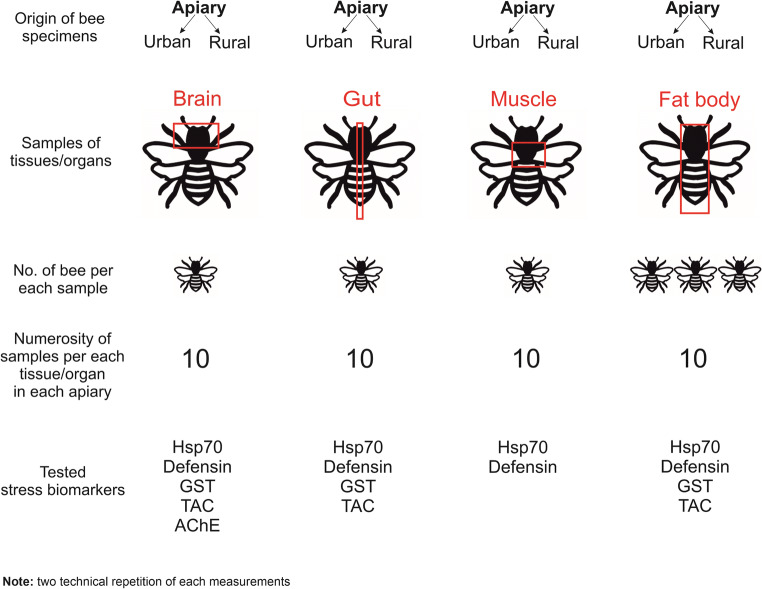
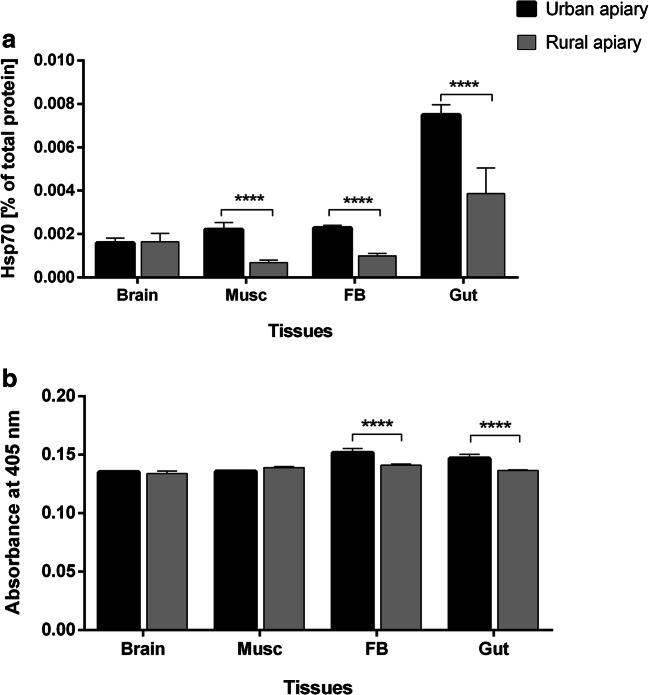
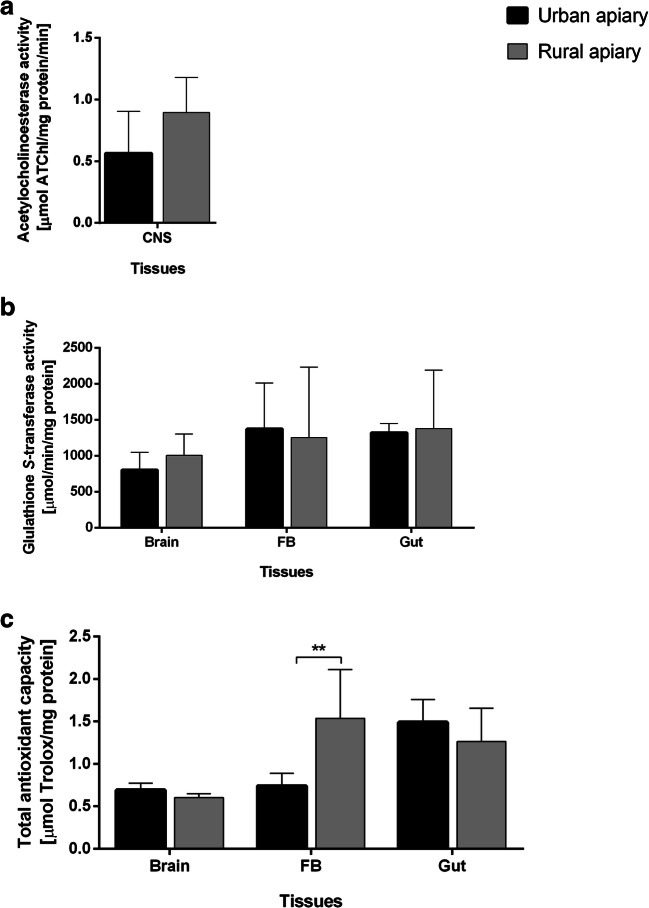
A decrease among honey bee populations (Apis mellifera) in the traditional apiaries has been observed in recent years. In light of this negative phenomenon, urban beekeeping seems to be an appropriate alternative solution for the bee population in reducing the toxic effects of a large number of pesticides that are commonly used in agricultural ecosystems. Despite the rapid development of urban beekeeping, there is little information regarding the different aspects of the defense effectiveness of bees from the urban and rural areas. The study was aimed to show whether honey bees from these two locations differ in the level of the valuable biomarkers of stress exposure helpful in establishing which bees, from urban or rural areas, are under greater environmental pressure. For this purpose, foragers from an urban rooftop apiary and a traditional rural apiary were collected. The chosen biomarkers were measured in various tissues of bees. The activity of glutathione S-transferase and acetylcholinesterase, the level of total antioxidant capacity, heat shock protein 70 (Hsp70), and defensin were selected for the analyses. In our opinion, the Hsp70 and defensin levels seemed to be important in the indication of urban multistress factors. The higher level of heat shock proteins and defensins in tissues/organs of bees from the urban apiary-in the gut (an increase, respectively, 92% and 7.3%) and fat body (an increase, respectively, 130% and 7.8%), known as targets of environmental toxins, pointed out the urban environment as highly stressful at both the individual and colony levels. In turn, high total antioxidant capacity was measured in the guts of honey bees from rural area (an increase 107%). Such a situation suggests a different mechanism of defense and specificity of rural and urban environmental stressors and also honey bees foraging activity.
近年来,人们观察到传统蜂场中的蜜蜂数量(Apis mellifera)有所减少。鉴于这种负面现象,城市养蜂似乎是减少农业生态系统中大量常用杀虫剂毒性影响的一种合适替代解决方案。尽管城市养蜂业发展迅速,但关于城市和农村地区蜜蜂防御效果的不同方面的信息却很少。本研究旨在展示来自这两个地点的蜜蜂在暴露于压力的有价值生物标志物水平上是否存在差异,这些生物标志物有助于确定来自城市或农村地区的蜜蜂承受更大环境压力的情况。为此,从城市屋顶蜂场和传统农村蜂场收集了采集蜂。选择了各种蜜蜂组织中的生物标志物进行测量。选择了谷胱甘肽 S-转移酶和乙酰胆碱酯酶的活性、总抗氧化能力、热休克蛋白 70(Hsp70)和防御素的水平进行分析。我们认为,Hsp70 和防御素水平似乎在指示城市多压力因素方面很重要。来自城市蜂场的蜜蜂组织/器官中的热休克蛋白和防御素水平较高(分别增加了 92%和 7.3%)和脂肪体(分别增加了 130%和 7.8%),这些都是环境毒素的靶点,这表明城市环境在个体和群体水平上都具有高度压力。反过来,在农村地区的蜜蜂肠道中测量到了较高的总抗氧化能力(增加了 107%)。这种情况表明,农村和城市环境应激源以及觅食活动的蜜蜂具有不同的防御机制和特异性。