Cyrus Tang Hematology Center, Collaborative Innovation Center of Hematology, Suzhou Key Laboratory of Thrombosis and Vascular Diseases, State Key Laboratory of Radiation Medicine and Protection, Soochow University, Suzhou, China.
National Clinical Research Center for Hematologic Diseases, the First Affiliated Hospital of Soochow University, Suzhou, China.
J Cell Mol Med. 2020 Dec;24(24):14257-14269. doi: 10.1111/jcmm.16043. Epub 2020 Oct 30.
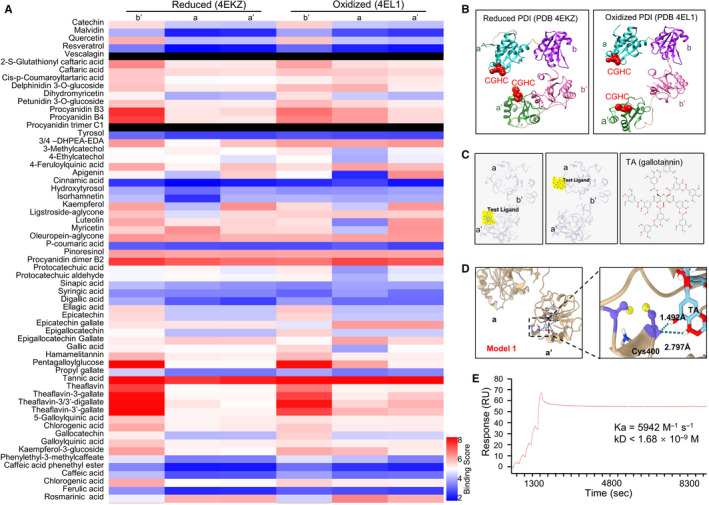
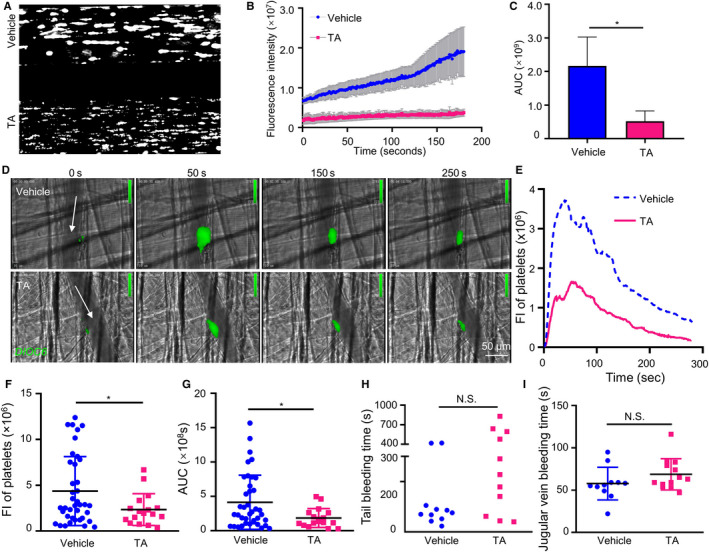
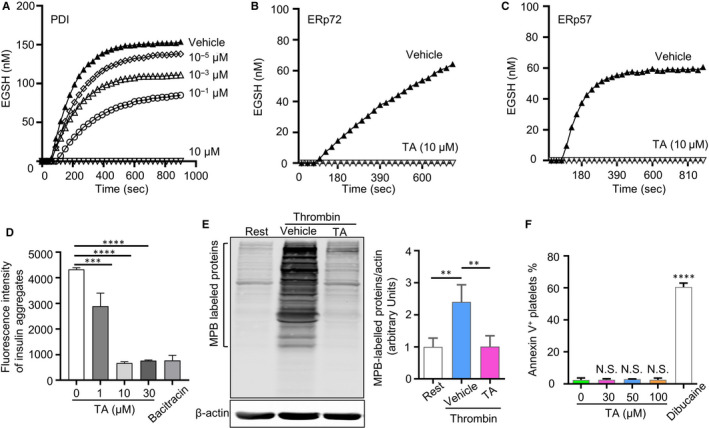
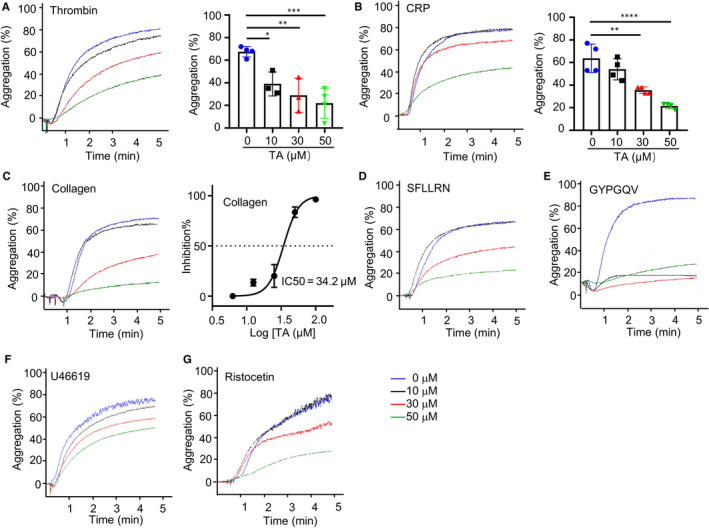
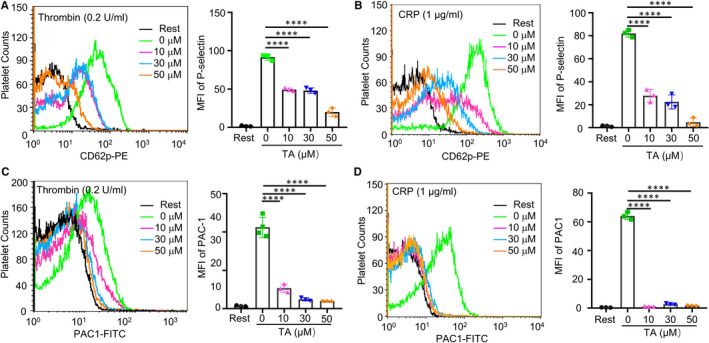
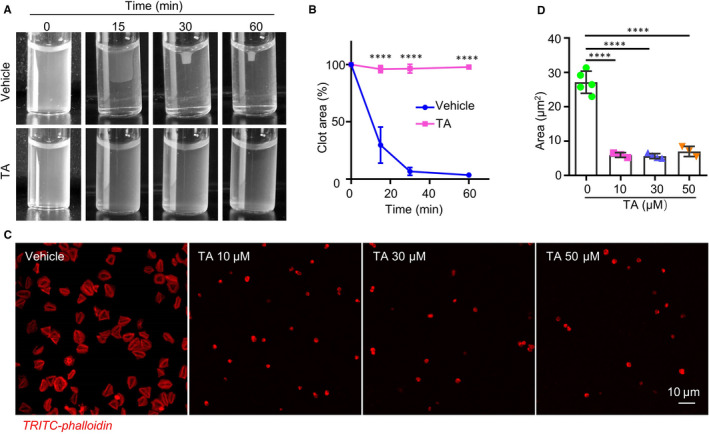
Protein disulphide isomerase (PDI) promotes platelet activation and constitutes a novel antithrombotic target. In this study, we reported that a PDI-binding plant polyphenol, tannic acid (TA), inhibits PDI activity, platelet activation and thrombus formation. Molecular docking using plant polyphenols from dietary sources with cardiovascular benefits revealed TA as the most potent binding molecule with PDI active centre. Surface plasmon resonance demonstrated that TA bound PDI with high affinity. Using Di-eosin-glutathione disulphide fluorescence assay and PDI assay kit, we showed that TA inhibited PDI activity. In isolated platelets, TA inhibited platelet aggregation stimulated by either GPVI or ITAM pathway agonists. Flow cytometry showed that TA inhibited thrombin- or CRP-stimulated platelet activation, as reflected by reduced granule secretion and integrin activation. TA also reduced platelet spreading on immobilized fibrinogen and platelet adhesion under flow conditions. In a laser-induced vascular injury mouse model, intraperitoneal injection of TA significantly decreased the size of cremaster arteriole thrombi. No prolongation of mouse jugular vein and tail-bleeding time was observed after TA administration. Therefore, we identified TA from natural polyphenols as a novel inhibitor of PDI function. TA inhibits platelet activation and thrombus formation, suggesting it as a potential antithrombotic agent.
蛋白质二硫键异构酶(PDI)促进血小板活化,是一种新型的抗血栓靶点。本研究报道了一种与 PDI 结合的植物多酚单宁酸(TA),可抑制 PDI 活性、血小板活化和血栓形成。使用具有心血管益处的植物多酚进行分子对接研究显示,TA 是与 PDI 活性中心结合能力最强的化合物。表面等离子体共振实验表明 TA 与 PDI 具有高亲和力。通过 Di-eosin-glutathione disulphide 荧光测定法和 PDI 试剂盒,我们发现 TA 可抑制 PDI 活性。在分离的血小板中,TA 可抑制由 GPVI 或 ITAM 途径激动剂刺激引起的血小板聚集。流式细胞术显示 TA 可抑制凝血酶或 CRP 刺激的血小板活化,表现为颗粒分泌和整合素活化减少。TA 还可减少血小板在固定纤维蛋白原上的铺展以及在血流条件下的血小板黏附。在激光诱导的血管损伤小鼠模型中,腹腔注射 TA 可显著减小隐静脉小动脉血栓的大小。给予 TA 后,小鼠颈静脉和尾出血时间无明显延长。因此,我们从天然多酚中鉴定出 TA 是 PDI 功能的新型抑制剂。TA 可抑制血小板活化和血栓形成,提示其具有成为抗血栓药物的潜力。