Radiation Medicine Program, Princess Margaret Cancer Centre, Toronto, ON, Canada; Department of Radiation Oncology, University of Toronto, ON, Canada.
Smart Cancer Care, Princess Margaret Cancer Centre, Toronto, ON, Canada; Healthcare Human Factors, University Health Network, Toronto, ON, Canada.
Healthc (Amst). 2020 Dec;8(4):100480. doi: 10.1016/j.hjdsi.2020.100480. Epub 2020 Oct 22.
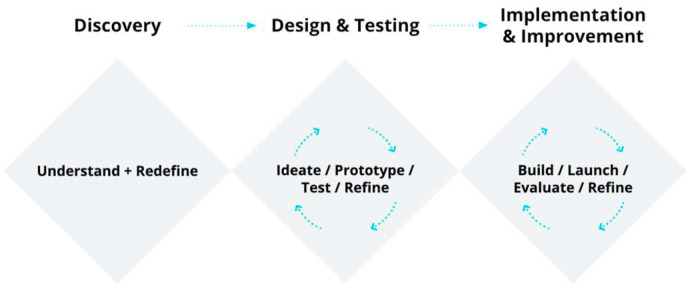
There has been longstanding interest in virtual care in oncology, but outdated reimbursement structures and a paradoxical lack of agility within electronic systems limited widespread adoption. Through the example of the Province of Ontario, Canada and the Princess Margaret Cancer Centre, we describe how a collective sense of action from COVID-19, a system of distributed leadership and decision-making, and the use of a Service Design process to map the ambulatory encounter onto a digital workflow were critical enablers of a large-scale virtual transition. Rigorous evaluation of virtual care models will be essential to maintain integration of virtual care post-pandemic.
长期以来,肿瘤学领域一直对虚拟护理感兴趣,但过时的报销结构和电子系统中自相矛盾的缺乏灵活性限制了其广泛采用。通过加拿大安大略省和玛格丽特公主癌症中心的例子,我们描述了 COVID-19 带来的集体行动意识、分布式领导力和决策系统,以及使用服务设计流程将门诊就诊映射到数字工作流程,这些是大规模虚拟转型的关键推动因素。对虚拟护理模式进行严格评估对于维持大流行后虚拟护理的整合至关重要。